Earlier quoted context omitted.
Where do you see that the full well of those CCDs are fully saturated by a single satellite streak? Even if that was the case, that seems a very poor design for a sensor and not really an issue of satellites. If a satellite streak can saturate your well, then so could a decently dense star field. Do they blow out the individual pixels? Sure. But you just stack. You don't lose sensitivity just because your stack rejec…
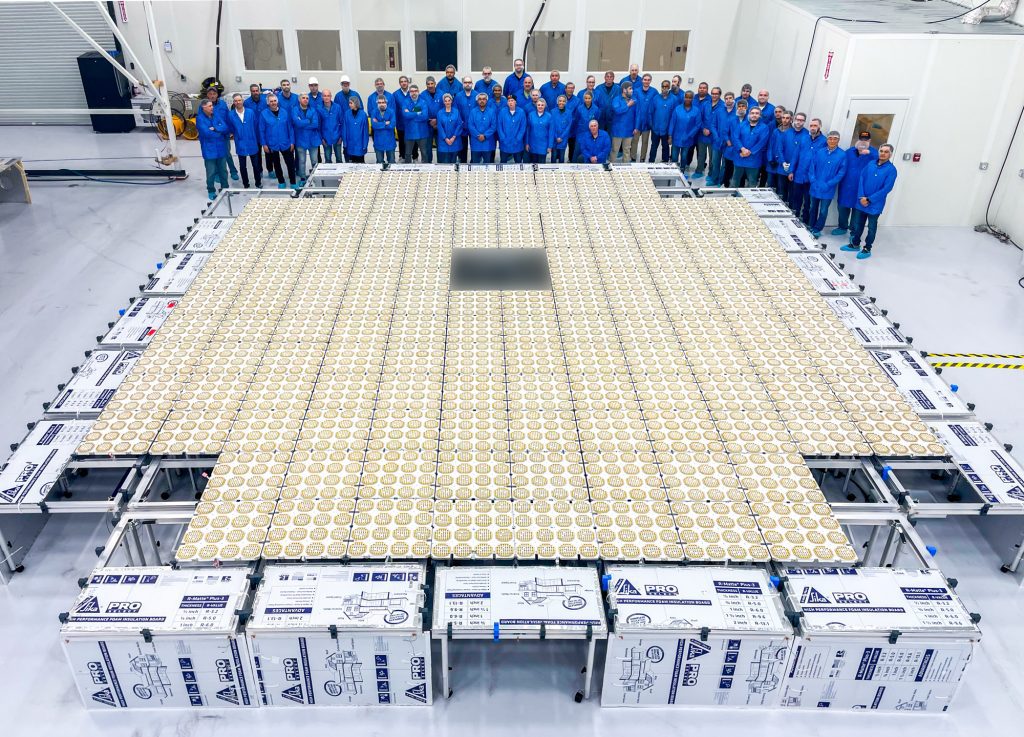
It's not really that it saturates the entire image, it's that bright objects creates non-linear and ghosting artifacts which degrade the sensitivity of the entire exposure, even after post-processing in software. https://www.space.com/bluewalker-3-prototype-satellite-brigh... https://www.nature.com/articles/s41586-023-06672-7 https://iopscience.iop.org/article/10.3847/1538-3881/abba3e/...
Also note that BlueWalker 3, like most low-earth orbit satellites, is only visible during "terminator conditions", when the satellite itself is illuminated by the sun but the telescope is still in darkness. Those times are typically an hour or so after sundown or an hour or so before sunrise. So one solution is to schedule astronomy for the middle of the night, when none of these low earth satellites will lit by the sun at all. Which certainly increases the costs of astronomy, since you can't use your telescope for as many hours per day.
Or, just use your space object catalog to look elsewhere in the sky when bright satellites happen to be in the sky during terminator illumination conditions. Which I see is one of the things your last link, "Mitigation of LEO Satellite Brightness and Trail Effects on the Rubin Observatory LSST", suggests!