Live data from Hacker News

Household size and the housing stock

kevinerdmann.substack.com

101–110 of 149 posts

Re: Household size and the housing stock

#101
post #3

Earlier quoted context omitted.

You build the biggest thing you can within a parcel because there is plenty of demand at the top of the market. Want more, smaller homes? Reduce or eliminate minimum lot sizes, setbacks, constraints on number of units, and process required towards entitlement. What is legal is what gets built. Not enough is legal, and not enough is built as a result.

> You build the biggest thing you can within a parcel because there is plenty of demand at the top of the market. I know many people who have built many homes and I don't know a single one who thought that way or built a house that reflects it. While impacted by practical needs to a degree, preferred home size is just a fashion that changes over time and amounts to personal taste. The 3500sf McMansion of yesterday be…

> preferred home size is just a fashion

It's been a linear and monotonic increase for over 100 years
Re: Household size and the housing stock

#102

Earlier quoted context omitted.

But rents are also high. High rents aren't caused by investors. Rents are caused by too many people wanting to live somewhere versus a small number of dwellings. It's the pigeon hole principle, which you can't solve by reducing investors. Also, let's think about unintended consequences. A lot of housing starts happen only because of investor capital. Given the existence of a rental crisis, if you inadvertently reduce…

Of course high rents are caused by the investors. After all, rents are huge part of the return on their investment and also huge factor in determining the asset price. Solution to rental crisis is the reduction of what percentage of people rent vs buy. With a flood of cheap properties on the market more people would consider buying. Also they'd need smaller mortgages so they could be easier to acquire.

> After all, rents are huge part of the return on their investment and also huge factor in determining the asset price.

Yes, rents are part of their ROI. That does not mean asset prices cause rents. Rents cause asset prices by impacting investment demand. Rents provide a soft bound on asset prices because investors demand a certain ROI, else they will allocate capital in other markets. We're getting the direction of causality mixed up.

> Solution to rental crisis is the reduction of what percentage of people rent vs buy.

No. If we have N renters competing for 0.8*N rental properties near their workplace, and we convert half of them into buyers, you're left with 0.5*N renters competing for 0.3*N properties. If anything you have made the problem worse for renters (although you have improved the situation for buyers).

Re: Household size and the housing stock

#103
post #71

Earlier quoted context omitted.

The article specifically calls out home vacancy rates. We're at an all time low in cities.

What cities? How do you define vacancy? Is a 2nd home vacant? Is an airbnb vacant? How were these vacancies counted and who collects the data? Can you compare vacancy rates from the past to the present? Did they use same methodology to collect vacancy rates?

Exactly! I live in a major city and there are vacancies everywhere. It’s especially frustrating to see how many houses that sell sit empty for like a year or more before the speculators manage to flip them into a short term rental or whatever.

Re: Household size and the housing stock

#104

Earlier quoted context omitted.

The trend in Seattle at least is to take one SFH policy and build three town homes on it that don’t share walls but have the minimum buffers between them and the property line. People don’t really build homes at all, developers do, and they want to maximize the earnings they can get on an expensive plot of land.

If a home does not have a shared wall, it is not a townhome.

There regional variations in how the word is used. In my region, a townhome is defined via other criteria.

Re: Household size and the housing stock

#105
post #70

Earlier quoted context omitted.

Fwiw, that's my non-American impression of North American suburban homes everywhere (as far as I've seen, largely TV/film of course) - y'all say scathing things about terraced houses in Europe, but then your own seem for the most part detached only as a technicality. (And probably it is mostly about making legal and construction matters easier? No party wall; if you want to tear it down and put a new one up you can d…

We have townhomes that share walls as well. My wife wasn’t a fan although I loved one place like that. It’s mostly preference going on.

I know, it just seems like preference is much stronger against them / there are fewer of them in NA. Maybe because if you build your houses with a timber frame you need an air gap not to heat the neighbours? Also I suppose the cost saving of constructing like that is a lot less than with brick or even breeze blocks.

Re: Household size and the housing stock

#106
post #77

Earlier quoted context omitted.

that's the effect, the cause is that supply did not keep up, and that's caused by all kinds of restrictions and disincentives against high-density and corresponding cities (this stretched out populations, increased overall costs) just as white flight completely turned cities inside out (negating a lot of their economic benefits) the resistance to even gradual "citification" of SFH suburbs further pushed costs up

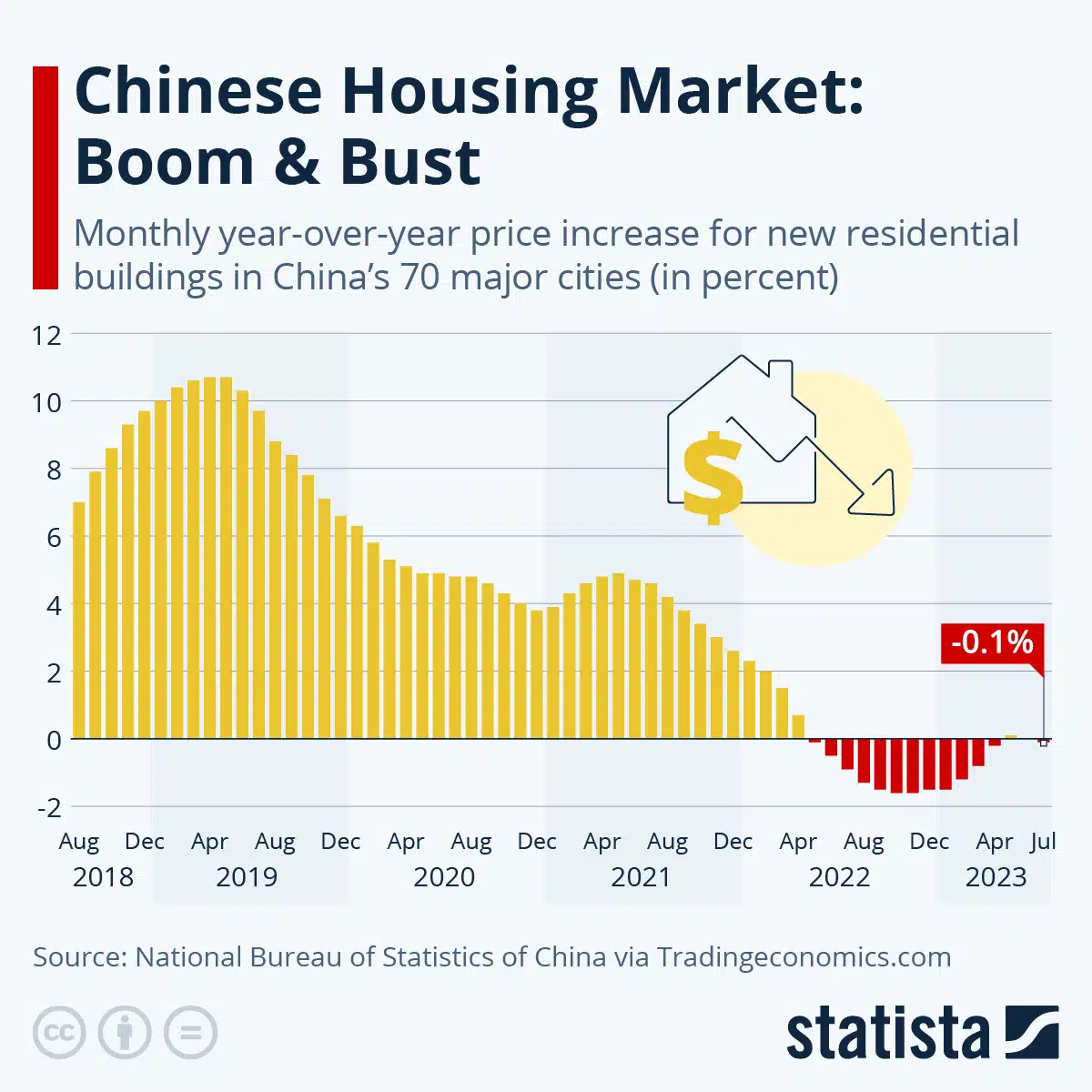
It's impossible for the supply to keep up for the demand for investment vessel. China has already built 3 times the number of the apartments that are needed to house the entire population and the demand still outpaces the supply.

nah, Chinese real estate bubble bursted, because demand collapsed (despite the prices kept low due to municipalities financing a large part of their budget through land sales, and banks were incentivized to issue a lot of mortgages, and that's how Credit Suisse run into a wall)

Re: Household size and the housing stock

#107
post #53
post #42

Earlier quoted context omitted.

The options are not limited to {"bespoke custom house", "one size for all"}. These ones from this builder vary from 80-320 square metres (~10 square feet per square meter): https://www.heinzvonheiden.de/hausfinder It would be hilarious if the famously choice-filled capitalist USA has a building industry limited to Cold War DDR "commie block" identikit construction.

In the US, price per square foot is an important metric for appraisal. If the appraiser puts too low a price on the house, the buyer can't get a loan. Therefore if you are building in the US to sell the house, then you will maximize the square feet to maximize the appraised value. In addition, it is relatively rare in the US for an individual owner to commission a custom house to be built. Particularly in the more po…

> In the US, price per square foot is an important metric for appraisal. If the appraiser puts too low a price on the house, the buyer can't get a loan. Therefore if you are building in the US to sell the house, then you will maximize the square feet to maximize the appraised value.

Something in that paragraph doesn't add up. 500 sqft/$500k property is $1k/sqft, a 750 sqft property needs to be valued at at least $750k to be the same price per unit area; bigger is not sufficient for more per unit area — my expectation would be that cost is sublinear with area for most residential units due to various fixed costs such as (an assumption on my part) utility connection fees and architecture fees.

Mid scale development, entire districts at a time, I'd expect that to be linear with regard to area (so the derivative, cost per square foot, is constant); Very large scale, an entire city at once, that I'd expect the derivative of cost with respect to area to increase as size increases, due to the expectation that infrastructure becomes a dominant cost.

Re: Household size and the housing stock

#108

The cause of the problem is that real estate is a good investment asset. The way to solve the problem is making it a bad investment asset. The best way to do it is to tax real estate progressively. The more you own, the higher percentage of its value you must pay every year. That taxation scheme would make investors drop millions of houses on the market like a hot potato. Prices would tank. This might cause issues wi…

A land value tax would be a more efficient way to fairly distribute the benefits of land.

Re: Household size and the housing stock

#109
post #89

Earlier quoted context omitted.

One consideration is that, from a legal rights and social inclusion perspective, places aren’t fungible. The market can’t make a culturally inhospitable place welcoming.

"One consideration is that, from a legal rights and social inclusion perspective, places aren’t fungible." You do understand that works both ways? If you reverse the areas you're thinking of, there are people who prefer the rights or social environment in the opposite direction. Shouldn't we be trying to bring similar opportunities to all social groups? If we want to look at how this turns out, take a look at Native…

Edit 3:

Originally I'd replied about population demographics and migration; @giantg2 has a good reply to that, which you can see below. In reviewing the conversation, I got mentally stuck on the comparisions to reservations, because I think it's a severely fucked up comparison. But saying that alone isn't a helpful or effective conversation, so -

> Shouldn't we be trying to bring similar opportunities to all social groups? If we want to look at how this turns out, take a look at Native American reservations.

In terms of "should we be trying to bring..." - yeah, more or less, yeah, we should. The issue, for me, comes first from trying to say that the social group that is a reservation is the same kind of social group that is a disappearing small town; second, that "bring[ing] similar opportunities" to both would look similar (ye olde equality/equity conversation), and lastly that a meaningful comparison of outcomes can be made between the polities, due to, you know, all the ethnic cleansing (Trail of Tears, etc). But, that's a a hard conversation to have, or to continue, and it's based off of me making a lot of assumptions about what comparison actually is trying to be made.

So, to be constructive about it:

> If we want to look at how this turns out, take a look at Native American reservations.

Can you walk me through this? What are you seeing as the outcome, and why do you think these polities are comparable?

Re: Household size and the housing stock

#110
post #106

Earlier quoted context omitted.

It's impossible for the supply to keep up for the demand for investment vessel. China has already built 3 times the number of the apartments that are needed to house the entire population and the demand still outpaces the supply.

nah, Chinese real estate bubble bursted, because demand collapsed (despite the prices kept low due to municipalities financing a large part of their budget through land sales, and banks were incentivized to issue a lot of mortgages, and that's how Credit Suisse run into a wall)

I'm not sure how the latest data looks but crash is a strong word.

https://www.business2community.com/wp-content/uploads/2023/1...

It seem like it barely stopped (paused?) growing. Which is reasonable given more widespread awareness that what's being built is of lower and lower quality. Which is also natural given that supply is provided to satisfy investors not honest residential demand.

Post reply on HN