Earlier quoted context omitted.
If you put a modern ICE car in neutral while moving, you’ll use as much gas as you would while sitting in a parking lot idling. However if you just coast in gear with the engine braking slowing you down, a modern car will turn off the fuel to the engine, so zero gas is used.
Then you trade greater pumping losses (reducing kinetic energy of the car) in exchange for lesser potential energy (gasoline) usage. It's not a free lunch.
Vehicle brakes produce charged particles that may harm public health: study
191–200 of 320 posts
Re: Vehicle brakes produce charged particles that may harm public health: study
#192This will come from all ground transportation sources, right? Busses, trains, trams, subways etc. Probably the heavier the vehicle the more particles are likely to be produced?
Re: Vehicle brakes produce charged particles that may harm public health: study
#193Electric vehicles are heavier, which means they must spend more brake pads to stop. But they also use regenerative breaking, which reduces pad wear. So I'm not sure if they make it worse or not.
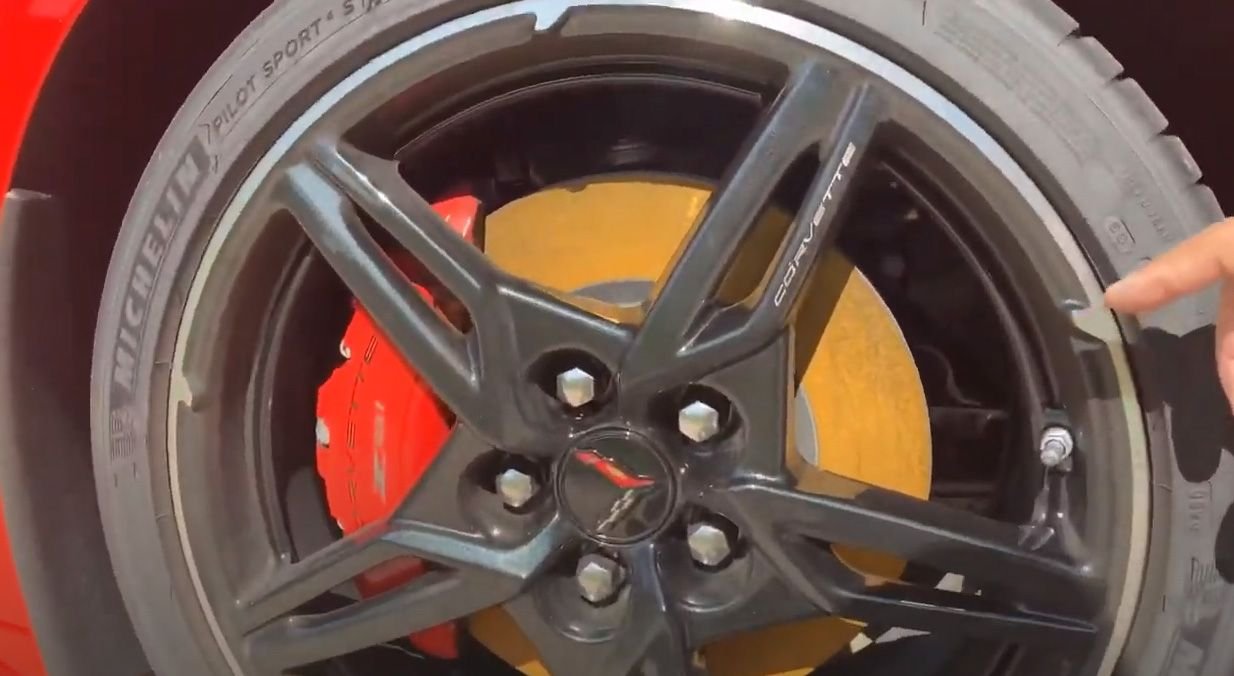
The danger with electric vehicles is actually that the break pad is in risk of rusting since you don't use it enough
e.g.: https://cimg0.ibsrv.net/gimg/www.corvetteforum.com-vbulletin...
Re: Vehicle brakes produce charged particles that may harm public health: study
#194Earlier quoted context omitted.
Yep. Pretty much any kind of wear and tear part that is on an EV wears worse compared to a similarly powerful ICE. It's probably a wash or better because they don't use petroleum products for propulsion, but it is definitely a thing that needs to be considered. EV's are not some kind of panacea.
Except brakes, since they are rarely used due to regenerative braking. Tires, on the other hand, do wear faster than a lighter ICE car. My EV has almost 30,000 miles now and will need tires soon, but other than washer fluid, it has had no other consumables or wear items replaced. Though to be fair, the tires on my previous ICE vehicle only lasted about 30,000 miles before they needed to be replaced, OEM car tires are…
https://www.fox5atlanta.com/news/atlanta-magnet-man-alex-ben...
That 20K set of tires had a slow leak from a nail that was patched incompletely. On the new set I had to replace two using the hazard insurance I purchased after three months and two thousand miles. I expect to use the insurance again.
I now have an EV with sport summer tires. They’re at 5K miles and have a screw embedded in one tire since about 400 miles. That tire was deemed to be safe and best left alone as it’s presumed to be running through a rubber block only. I’m just running it until it goes flat assuming it doesn’t manage to survive its whole expected life span.
Realistically I’ll end up running something else over this spring once construction gets into full swing.
Re: Vehicle brakes produce charged particles that may harm public health: study
#195We need to go back to horseback riding. It's inevitable.
https://www.pbs.org/video/new-york-horse-manure-crisis-ploay...
> New York City was a crowded mess: no one could figure out what to do with all the horse manure, urine, and rotting horse carcasses on the streets spreading disease. New York had over 100,000 horses producing over 2.5 million pounds of manure every day. Fossil fuel powered trains, electric streetcars and internal combustion vehicles were seen as the clean-energy alternative.
Re: Vehicle brakes produce charged particles that may harm public health: study
#196Earlier quoted context omitted.
And EVs make some problems worse, such as tire dust because they're heavier than an equivalent ICE car.
EVs also don't really use brakes. They mainly use regen braking. 50k miles and on the same pads.
Re: Vehicle brakes produce charged particles that may harm public health: study
#197Earlier quoted context omitted.
It's a shame this is used as an excuse to keep the heavy ICE SUVs and trucks. There are many EVs lighter than an average pickup truck. If people really cared about this, they'd demand train-based public transport instead (no tires! fully electric! self-driving too!), or at very least limits on car weight regardless of the engine.
Most drivers are virtue signalers. Until we have eco batteries or hydrogen buses and trains are the only real eco solution.
A mix of solutions will be needed to fix the variety of different and unique problems that exist.
Re: Vehicle brakes produce charged particles that may harm public health: study
#198Re: Vehicle brakes produce charged particles that may harm public health: study
#199The problem of "brake dust" on human health and air quality has been known for a long time ( https://phys.org/news/2020-01-air-pollution-effects-immune-c... ) before that there were also issues with asbestos in brakes, but thankfully those haven't been used since the 90s as far as I know. This is the first I'm hearing about electrically charged particles though. The bottom line is that proximity to traffic is horribl…
what about the NYC subway / PATH train? The air quality there is pretty bad -- the trains use standard brakes.
Re: Vehicle brakes produce charged particles that may harm public health: study
#200This will come from all ground transportation sources, right? Busses, trains, trams, subways etc. Probably the heavier the vehicle the more particles are likely to be produced?
From airplanes, you get the lead from their fuel