> all around we have junkies in the streets, squatters, shoplifters, car thieves, burglars operating with impunity.
This is the insane take. Maybe that's your personal bubble talking, but there are millions of people who go about their daily lives without seeing a single junkie in the street. America has always had "bad" neighborhoods filled with junkies/squatters/shoplifters/car thieves/burglars but they have not and do not operate with impunity. You can easily find examples of all of those things resulting in someone being arrested/convicted/shot by police.
Record numbers of Americans can't afford rent. Household debit is at all time highs as well. There are also historic numbers of Deaths of Despair. Is it any wonder that drug use, homelessness, squatting, and crimes like shoplifting/theft are rising? It doesn't excuse the behavior, but it does explain much of it. Give Americans zero help for mental illness, don't act surprised when you get a bunch of crazy people around you. Punish addicts instead of helping them? Enjoy your junkies I guess! Allow massive numbers of people to live in desperation and you can't act shocked when they act out of desperation.
"Tough-on-crime" laws will not fix those issues because they do nothing but making the underlying causes even worse. "Tough-on-crime" laws are exactly what have been failing us, and why people have started looking for alternatives.
> you are replying to a post about 12-13 year-olds stealing cars and carrying guns, ffs. this should involve at least several years in jail. maybe a 2nd chance at 18.
A 12 year does not benefit from a prison sentence. Do you honestly think that's going to keep them from committing crimes later on in life? We should expect children to do stupid things. Their undeveloped brains are wired for risk taking, and failing to see/consider the consequences of their actions. (https://www.aacap.org/AACAP/Families_and_Youth/Facts_for_Fam...). That doesn't mean they are incapable of making good choices, but it does make it much more likely (and natural) for them to fail to make good choices from time to time. Not all acts of teenage impulsivity will lead to stealing cars, but those 12-13 year olds mentioned would be far from the first kids to do it. Perhaps you could argue that it's the parents who should be punished for not raising their child properly or for failing to keep them away from guns, but I'm skeptical that it would prevent other families from having the same problems. Children need to be allowed to grow and learn from their mistakes. There need to be consequences for when they screw up, but is sending a child off to get tortured and raped for years the best solution you can come up with?
> mass-incarceration is not a "problem" to be solved
Hard disagree. There is plenty of research into the problems it causes and enables to continue. It's hugely wasteful and expensive. Not only do tough on crime laws and mass incarceration fail to prevent crime (see https://www.psychologytoday.com/us/blog/crime-and-punishment...), it actually makes things worse! It rips families apart. It hurts communities. It hurts the economy, It hurts the people who are abused in prisons. It prevents people from being contributing members of society. No good comes from mass incarceration.
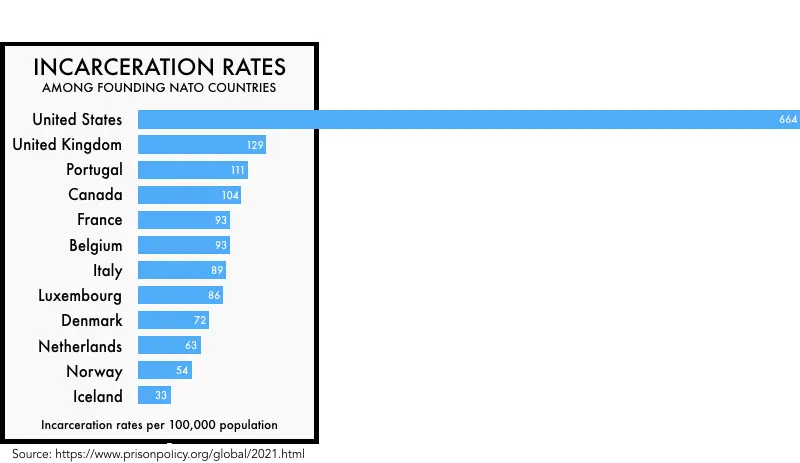
It's also not about how much crime there is. Look at this: https://static.prisonpolicy.org/images/NATO_US_2021.webp
Do you honestly think America has so much more crime than the rest of the planet? It's not as if our incarceration problem only got that bad recently either. It's been insane for a very very very long time.
"how much crime is happening" isn't really the issue anyway. It's "what crimes are committed, should they be crimes in the first place, and do we need people behind bars because of them".
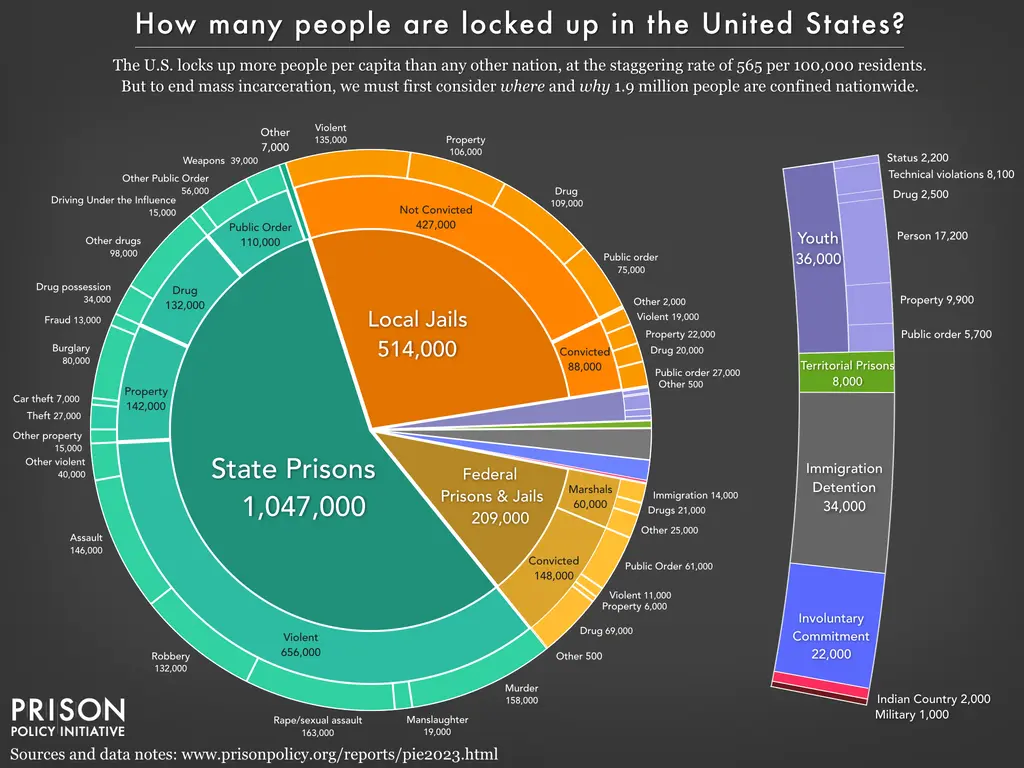
A massive percentage of the people who are locked up have never even been convicted of a crime (https://static.prisonpolicy.org/images/pie2023.webp) and many who have been are there for non-violent and drug related offenses, often with no victim at all!
> others will simply take massive advantage of it. the later need to be locked up, not for rehabilitation, but to prevent crime.
Everyone should be free to take advantage of compassion, but compassion doesn't mean that people can just get away with whatever they want either. I agree, that prison is no way to rehabilitate someone. That said, a night or two in jail can be a nice "time out"/wake up call. There will always be some people who need to be kept locked up to protect the rest of society. It should be a last resort though and those people shouldn't be subjected to torture or substandard conditions. They should be allowed to live a safe, healthy, good life - just one kept apart from the rest of the us and without their freedom.
> a great way to differentiate it is repeat offenders. there's basically no excuse for this.
You can't imagine why someone who gets out of jail, is suddenly saddled with massive debt, fees, and fines from the experience, but whose record means they cannot get a job or an apartment might turn to crime again? Why someone who has spent years being beaten, raped, tortured behind bars might come out of prison with problems that lead them to drugs and the problems that causes? Why people who are locked up for mental illness and released without treatment or the means to get treatment might reoffend?
Again, it doesn't justify the crimes, but it does help to explain them. If we don't give people who get out of prison a chance to get their life back together what else do we expect? Our current system makes it extremely unlikely for someone to have a normal decent life once they are out of prison. Especially if that person had very little money/support, or had mental illness or an addiction, or very little education (maybe they were only 12-13) when they went in. The vast majority of the people who enter the justice system have a mental illness/impairment, an addiction, or both. That has to be dealt with or it's just going to cause more issues. Many leave prison with mental problems due to the trauma of their experiences. That has to be dealt with.
This isn't an unsolvable problem. Other countries do so much better than we do, so we can draw from their examples. Suggesting that we should ignore all those examples and be even more draconian and oppressive is a very weird take.