Live data from Hacker News

Self-teaching, spaced repetition, and why books don't work

dwarkeshpatel.com

91–100 of 154 posts

Re: Self-teaching, spaced repetition, and why books don't work

#91
post #7

Earlier quoted context omitted.

Yes. This is the same for both math and programming. These skills take a lot of practice to develop. It’s like playing a musical instrument: you won’t learn how to do it if all you do is read the book. What’s strange to me is how people seem to resist this fact. Like it’s obvious to pretty much everyone that you need to practice an instrument to be able to play music on it. But for math and physics at least they seem…

Not everything is hard work. Some are smarter (or better equipped) than others. You can spend an eternity teaching me math and still won't be able to accomplish anything. It's almost like different people exist and they have different skill sets and interests.

Yeah I experienced this firsthand. My roommate in college was a physics genius. He would grok concepts without really studying very intensely— often after a single reading or lecture.

He would intuit solutions to problems based on extrapolating from the textbook. The undergraduate stuff all clicked right away for him.

Even when we scored the same on an exam, the difference in effort expended was dramatic
Re: Self-teaching, spaced repetition, and why books don't work

#92

Earlier quoted context omitted.

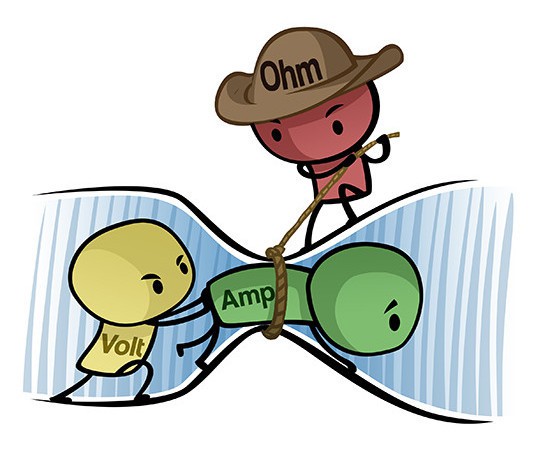
The ability to link image-metaphors/mnemonics to concepts is something that really should spread to other (non-medical) domains. An example of a picture mnemonic for others: https://dornsife.usc.edu/news/wp-content/uploads/sites/7/202... Article: https://dornsife.usc.edu/news/stories/usc-dornsife-alumnus-r... If you're comfortable saying, did your startup/acquirer have any interest in developing products for other do…

I'm not the one you're asking, but I surprised you don't think that mnemonic isn't used in other domains. It typically doesn't look like a fully fleshed out pizza shop, but I distinctly remember explaining an cell scaffold that I had synthesized like a bowl of spaghetti and meatballs to some of the undergraduates I was mentoring.. I never felt that other domains didn't address the natural inclination to use abstracti…

To be clearer, I'm talking about explicit integrative pictures like the one I linked. I know simple ones like this exist

https://www.build-electronic-circuits.com/wp-content/uploads...

but I'm _surprised_ that complex metaphorical images like the one in the parent haven't spread to other domains. As you said, we often make verbal metaphors when teaching, but explicit visual metaphors are _relatively_ rare. I'm talking about literal political cartoon as mnemonic device. How often do you see visual metaphors in textbooks? They're usually more interested in correctness.

Perhaps AI will make generating these images easier, if the difficulty in creating the graphics was the sticking point. Or maybe the problem is in sharing them, which is a problem that I'm working on.

Re: Self-teaching, spaced repetition, and why books don't work

#93
post #7

Earlier quoted context omitted.

Yes. This is the same for both math and programming. These skills take a lot of practice to develop. It’s like playing a musical instrument: you won’t learn how to do it if all you do is read the book. What’s strange to me is how people seem to resist this fact. Like it’s obvious to pretty much everyone that you need to practice an instrument to be able to play music on it. But for math and physics at least they seem…

The feedback is a lot faster when playing an instrument, you hear if it sounds good or not. The reward is built-in. This is a bit harder for maths/physics once you're past the trivial stuff and most people don't find it rewarding to solve physics/maths problems.

[deleted]

Re: Self-teaching, spaced repetition, and why books don't work

#94
post #7

Earlier quoted context omitted.

Yes. This is the same for both math and programming. These skills take a lot of practice to develop. It’s like playing a musical instrument: you won’t learn how to do it if all you do is read the book. What’s strange to me is how people seem to resist this fact. Like it’s obvious to pretty much everyone that you need to practice an instrument to be able to play music on it. But for math and physics at least they seem…

The feedback is a lot faster when playing an instrument, you hear if it sounds good or not. The reward is built-in. This is a bit harder for maths/physics once you're past the trivial stuff and most people don't find it rewarding to solve physics/maths problems.

> most people don't find it rewarding to solve physics/maths problems.

Maybe that's the difference between people who are good at it and people who aren't. I found solving math problems (the ones you get in a practice course at a university) hugely rewarding. Finally figuring it out was so satisfying.

Coincidentally, my endeavors playing an instrument were never particularly fruitful.

Re: Self-teaching, spaced repetition, and why books don't work

#95

I've used spaced repetition to memorize nearly 5,000 words over the last 15 years, but I struggle to apply spaced repetition outside of key/value pair memorization. It seems that SRS is best used for "know what" rather than "know how". I am curious if anyone has applied spaced repetition to memorization of things other than terminology and how they did it.

I was in this boat until I read Andy’s article on how to write good prompts, which I’d highly recommend: https://andymatuschak.org/prompts/

Re: Self-teaching, spaced repetition, and why books don't work

#96
post #90
post #81

Earlier quoted context omitted.

You're wrong. [video] is only an (unnecessary) warning for people who don't like videos. If most of the page is text there is no reason at all to "warn" anyone.

The HN guidelines don't say anything about transcripts: "If you submit a video or pdf, please warn us by appending [video] or [pdf] to the title." https://news.ycombinator.com/newsguidelines.html

It's not a video!

Re: Self-teaching, spaced repetition, and why books don't work

#97

The real problem is teaching children that "reading" is merely decoding words off a page, and "listening" is merely hearing the words someone says. The book itself is a way to open the door to learning, not the end point. Reading subject titles first, cross-referencing, and working examples and doing projects help teach and cement ideas. There's techniques like SQ4R [1] for reading, and hugely applicable to general t…

Your first link is interesting. Looks like an expanded "see one do one teach one".

Everything revolves around a "cementing" stage, doesn't it. Practice makes perfect.

Re: Self-teaching, spaced repetition, and why books don't work

#98
post #11

Earlier quoted context omitted.

Why would you need to learn birthdays (except maybe closest family)? It's maybe the canonical thing to put into a calendar. "Because I want to" is obviously fine, but it still reminds me of the infamous "capitals of the world" flashcards that spaced repetition practitioners warn against.

It wasn't until I discovered Anki a few years ago that I finally was able to remember my parents' and sisters' birthdays (despite calendar reminders every year). Why remember something that can be looked up? Latency; it's super useful to have things appear in your brain so you can immediately do something useful with them instead of slowing down and looking something up and potentially losing context.

So, Anki did help me learn a few of them, while a few would just never stick for some reason. Amusingly, the few birthdays I did learn didn't really help me because even though I knew the birthdays, they wouldn't come to mind until days or weeks after the birthday passed!

So what I'd actually need is "what are all the birthdays that occur this month", and then have a ritual habit installed that at the first day of the month I would spend a few minutes pondering this list in my mind.

(Again, the birthday wall calendar would probably work better here...)

Re: Self-teaching, spaced repetition, and why books don't work

#99
post #11
post #6

Earlier quoted context omitted.

I had the opposite experience. If something's easy to remember, I don't need Anki. If something's hard to remember (I really struggle with birthdays, for example), even Anki doesn't help! The cards all end up as "leech" and Anki stops showing them to me. (I found this behaviour amusing, since the whole point of using Anki is to help me learn things that are difficult to remember!) They say if a card is ending up as a…

Why would you need to learn birthdays (except maybe closest family)? It's maybe the canonical thing to put into a calendar. "Because I want to" is obviously fine, but it still reminds me of the infamous "capitals of the world" flashcards that spaced repetition practitioners warn against.

For me specifically the motivation was that my mother, who is naturally very good with dates and birthdays, would keep telling me "It's your {uncle, grandma, cousin}'s birthday, don't forget!" and I would think to myself, "what kind of bad person am I, that I don't even know my own family's birthdays?"

Similarly, I struggle with understanding/remembering the structure of my family tree, at least for the family members that I never met (I am often told stories about ancestors, and am shamed for my inability/unwillingness to naturally and automatically memorize them). So I broke the family tree up into individual relations and made Anki cards of them.

That worked a little better than the birthdays, but still a struggle, because it is "meaningless information" as far as my own brain is concerned. I might consciously think it's important to have knowledge of your ancestry, but my neurology apparently disagrees... Alas!

Re: Self-teaching, spaced repetition, and why books don't work

#100
post #6

Earlier quoted context omitted.

I had the opposite experience. If something's easy to remember, I don't need Anki. If something's hard to remember (I really struggle with birthdays, for example), even Anki doesn't help! The cards all end up as "leech" and Anki stops showing them to me. (I found this behaviour amusing, since the whole point of using Anki is to help me learn things that are difficult to remember!) They say if a card is ending up as a…

A calendar in your toilet? Go digital and use your phone's built-in calendar.

The difference here is important. I see the birthday calendar (well, my Dutch housemate's one) every time I sit down on the toilet. As for non-wall calendars (both digital and physical), stuff goes into them but it never comes out!

(Though the digital one does become useful due to the automatic reminders.)

Post reply on HN