This author complains too much. People want to eat cheese in France because it beats eating Doritos in a tiny apartment.
The Cruel Fantasies of Well-Fed People
11–20 of 138 posts
Re: The Cruel Fantasies of Well-Fed People
#12"falling hunger during a time of rising population" I find it astonishing that Monbiot manages to mention China's famines in the 1950s and 1960s, but somehow fails to mention that most of the progress in the fight against hunger since the 1970s was made here: If you exclude China from the numbers, "falling hunger during a time of rising population" didn't really happen. Old story: China bad.
China was plagued by famine for centuries, including one in 1906 larger than the one a decade after the PRC was established. China's victory over malnutrition was won over the past 60 years, but none of this is convenient to his narrative.
Re: The Cruel Fantasies of Well-Fed People
#13I resonate with the article for several reasons: - I lived in rural Romania through the 80s when Ceaușescu decided to basically return to war time rationalization of food. - My father was an agricultural engineer on a state farm, a specialty almost forgotten today yet of utmost importance in the 50s-60s when he graduated university and got the job. People today scorn at the idea of state farms but my father comes fro…
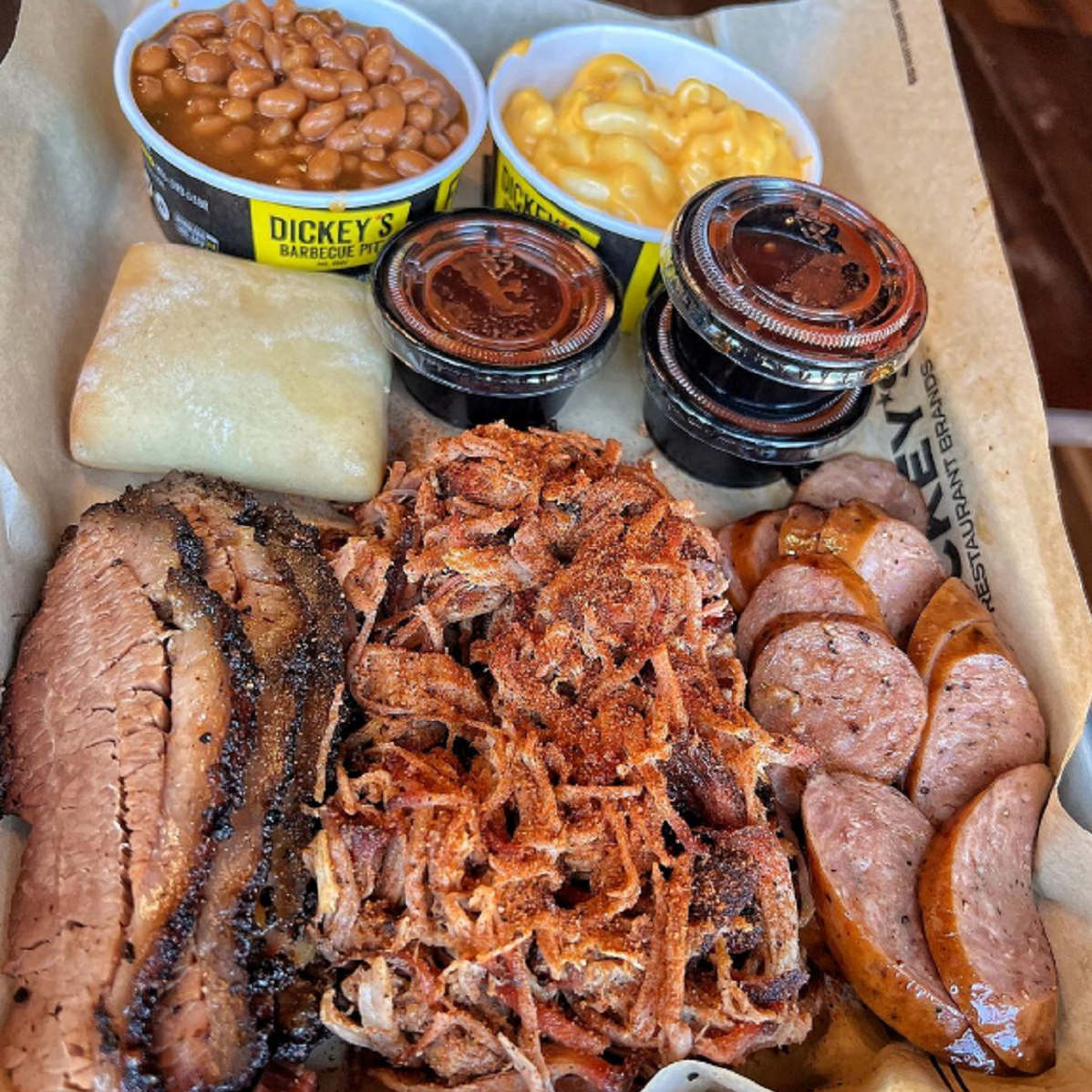
>There was no lack of protein but it wasn't the obscene frenzy I see in American movies (probably fake?): all beef chops meat and basically no bread or carbs or vegetables at all.
It's not an every meal kind of thing, but it's a real thing. Especially if you go to a restaurant that specializes in barbecue. Here's a typical meal from Dickey's, the first chain barbeque restaurant I could think of:
https://whatnowphilly.com/wp-content/uploads/sites/14/2022/0...
Re: The Cruel Fantasies of Well-Fed People
#14I resonate with the article for several reasons: - I lived in rural Romania through the 80s when Ceaușescu decided to basically return to war time rationalization of food. - My father was an agricultural engineer on a state farm, a specialty almost forgotten today yet of utmost importance in the 50s-60s when he graduated university and got the job. People today scorn at the idea of state farms but my father comes fro…
> People today scorn at the idea of state farms but my father comes from a family of rather wealthy peasants from before collectivization and always told me that productivity was shit before modern cultivation methods, mechanization, chemical fertilizers, pesticides and herbicides were used.
“Modern cultivation methods, mechanization, chemical fertilizers, pesticides and herbicides” don’t require the use of state farms. Evidence: farms in other rich countries of the time such as Western Germany and the USA.
Re: The Cruel Fantasies of Well-Fed People
#15The main thesis of the article is that famine due to crop failure (as opposed to famine due to war) has largely been eliminated by two modern technologies: industrial agricultural methods (synthetic fertilizer, pesticides, herbicides, equipment) and global trade (air and ship transport managed by markets).
This generally appears true - some time ago I tried to discover if total land area under agricultural production had increased since before the Norman Borlaug era and the answer seems to be no - as the author notes, per-acre productivity improvement accounts for the increase in food production.
The opposing argument is that this approach is not sustainable in the long run due to soil degradation and agricultural pollution of waterways, high energy costs of the industrial approach, dependence on fossil fuels (and threats of flood and drought related to global warming), and that eventually the system will crash leading to a new round of famines.
For the techno-optimists (e.g. myself) there is a way out - flip the industrial agriculture system off fossil fuels and onto renewable energy, i.e. electric equipment powered by sunlight and wind, and optimize use of inputs (fertilizer etc.) via adoption of machine learning and robotics (i.e each growing plant gets individual attention with this model). Of course this only works if we also stabilize the global human population and eliminate fossil fuels from the energy mix to avoid increasing drought/flood risk. Moving to a diet of no more than 5% or so animal products also makes sense as that means more primary production (direct photosynthesis) goes to humans instead of livestock, thereby reducing the pressure on agricultural land.
As Monbiot implies, anyone claiming a return to pre-industrial subsistence agriculture is a good idea is either a shameless marketer or a lunatic who has never tried to grow their own food.
Re: The Cruel Fantasies of Well-Fed People
#16[flagged]
Oh come on. We can criticize the article on a number of levels but it’s well-written (not well-researched) and clearly human.
Re: The Cruel Fantasies of Well-Fed People
#17Starts out so wrong. I live in Spain, traditionally good food still a staple. Most of the world I have visited is like that too.
OK USA has screwed it's food chain, but that does not apply outside. People generally value traditions, and specifically food traditions, highly. It's a long way from financially difficult to keep these alive. People just have to decide they want to and spend time, not money. People round here do that.
N.B. Traditional food does not come from a shop, you make it yourself. Thus, it cannot be gentrified away. Growing your own local specialities is usually easy where it is traditional.
If you can't imagine obtaining anything without going to the free market and haggling, your limited options are your own doing. That's not gentrification.
Re: The Cruel Fantasies of Well-Fed People
#18I resonate with the article for several reasons: - I lived in rural Romania through the 80s when Ceaușescu decided to basically return to war time rationalization of food. - My father was an agricultural engineer on a state farm, a specialty almost forgotten today yet of utmost importance in the 50s-60s when he graduated university and got the job. People today scorn at the idea of state farms but my father comes fro…
Good post. Thanks.
Re: The Cruel Fantasies of Well-Fed People
#19[dead]
Re: The Cruel Fantasies of Well-Fed People
#20The headline is misleading, but the sudden trendiness of a previously-unknown food is pretty devastating to everyone but the few who manage to cash in on the trend.
Witness: Korean food. I love it as much as anyone and have a container of gochujang in the fridge, but I read once about some poor Korean who, when told that Westerners were suddenly very interested in their culture, just said, "Why?"