Earlier quoted context omitted.
At this point the massive investment in software is what drives this, hardware differences may no longer be dominant but the only way to unseat NV at this point is drop in replacements and/or drop in replacement libraries. And that's getting there. Which is good because GPUs are too expensive and have too little memory, some competition might help move things along rather than to give NV more time to milk their preci…
I really wish the ML researchers would have stayed with Vulkan or OpenCL instead of standardising on CUDA. Everyone must have known how it would end.
What every developer should know about GPU computing
131–140 of 186 posts
Re: What every developer should know about GPU computing
#132Earlier quoted context omitted.
"Going through a formal CS program will give you an intimate understanding of CPUs and 101 other hilarious jokes you can tell yourself!"
Depends on the university! In my school to pass the computer architecture course you had to read and present a recent paper on CPU design.
Re: What every developer should know about GPU computing
#133Looking at this quote:
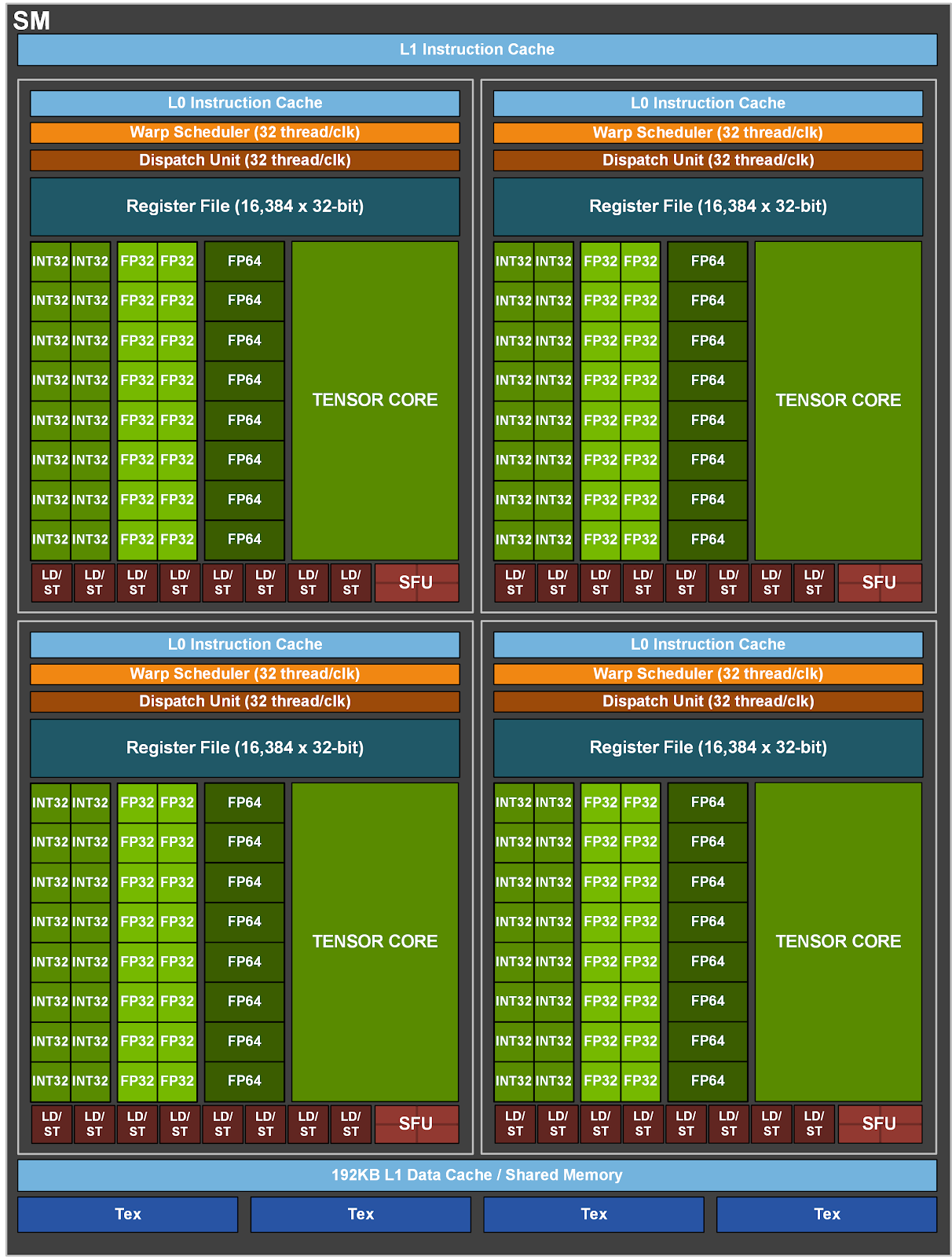
> the Nvidia H100 GPU has 132 SMs with 64 cores per SM, totalling a whopping 8448 cores.
8448 cores sure sounds impressive. But the Apple M2 Ultra only has 76 cores?!
How can the NVidia H100 GPU have over 110x more cores? Clearly it doesn’t have 110x more performance over the M2 Ultra, so what is going on here?
Re: What every developer should know about GPU computing
#134Earlier quoted context omitted.
I really wish the ML researchers would have stayed with Vulkan or OpenCL instead of standardising on CUDA. Everyone must have known how it would end.
Those ml researchers wanted to get hired…
Re: What every developer should know about GPU computing
#135>Most programmers have an intimate understanding of CPUs maybe this article is brilliant, but when the first line is something so blatantly untrue it really makes it hard to take the rest seriously
Definitely not true about most programmers, but maybe the author meant CS educated engineers. Going through a formal CS program will give you an intimate understanding of CPUs, especially when compared to the very light coverage of GPUs.
Please tell me you forgot the /s.
I have a PhD in computer engineering from a top-20 school in US. Took a bunch of grad level classes, passed the quals (my specialty was ML accelerators).
I do NOT have an “intimate understanding of CPUs”. I probably know a little bit more about CPUs than an average programmer. Which is very little.
Modern CPUs are extremely complex. Almost as much of impenetrable black boxes as modern neural networks.
Re: What every developer should know about GPU computing
#136One thing I don’t understand is how the architecture of Apple Silicon is different from NVidia’s. Looking at this quote: > the Nvidia H100 GPU has 132 SMs with 64 cores per SM, totalling a whopping 8448 cores. 8448 cores sure sounds impressive. But the Apple M2 Ultra only has 76 cores?! How can the NVidia H100 GPU have over 110x more cores? Clearly it doesn’t have 110x more performance over the M2 Ultra, so what is g…
See this diagram from an nvidia blog post: https://developer-blogs.nvidia.com/wp-content/uploads/2021/g...
( https://developer.nvidia.com/blog/nvidia-ampere-architecture... )
Re: What every developer should know about GPU computing
#137Imagine with NVIDIA banned in china, how well the Chinese local companies will do in GPU's for AI: https://x.com/BeijingDai/status/1715861773495279743?s=20
Re: What every developer should know about GPU computing
#138>Most programmers have an intimate understanding of CPUs maybe this article is brilliant, but when the first line is something so blatantly untrue it really makes it hard to take the rest seriously
Definitely not true about most programmers, but maybe the author meant CS educated engineers. Going through a formal CS program will give you an intimate understanding of CPUs, especially when compared to the very light coverage of GPUs.
I think the descriptor “intimate” is overstating the case if you don’t know how to optimize code on different implementations of the same ISA. Most formal CS programs give you a generic understanding of CPUs, more like a survey course, not enough information to do serious optimization.
Re: What every developer should know about GPU computing
#139One thing I don’t understand is how the architecture of Apple Silicon is different from NVidia’s. Looking at this quote: > the Nvidia H100 GPU has 132 SMs with 64 cores per SM, totalling a whopping 8448 cores. 8448 cores sure sounds impressive. But the Apple M2 Ultra only has 76 cores?! How can the NVidia H100 GPU have over 110x more cores? Clearly it doesn’t have 110x more performance over the M2 Ultra, so what is g…
Yes, their architecture is different from many in that they support a separate program counter per lane (which is why they feel justified in calling this a “thread”), but ultimately it’s the rate and throughput of ALUs that matter.
Re: What every developer should know about GPU computing
#140I wish it was easier to program a GPU... I've already refrained myself to learn vulkan because it scares me, but similarly, opengl and cuda are a bit mysterious to me, and I don't really know how I could take advantage of it, since most computing tasks cannot be made parallel. I've read there are data structures that are somehow able to take advantage of a GPU as an alternative to the CPU (for example a database runn…
Writing and launching raw cuda kernels is too low level for me, but writing with Thrust makes it feel pretty similar to writing regular C++ code. You still need to deal with moving data from host to device and back, but that's as simple as assigning a `thrust::device_vector` to a `thrust::host_vector`