Responding to a variety of questions made over the years about this: This is a constant intended to be displayed after localizing the constant . Its localized value will primarily be displayed to users whose preferred languages have a short word describing the relationship. But it ALSO needs at least some comprehensible localization in EVERY language, because I can send you a vcard for myself labeling this specific t…
are there multiple languages that have this exact relationship concept? because if it’s in a single language or family of languages, the idea that it can be translates into something generic seems questionable
LabelContactRelationYoungerCousinMothersSiblingsDaughterOrFathersSistersDaughter
121–130 of 276 posts
Re: LabelContactRelationYoungerCousinMothersSiblingsDaughterOrFathersSistersDaughter
#122Responding to a variety of questions made over the years about this: This is a constant intended to be displayed after localizing the constant . Its localized value will primarily be displayed to users whose preferred languages have a short word describing the relationship. But it ALSO needs at least some comprehensible localization in EVERY language, because I can send you a vcard for myself labeling this specific t…
are there multiple languages that have this exact relationship concept? because if it’s in a single language or family of languages, the idea that it can be translates into something generic seems questionable
Re: LabelContactRelationYoungerCousinMothersSiblingsDaughterOrFathersSistersDaughter
#123Re: LabelContactRelationYoungerCousinMothersSiblingsDaughterOrFathersSistersDaughter
#124If you are a native English speaker and are surprised a relationship label might translate with difficulty into another language/culture, consider: Brother-in-law It’s my sibling’s husband, OR my spouse’s brother. In many non-English-speaking cultures, that juxtaposition appears bizarre.
I would be surprised to learn if most people regardless of language wouldn’t recognize the similarity of those two relationships.
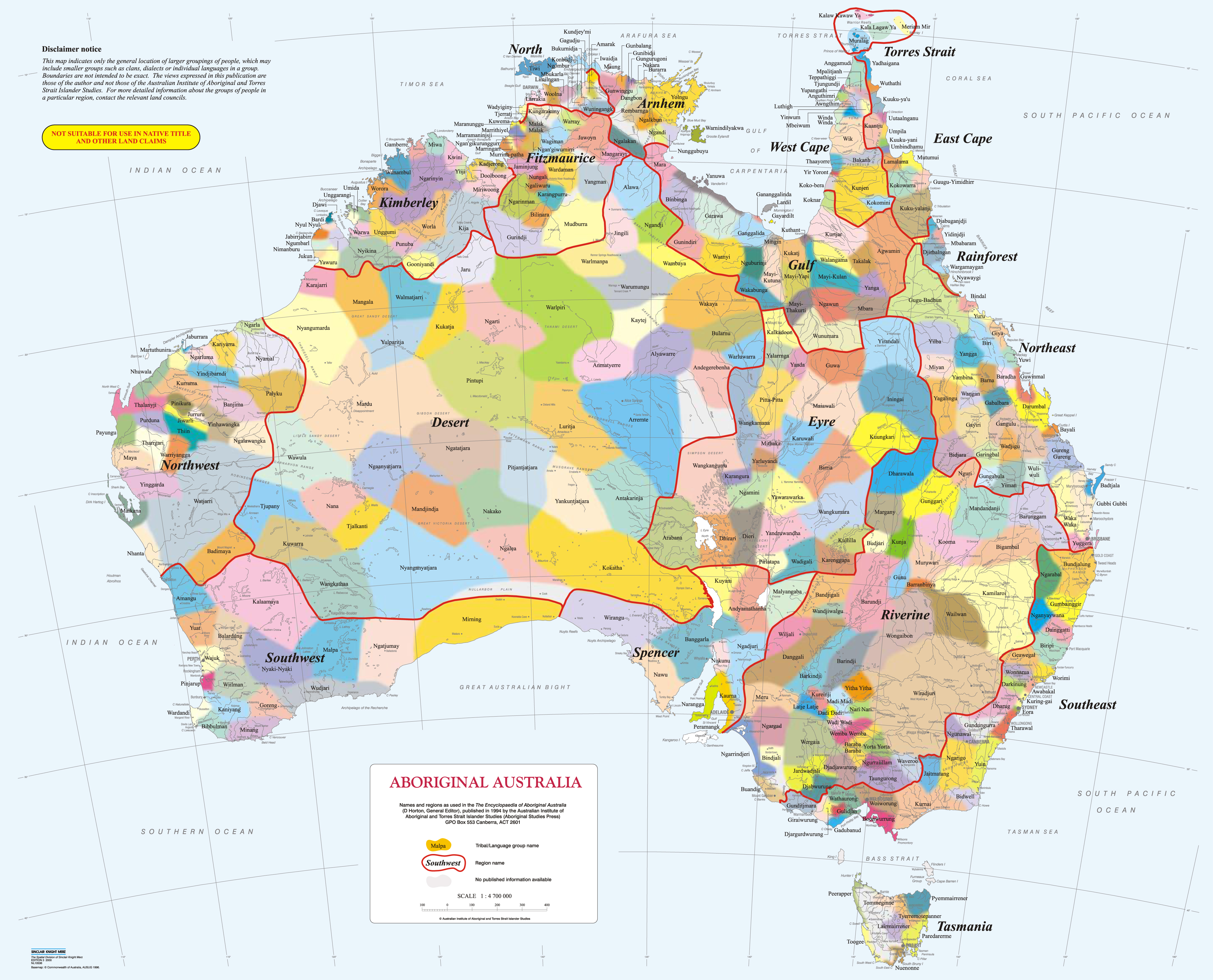
( This was once way more complicated in stricter days as both Matrilineal and Patrilineal moieties were intertwined across adjacent territorries - leading to a complex system of exogamous out rotation .. the wikipedia pages fail to fully capture a complete picture with all local variations [3] )
[1] https://mgnsw.org.au/wp-content/uploads/2019/01/map_col_high...
[2] https://en.wikipedia.org/wiki/Australian_Aboriginal_kinship
[3] https://en.wikipedia.org/wiki/Noongar_kin_systems
You're correct that most people in Western society see those relationships as similar - I have no idea if that remains true once you start including Indian, south east asian, and other people across the globe.
Re: LabelContactRelationYoungerCousinMothersSiblingsDaughterOrFathersSistersDaughter
#125Why though? Where does this actually get used? This seems to represent two different relationships. The mother’s sibling could be a brother. For the father a sister is specified. What about the father’s brother’s younger daughter? The description says younger daughter in both cases but the name doesn’t specify. So what’s the class for the older daughter of the mother’s sibling or the father’s sister? And if age is re…
In US, separating out "younger sister" is weird, they probably should collapse the list. But in others like Chinese, some of the collapsed relationships have different words.
Re: LabelContactRelationYoungerCousinMothersSiblingsDaughterOrFathersSistersDaughter
#126Earlier quoted context omitted.
"First cousin where at least one of the sibling parents is female" is easy enough to recognize too, I just wonder why you'd do it that way. Why group together "mother's brother", "mother's sister", and "father's sister", but keep it separate from "father's brother"? And then specifying "younger" and the gender of the cousin is straightforward enough.
In Chinese there is a distinction between cousins whose parents are brothers (堂 tang) and cousins whose parents aren’t brothers (表 biao). There is also a distinction between older and younger siblings, and then also gender. What seems awkward in English is the very simple and concise 表妹 (biao mei) in Chinese.
We had a terribly hard time explaining the idea of "cousin." Once we did, she explained that she was unfamiliar with the concept because her family (and apparently all the families she knew well) had only had single children for generations.
I assumed there had to have been a word for it at some point, and that people were probably using it somewhere, but she seemed quite sincere in telling us she knew no such word.
Re: LabelContactRelationYoungerCousinMothersSiblingsDaughterOrFathersSistersDaughter
#127Earlier quoted context omitted.
That is interesting. In many English speaking cultures children will informally refear to their mother's parents and father's parents by different names even if formally they are both "grandmother", "grandfather" or "grandparent". I like that in China they formalised the names.
Scandinavian languages have the same. »Mormor« (lit. mum mum) means maternal grandmother, while »farmor« (lit. dad mum) means paternal grandmother. Unfortunately, it doesn't appear to continue beyond that (so no »mormormor«).
But where English just has "great great grandmother", In Swedish you can specify exactly which one of the eight people you mean, was it your "mormors farmor" or your "farmors mormor" perhaps? Or I could say something like my "farfars farfars mormors mormors morfars morfars farfar" was a Walloon immigrant to Sweden in the early 1600's, unlike my "farfars farfars farfars farfars farfars far" who was a German immigrant to Sweden in the late 1600's.
However, in practice, it's very rare for people three generations back or more to be alive, so most people only have one or two of these, if any at all, and people usually prepend "gammel-" (lit. "old") in front. So if you have a "gammelfarmor", that's either your father's father's mother, or your father's mother's mother, or your mother's father's mother for example.
Re: LabelContactRelationYoungerCousinMothersSiblingsDaughterOrFathersSistersDaughter
#128Earlier quoted context omitted.
Not an issue: You already have two grandfathers and two grandmothers, how do you call them?
While I called my grandmothers by different names, I called both my grandfathers the same name. They were never in the same room together, so it was never an issue.
Re: LabelContactRelationYoungerCousinMothersSiblingsDaughterOrFathersSistersDaughter
#129Of possible interest to HNers, kinship terminology of different cultures is a subject that has a very elegant taxonomy. It was a major line of inquiry in early modern sociology, which tried to link other attributes of how societies were structured to how they named relations. https://en.wikipedia.org/wiki/Kinship_terminology
In the distant past, when you met someone new, they asked who you are in relation to your tribe and family.
Now, they ask what you do for the economy as an economic unit.
It’s fun to rebel against the current culture by asking someone who they are instead of what they do.
Re: LabelContactRelationYoungerCousinMothersSiblingsDaughterOrFathersSistersDaughter
#130Earlier quoted context omitted.
Related question (not really!) - two dads or moms - who should be called what?
I don't think it would be good to have a deterministic way to decide who gets to be called what in that case. The world would be a better place if we didn't make a distinction between mother and father, though obviously that's baked into almost all cultures and fully removing that would cause more problems than it would solve. Given that we don't have preexisting momentum to make a distinction between two parents of…