Live data from Hacker News

SEC charges Impact Theory for unregistered offering of NFTs

sec.gov

151–160 of 257 posts

Re: SEC charges Impact Theory for unregistered offering of NFTs

#151

NFTs were supposed to be an end-run around the Howey Test. ICOs were clearly securities offerings, and the SEC shut down most of those. NFTs were specifically designed to evade that test, by claiming they were really "digital artworks". This one, though, was clearly marketed as Make Money Fast. The Securities Act of 1934 has a "duck test" definition of security - if it is marketed, bought, sold, and held as a money-m…

> if it is marketed, bought, sold, and held as a money-making thing, it's a security

No, sorry, no such legal language exists and how absurd of a law would that be. Anything which goes up and down in value could be bought or sold as "a money making thing" including collectible video games, books, Pokemon cards, .com domain names, pork bellies, houses, bar codes, imported goods, rare sneakers, wholesale products, golf club memberships, Picasso paintings, etc.

There is a Supreme Court precedent called the Howey test which specifies 4 criteria for which all 4 must be true in order for something to be a security. You cannot have 3 of 4 and be considered to be a security:

1. An investment of money

2. In a common enterprise

3. With the expectation of profit

4. To be derived from the efforts of others

Notably, speculative flipping of owned assets is not considered to profit derived from a common enterprise. Speculative flipping happens everywhere in all supply chains you participate in on a daily basis. Everyone is attempting to buy low in an attempt to sell high. Everyone loves to compare crypto to the tulip mania in the Netherlands from the 17th century. While that is true in some cases, you certainly can't make the case that tulips should be regulated by the SEC.
Re: SEC charges Impact Theory for unregistered offering of NFTs

#152
post #43
post #39

Earlier quoted context omitted.

That seems materially different from an expectation that you will make money on the card, or that the value of your card is determined by MLB's profitability and future earnings.

MLB cannot promote baseball if MLB is unprofitable and enters bankruptcy. It’s clearly connected.

That's still not a security, because if someone buys all the baseball cards, they don't control anything about MLB or have a right to its profits, for example.

Re: SEC charges Impact Theory for unregistered offering of NFTs

#153
post #64

Earlier quoted context omitted.

I don’t have a horse in this race and I’m not a gamer (although I used to be) and I also find it strange that gamers don’t prefer NFTs over the standard skins/cosmetics market. I can totally understand why developers and publishers prefer to keep digital assets in their own databases, but from a users perspective having it on a public blockchain seems like exactly the same product but better in terms of more options?…

> from a users perspective having it on a public blockchain seems like exactly the same product but better in terms of more options What options? What advantages are there? Better for who, the scammers pulling the rug? Keep in mind, the oft-repeated promise of being able to move assets from one game to another is a bald faced lie, and that's pretty obvious to developers and even players, just not crypto bros and NFT…

> Just not crypto bros and NFT shills who have never developed or played games, apparently.

“It is difficult to get a man to understand something, when his salary depends on his not understanding it.”

Re: SEC charges Impact Theory for unregistered offering of NFTs

#154

NFTs were supposed to be an end-run around the Howey Test. ICOs were clearly securities offerings, and the SEC shut down most of those. NFTs were specifically designed to evade that test, by claiming they were really "digital artworks". This one, though, was clearly marketed as Make Money Fast. The Securities Act of 1934 has a "duck test" definition of security - if it is marketed, bought, sold, and held as a money-m…

> This one, though, was clearly marketed as Make Money Fast. How about BAYC? All the a16z investments in crypto? Will the hammer fall for these, too?

The wheels of justice turn slowly but grind exceedingly fine

Re: SEC charges Impact Theory for unregistered offering of NFTs

#155
post #54

Earlier quoted context omitted.

Unfortunately the defendant settled, instead of fighting in court like they should have.

Its also worth nothing that the SEC is losing in court, losing the support of Congress and losing the support of the White House specifically as more people, including judges, notice this lack of distinction and the SEC’s unwillingness (and inability) to describe why there is a distinction there is either a way to issue crypto collections and collect money for them without being a security, or all other collections s…

You seem to be very keen on making this rather dubious point all over this thread. Certainly more motivated than I would consider “normal” for someone just wishing to weigh in on a topic they care about. Are you connected with this, or just having a particularly manic day?

Re: SEC charges Impact Theory for unregistered offering of NFTs

#156

NFTs were supposed to be an end-run around the Howey Test. ICOs were clearly securities offerings, and the SEC shut down most of those. NFTs were specifically designed to evade that test, by claiming they were really "digital artworks". This one, though, was clearly marketed as Make Money Fast. The Securities Act of 1934 has a "duck test" definition of security - if it is marketed, bought, sold, and held as a money-m…

> if it is marketed, bought, sold, and held as a money-making thing, it's a security No, sorry, no such legal language exists and how absurd of a law would that be. Anything which goes up and down in value could be bought or sold as "a money making thing" including collectible video games, books, Pokemon cards, .com domain names, pork bellies, houses, bar codes, imported goods, rare sneakers, wholesale products, golf…

That seems to reinforce the grandparents characterization of this as an evasion of the Howey test, not refute it. You really think the technical distinction of a unique number defeats the idea of "common enterprise"? Doesn't the fact that all the initial profit goes to one enterprise clearly make it "common"? Conversely, aren't traded shares of common stocks on NYSE merely "speculative flipping" unless they're specifically paying dividends?

Meh. I mean, fine, you can make that argument but I don't think this is nearly as clear as you think it is. From my perspective: I mean, duh. Of course these are securities. "Give us money for this thing and you'll get more money later" isn't a hard idea to understand as the spirit behind securities regulation.

Re: SEC charges Impact Theory for unregistered offering of NFTs

#157
post #25

Earlier quoted context omitted.

From what I'm reading here, the company misled "investors" by attaching the NFT to ownership in the company, which would be considered a security. "The order finds that Impact Theory encouraged potential investors to view the purchase of a Founder’s Key as an investment into the business, stating that investors would profit from their purchases if Impact Theory was successful in its efforts." When I purchase a baseba…

With baseball cards, You have an expectation that the MLB will continue to promote and develop Baseball as a top sport. You purchased an illegal security.

Baseball cards aren’t owned by the MLB. That would be a weird expectation like buying Oakland raiders hat and expecting the hat manufacture to stop the raiders from moving to Las Vegas because it would devalue the apparel.

People buy baseball cards to collect them. I have a bunch from my childhood. They weren’t investments.

Re: SEC charges Impact Theory for unregistered offering of NFTs

#158
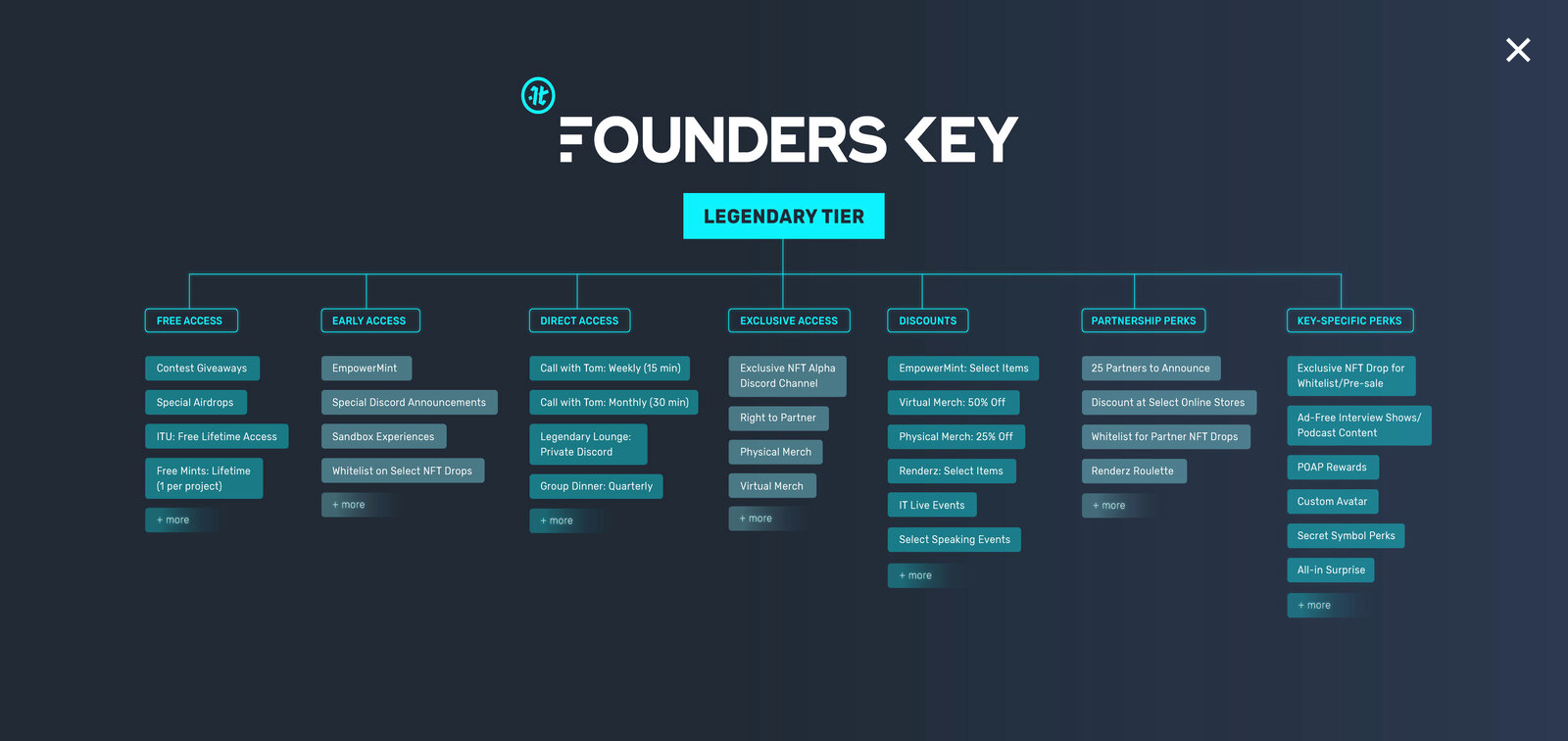
This seems reasonable. From what I am able to pick up, they thought they had found some clever loophole to ICO by selling NFTs. Despite the C&D some of their founders key benefits are still up: https://founderskey.io/images/fk/legendary-key.png

Basically 1. until the platform is implemented the key is basically an IOU. However, it can be sold and transferred for a profit AIUI so it’s not like a crowdfunded game where you get some similar benefits as those can’t be sold for a profit. 2. all your NFT corresponds to is a literal key representing the benefits Impact Theory will make available to you in the future so per the Howey Test you are purchasing a contract (not a specific piece of art or cosmetic) yielding profits from the sole efforts of a third party (Impact Theory).

Honestly, they probably could have gotten away with it if they had been a little less lazy! I bet if they tried to raise money by selling some kind of character art (that currently exists like a normal NFT, not a custom avatar they’ll give you one day) that they’d eventually also display in their final product they’d have been fine.

The interesting takeaway though is that it seems like you can’t do kickstarter-style crowdfunding through transferable NFT ICOs, at least in this form in which you got nothing but a key.

Re: SEC charges Impact Theory for unregistered offering of NFTs

#159

NFTs were supposed to be an end-run around the Howey Test. ICOs were clearly securities offerings, and the SEC shut down most of those. NFTs were specifically designed to evade that test, by claiming they were really "digital artworks". This one, though, was clearly marketed as Make Money Fast. The Securities Act of 1934 has a "duck test" definition of security - if it is marketed, bought, sold, and held as a money-m…

> NFTs were specifically designed

No, NFTs were to capitalize on the new tax reporting and valuation requirements for physical art that closed the money laundering loophole.

Post reply on HN