Live data from Hacker News

The Nano ESP32

blog.arduino.cc

41–50 of 142 posts

Re: The Nano ESP32

#41

What you get when you pick a board is not just the raw specs, but also the community, apis, and documentation. I choose to buy Adafruit products because I know they will be documented and supported for a long time.

I have no idea what this is in response to, but the ESP32 is so incredibly popular that this is like saying "I like going to my Ford dealer because I know they'll repair Fords for ages and their mechanics really know Fords." The problem with the ESP32 is that it has some pretty insane peak power draw figures (nearly an amp at times, far higher than the official spec of ~300mA) that catch people off guard in low power…

That is atrocious current draw, I didn't know that. Much more edge gateway than unplugged IoT endpoint...

Re: The Nano ESP32

#42

Earlier quoted context omitted.

Just for prototyping ease tbh. You would always make a custom board for an actual mass appeal product. If it's not a mass made product why do you care? Pick the easiest one regardless of cost. This is essentially a dev kit. With the ability to easily mess with it. You don't care about the cost here because it's not really an expense when amortized.

Prototyping with an ESP32 is a lot easier with a $6 breakout board [1]. Still comes out cheaper than TFA Nano without headers. [1] https://www.amazon.com/KeeYees-Breakout-ESP-WROOM-32-Microco...

This looks to have better software with it though. I get that you can probably port between but i'm happy to pay a few dollars to save my own time here.

We're talking $4 vs $16 for a board for engineers that cost much more than that an hour. Pick whatever you like. In fact go buy both and play with both the above and this. The cost is literally nothing. These boards are not what goes into a large production run product.

Re: The Nano ESP32

#43
post #36

Earlier quoted context omitted.

Just for prototyping ease tbh. You would always make a custom board for an actual mass appeal product. If it's not a mass made product why do you care? Pick the easiest one regardless of cost. This is essentially a dev kit. With the ability to easily mess with it. You don't care about the cost here because it's not really an expense when amortized.

Hi, just asking, I'm interested in embedded but as an outsider I fail to understand how would I go about making custom board? I googled a lot, but I still fail to grasp how do you make the board? How do you program the chip? How can you test your board? How can you prototype on an arduino, if you'll use different architecture STM vs Atmega, etc... I've done some arduino projects using VSCode and Platformio and I want…

I am probably about in the same spot that you are. I've been slowly working my way through this course from Andre LaMothe, I think pieces of it might be applicable for you. It's a Udemy course, so it goes on sale for ~$20ish pretty often, I think it's really well done and I've learned a lot so far.

https://www.udemy.com/course/crash-course-electronics-and-pc...

Re: The Nano ESP32

#44
post #36

Earlier quoted context omitted.

Just for prototyping ease tbh. You would always make a custom board for an actual mass appeal product. If it's not a mass made product why do you care? Pick the easiest one regardless of cost. This is essentially a dev kit. With the ability to easily mess with it. You don't care about the cost here because it's not really an expense when amortized.

Hi, just asking, I'm interested in embedded but as an outsider I fail to understand how would I go about making custom board? I googled a lot, but I still fail to grasp how do you make the board? How do you program the chip? How can you test your board? How can you prototype on an arduino, if you'll use different architecture STM vs Atmega, etc... I've done some arduino projects using VSCode and Platformio and I want…

[deleted]

Re: The Nano ESP32

#45
post #36

Earlier quoted context omitted.

Just for prototyping ease tbh. You would always make a custom board for an actual mass appeal product. If it's not a mass made product why do you care? Pick the easiest one regardless of cost. This is essentially a dev kit. With the ability to easily mess with it. You don't care about the cost here because it's not really an expense when amortized.

Hi, just asking, I'm interested in embedded but as an outsider I fail to understand how would I go about making custom board? I googled a lot, but I still fail to grasp how do you make the board? How do you program the chip? How can you test your board? How can you prototype on an arduino, if you'll use different architecture STM vs Atmega, etc... I've done some arduino projects using VSCode and Platformio and I want…

> how would I go about make the board?

First, make a schematic. This covers which things are electrically connected together so it's easier to see what connections there are. There's always "boilerplate" circuitry, so you'll want to start with an existing schematic. Eg https://stm32-base.org/assets/pdf/boards/original-schematic-...

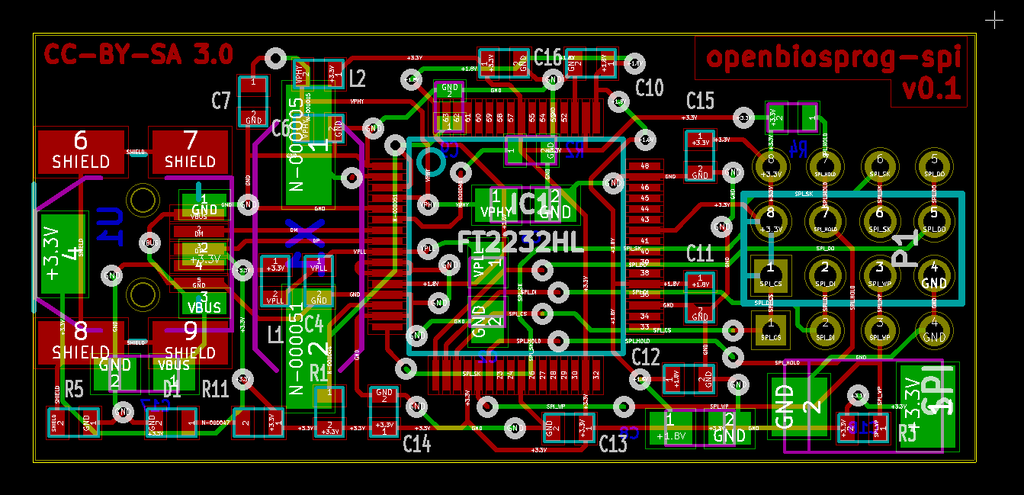
Then you design the board. You take the schematic, and then actually draw the actual wires (traces) on a board, and tell it which parts go where. The output from this step is a series of Gerber files. They look something like https://info.ewmfg.com/hubfs/Gerber-file-East-West-MFG.png

Finally, you send the board files off to a fab for them to make the board, and optionally solder all the parts on. You used to be able to make it yourself but these days, a pcb house, or manufacturing facility is the way to go.

KiCad is the preferred hobbyist software package these days.

/r/PrintedCircuitBoard/ has some good resources for this process.

> How do you program the chip?

These days, via USB. Circuitry is so cheap these days that the easiest thing to do is have a USB port, and a 'program' button, so when you hold the button down, and power up the device, it boots into a special mode where it can be programmed. There are other techniques but they're mostly harder.

Back in the day, you would have a chip programming device where you would burn the code into a chip, and then have to physically put that chip into your circuit. In order to erase it, you would need to uncover a hole in the top of the chip, and then shine UV light on it.

> How can you test your board?

Depending on the level of debugging you need, a multimeter, a oscilloscope or a digital logic analyzer, in addition to printf debugging and using a debugger, possibly via JTAG.

A multimeter is good enough for simple low/high testing. Like why is this single LED not on, it should be one.

An oscilloscope is useful for graphing simple signals that a multimeter can't catch. If you're turning the LED on and off 50 times a second, it'll be dimmer than if it's just on the whole time (PWM), and an oscope is good for looking at those 50 times.

Finally, a digital logic analyzer. If you're using a bus, like I²C or SPI, and are sending bytes and bytes of data, you can read those off an oscilloscope; low, high, low low is a 4, but that gets old real quick. A digital logic analyzer will interpret the signals on the wire and just tell you the bytes.

Most chips will have a serial port so you can do printf/console.log-grade debugging. You may need additional circuitry to talk to this port, or it may happen over USB.

Finally some microcontrollers support in-circuit emulation (ICE) debugging methods. The two big ones are JTAG and SWE. These let you connect your computer to the microcontroller, and then step through your code, line by line, using a debugger.

> How can you prototype on an arduino, if you'll use different architecture STM vs Atmega, etc...

To be clear, that's not recommended. You're writing in C, not assembly so the code you write is largely portable, so it's just a matter of copying your code to a different configuration, updating the code that interacts with the chip's hardware, and then recompiling.

Updating the code may or may not be trivial though. And personally it's not especially fun. I'd just use the same chip for prototyping as I'd want in my production run. If you have your heart set on using an STM32, just use a dev kits for that to prototype with eg https://www.digikey.com/en/products/detail/stmicroelectronic... instead of an Arudino.

And of course, these days, and on the linked article, you can program in MicroPython instead of C, which is easier.
Re: The Nano ESP32

#46
post #36

Earlier quoted context omitted.

Just for prototyping ease tbh. You would always make a custom board for an actual mass appeal product. If it's not a mass made product why do you care? Pick the easiest one regardless of cost. This is essentially a dev kit. With the ability to easily mess with it. You don't care about the cost here because it's not really an expense when amortized.

Hi, just asking, I'm interested in embedded but as an outsider I fail to understand how would I go about making custom board? I googled a lot, but I still fail to grasp how do you make the board? How do you program the chip? How can you test your board? How can you prototype on an arduino, if you'll use different architecture STM vs Atmega, etc... I've done some arduino projects using VSCode and Platformio and I want…

You could start by doing an io board for one of your stm32 board. You start by doing the schematic in kicad eeschema, debug on the breadboard and then you route the actual pcb in kicad pcbnew. There are a lot of tutorial on YouTube on how to use kicad.

After that you can have it fabricated and assembled in China. It's not a necessity but it is really convenient for surface mounted parts and it is surprisingly inexpensive.

Once your comfortable doing io boards, try to replicate one of your stm32 board.

Re: The Nano ESP32

#47

Earlier quoted context omitted.

Can you expand a bit on the value for the money? This board is $21 with headers... I've seen a ton of esp32 boards for much less. What do you think makes this board worth the extra cost?

Can you post your recommendations? I'm looking to build some stuff for fun, like DIY CO2 sensor. Say I go for something else than Arduino, what am I missing out on?

https://esphome.io ESP32 boards: surprisingly fast/powerful little SOC with wifi

ESP8266: cheaper+slower. I like the Wemos D1 mini board: smaller and has enough horsepower for most things.

Sourcing: a ton on options on AliExpress. Buy a few extras so if you fry one you aren't waiting for replacements. They are super cheap ($3-$6).

Options to consider for board: memory, CPU speed (ESP32 vs ESP8266), size/form factor, pins/dev board or just solder holes, does it have built in USB controller (and which one), voltage regulator for 5V, USB Micro vs USB C, sensor voltage requirement, etc. Sounds complicated, but they are all pretty similar, and can typically buy a few and make your projects work. Getting one of the "branded" options like Wemos D1 is good bet, comes with all the basics covered, and no surprises like making your own voltage reg.

Sensors: lots to learn on each one. Just did the deep dive on CO2, and there were a ton of details (eCO2 vs CO2, auto calibration quality, manual calibration support, cost, airflow, etc). Went for Senseair S8. If you want easy place to get started, look at AirGradient Kit: https://www.airgradient.com/kits/

Re: The Nano ESP32

#48
post #38
post #36

Earlier quoted context omitted.

Hi, just asking, I'm interested in embedded but as an outsider I fail to understand how would I go about making custom board? I googled a lot, but I still fail to grasp how do you make the board? How do you program the chip? How can you test your board? How can you prototype on an arduino, if you'll use different architecture STM vs Atmega, etc... I've done some arduino projects using VSCode and Platformio and I want…

chip on it, e-ink display sawthered on and etc, just get me from my prototype to a full on product. Basically, I want to advance my skills to the next level, but I struggle to find how :/ .... you seem to have experience in this kind of stuff, could you please answear some of these questions? Ps: accidentally posted before I finished the comment and using mobile client without ability to edit comments :d Ps2: these c…

In theory you can play with KiCad and draw something up. There's lots of tutorials on KiCad. There's always ESP32 layouts online you can start from too. You can probably figure out how to connect the memory bus to your peripherals correctly but there's always mistakes to be made. That's why it's slightly harder than a minor hobby imho since you really want a full electronics bench including logic analyzer. So it's a big expensive hobby.

If you really want a custom board I'd honestly prototype with a dev kit board like the above and then contract out what you really want to a board design company, showing them your hacked up prototype. Expect $30k for an ESP32 layout that precisely does what you want with no fluff and minimal expense. You then send that off to a PCB maker for the first run and test when it gets back. If all is well you send it off again for a larger more cost effective run.

Re: The Nano ESP32

#49

Earlier quoted context omitted.

Prototyping with an ESP32 is a lot easier with a $6 breakout board [1]. Still comes out cheaper than TFA Nano without headers. [1] https://www.amazon.com/KeeYees-Breakout-ESP-WROOM-32-Microco...

This looks to have better software with it though. I get that you can probably port between but i'm happy to pay a few dollars to save my own time here. We're talking $4 vs $16 for a board for engineers that cost much more than that an hour. Pick whatever you like. In fact go buy both and play with both the above and this. The cost is literally nothing. These boards are not what goes into a large production run produ…

That has not been my experience at all as a user. ESPHome is even easier than Arduino and I haven’t touched firmware code in years.

The price makes a huge difference when you have dozens of them operating which is trivial with a decent hydroponics and smarthome setup. I also have a dozen boards just sitting idle ready to be called up to replace a failed one or use for a new project because they’re so cheap.

Not to mention the Arduino core is supported officially by ESP32: https://github.com/espressif/arduino-esp32

Who actually uses Arduino in production? Everyone just uses modules (for ESP32) or rolls their own using the Arduino board as a reference. They’re so simple the NRE is definitely worth the unit cost if you’re already rolling a daughter board at 1k units.

Post reply on HN