Earlier quoted context omitted.
Finland though. Try Africa: https://www.populationpyramid.net/africa/2022/
try the world(google), it's actually closer to finland
The horrors of Pompeii
71–80 of 118 posts
Re: The horrors of Pompeii
#72Earlier quoted context omitted.
I wouldn't last a day on that show, but modern man, in our pining for the olden days .. grossly underestimates the % of time & effort humans had to spend on simply acquiring enough calories to survive.
Normally, Aboriginal groups were easily able to find enough food for their entire clan in three or four hours of hunting and gathering each day. They know which fruit and animals are available at certain times, how to gather or hunt successfully and how to store foods. https://svacs.libguides.com/c.php?g=933180&p=6746395 How do we know this to be true? There are still aboriginal people alive today that gather fod in…
my guess is that you probably picked a particular sparsely living group in particular favorable climate that eventually probably got wiped out by a hungrier group.
furthermore, hunting for three hours no freaking way can sustain population density of say Indonesia, or some other Asian countries which have been populous for many centuries.
Re: The horrors of Pompeii
#73In case it wasn't immediately clear (it wasn't to me) "2 asses" refers to the as/assarius, a coin. https://en.wikipedia.org/wiki/As_(Roman_coin)
Thank you! I really couldn't imagine two donkeys being the price, but even that was easier than trying to workout what the biological explanation would have been.
Now if you only wanted to rent her for half an hour and have a pair of donkeys you don't need in the meantime, hey, I've got an idea. It's like Uber for donkeys, and we're going to build it on the eDonkey network...
Re: The horrors of Pompeii
#74>>> About a fifth of the women’s names in the brothel indicate they were free. Can anyone explain this?
> Can anyone explain this? Slave names were sometimes numbers. Naming conventions in Roman culture were apparently also fairly formal.[0] I would guess there's sufficient evidence here that a ratio of free to slave could be estimated. In general, it seems like being a slave was not a great experience.[1] [0]: https://en.wikipedia.org/wiki/Slavery_in_ancient_Rome#Treatm... [1]: among other stories, the one concerning…
It was definitely frowned upon.
Re: The horrors of Pompeii
#75Earlier quoted context omitted.
> Slave names were sometimes numbers. Senators' and emperors' names were quite often numbers. That is definitely not the distinction you're looking for.
"Janus the fifth" and "KD6-3.7"
You're thinking along the lines of generational suffixes? There were Roman emperors who's family name (nomen gentilicium) was a number, the same number being used by son, father, grandfather... not incrementing with each generation.
There were also Roman emperors who's fathers had been slaves.
Lucius Septimius Severus - family name means 7th
Publius Helvius Pertinax - family name means honey-yellow. Son of a freed slave.
Re: The horrors of Pompeii
#76Earlier quoted context omitted.
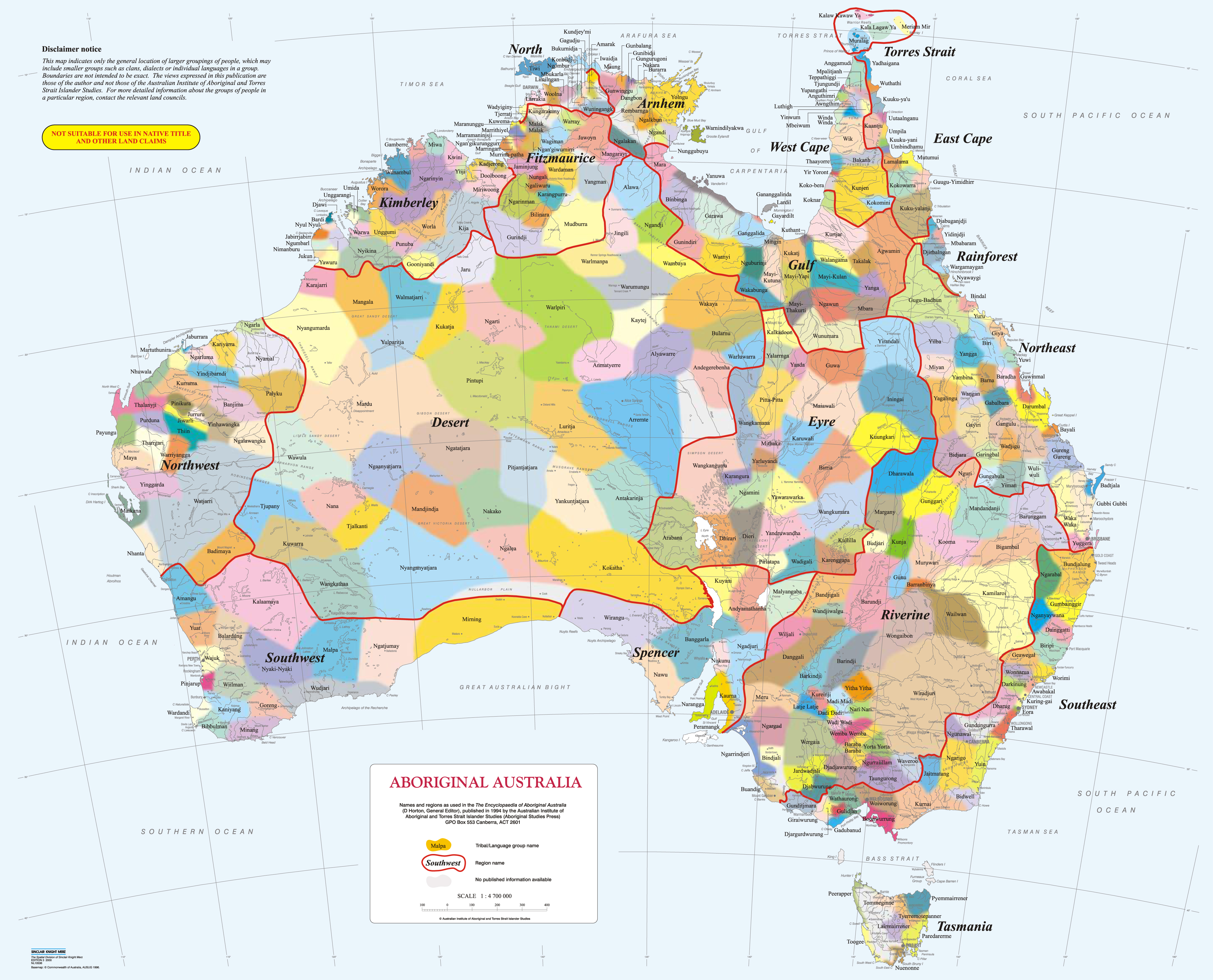
Normally, Aboriginal groups were easily able to find enough food for their entire clan in three or four hours of hunting and gathering each day. They know which fruit and animals are available at certain times, how to gather or hunt successfully and how to store foods. https://svacs.libguides.com/c.php?g=933180&p=6746395 How do we know this to be true? There are still aboriginal people alive today that gather fod in…
how come famines were a thing then if this is so easy? my guess is that you probably picked a particular sparsely living group in particular favorable climate that eventually probably got wiped out by a hungrier group. furthermore, hunting for three hours no freaking way can sustain population density of say Indonesia, or some other Asian countries which have been populous for many centuries.
What infomation do you have on pre European landing famine in Australia?
> my guess is that you probably picked a particular sparsely living group
The Swan Valley quote above applied to Western Australian and Central Desert groups prior to being shunted off traditional lands by European settlement (an area comfortably three times larger than Texas) - it continues to apply in areas where traditional practices on traditional lands continue.
https://mgnsw.org.au/wp-content/uploads/2019/01/map_col_high...
> that eventually probably got wiped out by a hungrier group.
Recent genetics has confirmed what was also the local oral history, that people arrived, fanned out, and stayed where they first settled:
https://www.nature.com/articles/nature21416
This runs contrary to the views espoused for decades by Windshuttle in Quadrant.
> furthermore, hunting for three hours no freaking way can sustain population density of say Indonesia
?? Pre Dutch contact Indonesia ?
I specifically linked to the example of Australian hunter gathers.
You can take it that my earlier comment doesn't apply to Iñupiat, Yupik, Aleut, Eyak, Tlingit, Haida, Tsimshian, etc peoples of Alaska.
Re: The horrors of Pompeii
#77Graffiti is one of the most exciting kinds of evidence preserved for us by the destruction of Pompeii, because it comes not from the literature of the elite, or the inscriptions of the powerful, but from a wider cross-section of society. The article is mostly about slavery and prostitution, colored by modern views of the world. For much of human history, people were simply trying to survive and life expectancy was us…
> life expectancy was usually lower than today Life expectancy at birth was lower than today. However those who survived to adulthood had a life expectancy considerably closer to modern ones than most people think. It turns out the massive infant and childhood mortality rates greatly dragged down the average overall life expectancy.
As far as I know, life expectancy for somebody who reached age of 10 was 36/37. If you include child mortality then life expectancy was in 20s [1][2].
[1] https://www.jstor.org/stable/3184767
[2] https://www.ucl.ac.uk/museums-static/digitalegypt/age/roman....
Re: The horrors of Pompeii
#78> Petronius was writing comedy, but there is no reason to dispute the incidental details, which can bring the Lupanar to life. His description suggests brothels would be located in more out-of-the-way parts of town and were not necessarily identifiable from the outside; the prostitutes and punters were screened from the outside world by a curtain. It also reveals that people could be enticed or tricked into visiting…
Re: The horrors of Pompeii
#79Earlier quoted context omitted.
> life expectancy was usually lower than today Life expectancy at birth was lower than today. However those who survived to adulthood had a life expectancy considerably closer to modern ones than most people think. It turns out the massive infant and childhood mortality rates greatly dragged down the average overall life expectancy.
I think the detractors of your comment would have less ground if you compared the life expectancy at 10 yo in Pompeii to that of a 10 yo from, say, 100 years ago, in which case at least I find it surprising that the difference is not far greater.
> When infant mortality is factored out (i.e. counting only the 67–75% who survived the first year), life expectancy is around 34–41 more years (i.e. expected to live to 35–42). When child mortality is factored out (i.e. counting only the 55-65% who survived to age 5), life expectancy is around 40–45 (i.e. age 45–50). The ~50% that reached age 10 could also expect to reach ~45-50; at 15 to ~48–54; at 40 to ~60; at 50 to ~64–68; at 60 to ~70–72; at 70 to ~76–77.
Early 19th century England
> For the 84% who survived the first year (i.e. excluding infant mortality), the average age was ~46–48. If they reached 20, then it was ~60; if 50, then ~70; if 70, then ~80. For a 15-year-old girl it was ~60–65. For the upper-class, LEB rose from ~45 to 50.
Less than half of the people born in the mid-19th century made it past their 50th birthday. In contrast, 97% of the people born in 21st century England and Wales can expect to live longer than 50 years.
Re: The horrors of Pompeii
#80Earlier quoted context omitted.
No they really didn't. This is what the age pyramid looks like for a first world nation: https://www.populationpyramid.net/finland/2022/ It's a column until you reach 70 then people start dying. This is what the age pyramid looks like for a society stuck in the Malthusian trap: https://1.bp.blogspot.com/-XfdbjKDGvT0/Ti49-5r5EyI/AAAAAAAAB... Notice how people have a half life, the chance of dying when you reach 20 yea…
Finland though. Try Africa: https://www.populationpyramid.net/africa/2022/