Earlier quoted context omitted.
(Even?) today there are many people involved in the sex industry voluntarily - I know of a Doctor who has left her specialist job to pursue full time sex work, she says it pays more. It’s not so hard to believe that some women 2,000 years ago would have made a good living in a society where this kind of work was accepted and legal. Presumably a portion could have been previously slaves who earned their freedom; and m…
Thanks but what I'm asking is how they can tell from their names? Is there a naming convention here?
The horrors of Pompeii
51–60 of 118 posts
Re: The horrors of Pompeii
#52Graffiti is one of the most exciting kinds of evidence preserved for us by the destruction of Pompeii, because it comes not from the literature of the elite, or the inscriptions of the powerful, but from a wider cross-section of society. The article is mostly about slavery and prostitution, colored by modern views of the world. For much of human history, people were simply trying to survive and life expectancy was us…
> life expectancy was usually lower than today Life expectancy at birth was lower than today. However those who survived to adulthood had a life expectancy considerably closer to modern ones than most people think. It turns out the massive infant and childhood mortality rates greatly dragged down the average overall life expectancy.
This is what the age pyramid looks like for a first world nation: https://www.populationpyramid.net/finland/2022/
It's a column until you reach 70 then people start dying.
This is what the age pyramid looks like for a society stuck in the Malthusian trap: https://1.bp.blogspot.com/-XfdbjKDGvT0/Ti49-5r5EyI/AAAAAAAAB...
Notice how people have a half life, the chance of dying when you reach 20 years in any year is 5% regardless of age.
Re: The horrors of Pompeii
#53>>> About a fifth of the women’s names in the brothel indicate they were free. Can anyone explain this?
Re: The horrors of Pompeii
#54Graffiti is one of the most exciting kinds of evidence preserved for us by the destruction of Pompeii, because it comes not from the literature of the elite, or the inscriptions of the powerful, but from a wider cross-section of society. The article is mostly about slavery and prostitution, colored by modern views of the world. For much of human history, people were simply trying to survive and life expectancy was us…
> life expectancy was usually lower than today Life expectancy at birth was lower than today. However those who survived to adulthood had a life expectancy considerably closer to modern ones than most people think. It turns out the massive infant and childhood mortality rates greatly dragged down the average overall life expectancy.
there are quite a few weasel words in there, but no, they didn't have life expectancy I would envy, even if they survived adulthood.
Re: The horrors of Pompeii
#55Graffiti is one of the most exciting kinds of evidence preserved for us by the destruction of Pompeii, because it comes not from the literature of the elite, or the inscriptions of the powerful, but from a wider cross-section of society. The article is mostly about slavery and prostitution, colored by modern views of the world. For much of human history, people were simply trying to survive and life expectancy was us…
> life expectancy was usually lower than today Life expectancy at birth was lower than today. However those who survived to adulthood had a life expectancy considerably closer to modern ones than most people think. It turns out the massive infant and childhood mortality rates greatly dragged down the average overall life expectancy.
Re: The horrors of Pompeii
#56Earlier quoted context omitted.
> life expectancy was usually lower than today Life expectancy at birth was lower than today. However those who survived to adulthood had a life expectancy considerably closer to modern ones than most people think. It turns out the massive infant and childhood mortality rates greatly dragged down the average overall life expectancy.
I think the detractors of your comment would have less ground if you compared the life expectancy at 10 yo in Pompeii to that of a 10 yo from, say, 100 years ago, in which case at least I find it surprising that the difference is not far greater.
Re: The horrors of Pompeii
#57Earlier quoted context omitted.
> life expectancy was usually lower than today Life expectancy at birth was lower than today. However those who survived to adulthood had a life expectancy considerably closer to modern ones than most people think. It turns out the massive infant and childhood mortality rates greatly dragged down the average overall life expectancy.
I think the detractors of your comment would have less ground if you compared the life expectancy at 10 yo in Pompeii to that of a 10 yo from, say, 100 years ago, in which case at least I find it surprising that the difference is not far greater.
The 20th and 21st century havd been revolutionary from a medical point of view.
Re: The horrors of Pompeii
#58Graffiti is one of the most exciting kinds of evidence preserved for us by the destruction of Pompeii, because it comes not from the literature of the elite, or the inscriptions of the powerful, but from a wider cross-section of society. The article is mostly about slavery and prostitution, colored by modern views of the world. For much of human history, people were simply trying to survive and life expectancy was us…
> life expectancy was usually lower than today Life expectancy at birth was lower than today. However those who survived to adulthood had a life expectancy considerably closer to modern ones than most people think. It turns out the massive infant and childhood mortality rates greatly dragged down the average overall life expectancy.
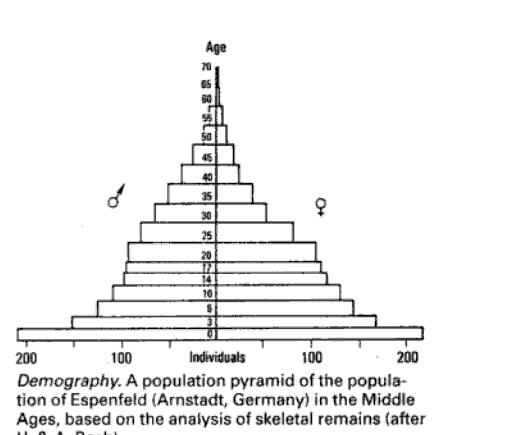
Nope. I see this consistently repeated all over HN or Reddit, but it just isn't true. Only the high clergy routinely reached their late 60s, and trying to analyze general mortality from the relatively sparse ancient records that mostly concerned the richest and most important people introduces enormous biases.
It is the burial grounds that tell the full story without major biases (there still are biases caused by, say, sailors drowning and their bones not being buried on land - a nontrivial cause of death in a maritime imperium). And the bones of average people indicate that over half didn't live to see their 60th birthday until the 19th century.
In some really bad periods (the Dark Ages in Europe), the average buried adult person is in their early forties - a tale of food insecurity and constant raids. Rome, at least, was mostly food secure and had long periods of peace, so celebrating your 50th birthday was very thinkable for a free Roman citizen of non-pauper status.
Edit: someone downvoting this. People, just take any paper about an archeological excavation of an old burial ground and the detected age distribution of the skeletons found. People over 60 are untypical, though always present in all periods until well into the industrial revolution. And early Medieval cemeteries skew a lot younger than either Rome at its height, or the Late Middle Ages with their better agriculture and more capable governments.
Re: The horrors of Pompeii
#59> Petronius was writing comedy, but there is no reason to dispute the incidental details, which can bring the Lupanar to life. His description suggests brothels would be located in more out-of-the-way parts of town and were not necessarily identifiable from the outside; the prostitutes and punters were screened from the outside world by a curtain. It also reveals that people could be enticed or tricked into visiting…
I watched a documentary one or two years ago about the coliseum in Rome, and it made me realize that what we claim to know about those ancient times must be 80% bullshit.
It was all assumptions built on top of assumptions, themselves built on top of suppositions without any proof.
When I was a kid I wanted to become an archeologist, but this one documentary that basically put in evidence that everything is just bullshit where we have picked the most convenient explanation completely disinterested me from archeology forever.
Re: The horrors of Pompeii
#60Earlier quoted context omitted.
I think the detractors of your comment would have less ground if you compared the life expectancy at 10 yo in Pompeii to that of a 10 yo from, say, 100 years ago, in which case at least I find it surprising that the difference is not far greater.
The Middle Ages is not Rome. I think it’s plausible that Roman society would fare better