Live data from Hacker News

A psychiatrist reflects on Philip K. Dick’s substance abuse and mental health

thecompanion.app

51–60 of 88 posts

Re: A psychiatrist reflects on Philip K. Dick’s substance abuse and mental health

#51
post #3

Interesting read. Have always enjoyed Philip K Dicks novels… sadly not surprised he struggled with mental and substance abuse. His books read in a way that often feature a character somewhat removed from reality or in some form of psychosis. The idea of what is real or not real is explored over and over again. I cannot help but think he was writing from his own soul or at least his own experience. He was always the l…

> sadly not surprised he struggled with mental and substance abuse. His books read in a way that often feature a character somewhat removed from reality or in some form of psychosis. The idea of what is real or not real is explored over and over again Don't take that is an indicator, Haruki Murakami often reads similarly and he seems to be a well adjusted person.

This comment is probably unnecessary but I've been reading tons of Murakami lately so here's a take:

Murakami's main schtick, I realized, is to write in the style of a hard-boiled detective novel, like Raymond Chandler (who he has often cited as an influence / obsession)... except that instead of the protagonist being a literal private investigator who wanders the city and meets people to solve the mystery of a murder, it's a disconnected man who wanders the city solving a mystery that's like, how to connect with people or how to get over a sense of loss or something. The world is mysterious, like how in a detective novel with corruption and intrigue and stuff, but it feels like it's that way because of how mysterious human connection is to his protagonists.

Philip K Dick, on the other hand, writes a mysterious world that makes some paranoid idea he had actually real. They're superficially similar but, I think, not really actually coming from the same place at all.

Re: A psychiatrist reflects on Philip K. Dick’s substance abuse and mental health

#52
post #3

Interesting read. Have always enjoyed Philip K Dicks novels… sadly not surprised he struggled with mental and substance abuse. His books read in a way that often feature a character somewhat removed from reality or in some form of psychosis. The idea of what is real or not real is explored over and over again. I cannot help but think he was writing from his own soul or at least his own experience. He was always the l…

His perspective is part of what makes his work so relevant to today with our manufactured realities that he predicted so well.

I agree and would like for you to expand on that observation

Re: A psychiatrist reflects on Philip K. Dick’s substance abuse and mental health

#53
post #33

Some people live at the cusp of the abyss but they are kind enough to dispatch so that we the rest dont have to

“Rick James dwells in the abyss” https://youtu.be/2278XhCy4Bs

RIP Charlie Murphy. What a comedian. There have been many celebrity obituaries that have made me sad, but there are few that left me devastated.

Re: A psychiatrist reflects on Philip K. Dick’s substance abuse and mental health

#55

This is a decent article but the author unfortunately has no understanding of what is known as a "spiritual emergence", which PKD very clearly went through and is critical to understanding his life and legacy. One of the first phases of this process is "anamnesis", in which you recall information from what is thought to be past lives. Laugh all you want, until this has happened to you, you can't even imagine what it…

Reality is that which, even when you downvote it, doesn't go away. ;)

Thank you for comment. Knew little about the man himself.

"I experienced an invasion of my mind by a transcendentally rational mind, as if I had been insane all my life and suddenly I had become sane."

This has to be experienced. (It's like Jimmy Hendrix says.) I'm not sure I would compare it to puberty, or an invasion. Definitely a visitation, however. It seems the historical successful travellers on the path were in the main fortunate to be born into families of adepts. In many cases it was the father who initiated the son. For others, the cultural milieu typically seeded the necessary symbolic guide posts.

> Reality is that which, even when you downvote it, doesn't go away. ;)

You have perhaps forgotten your own initial encounters with such topics. It is a healthy response of the unprepared psyche to recoil from such content to protect itself; it can be dangerous, as you must know. The third rail is very much alive.

Re: A psychiatrist reflects on Philip K. Dick’s substance abuse and mental health

#58
post #3

Interesting read. Have always enjoyed Philip K Dicks novels… sadly not surprised he struggled with mental and substance abuse. His books read in a way that often feature a character somewhat removed from reality or in some form of psychosis. The idea of what is real or not real is explored over and over again. I cannot help but think he was writing from his own soul or at least his own experience. He was always the l…

Philip K Dick's A Scanner Darkly contains an Author's Note at the end of the book on this topic. This is the note from the copy I have:

"AUTHOR'S NOTE:

This has been a novel about some people who were punished entirely too much for what they did. They wanted to have a good time, but they were like children playing in the street; they could see one after another of them being killed--run over, maimed, destroyed--but they continued to play anyhow. We really all were very happy for a while, sitting around not toiling but just bullshitting and playing, but it was for such a terrible brief time, and then the punishment was beyond belief: even when we could see it, we could not believe it. For example, while I was writing this I learned that the person on whom the character Jerry Fabin is based killed himself. My friend on whom I based the character Ernie Luckman died before I began the novel. For a while I myself was one of these children playing in the street; I was, like the rest of them, trying to play instead of being grown up, and I was punished. I am on the list below, which is a list of those to whom this novel is dedicated, and what became of each.

Drug misuse is not a disease, it is a decision, like the decision to step out in front of a moving car. You would call that not a disease but an error in judgment. When a bunch of people begin to do it, it is a social error, a life-style. In this particular life-style the motto is "Be happy now because tomorrow you are dying," but the dying begins almost at once, and the happiness is a memory. It is, then, only a speeding up, an intensifying, of the ordinary human existence. It is not different from your life-style, it is only faster. It all takes place in days or weeks or months instead of years. "Take the cash and let the credit go," as Villon said in 1460. But that is a mistake if the cash is a penny and the credit a whole lifetime.

There is no moral in this novel; it is not bourgeois; it does not say they were wrong to play when they should have toiled; it just tells what the consequences were. In Greek drama they were beginning, as a society, to discover science, which means causal law. Here in this novel there is Nemesis: not fate, because any one of us could have chosen to stop playing in the street, but, as I narrate from the deepest part of my life and heart, a dreadful Nemesis for those who kept on playing. I myself, I am not a character in this novel; I am the novel. So, though, was our entire nation at this time. This novel is about more people than I knew personally. Some we all read about in the newspapers. It was, this sitting around with our buddies and bullshitting while making tape recordings, the bad decision of the decade, the sixties, both in and out of the establishment. And nature cracked down on us. We were forced to stop by things dreadful.

If there was any "sin," it was that these people wanted to keep on having a good time forever, and were punished for that, but, as I say, I feel that, if so, the punishment was far too great, and I prefer to think of it only in a Greek or morally neutral way, as mere science, as deterministic impartial cause-and-effect. I loved them all. Here is the list, to whom I dedicate my love:

To Gaylene deceased

To Ray deceased

To Francy permanent psychosis

To Kathy permanent brain damage

To Jim deceased

To Val massive permanent brain damage

To Nancy permanent psychosis

To Joanne permanent brain damage

To Maren deceased

To Nick deceased

To Terry deceased

To Dennis deceased

To Phil permanent pancreatic damage

To Sue permanent vascular damage

To Jerri permanent psychosis and vascular damage

. . . and so forth. In Memoriam. These were comrades whom I had; there are no better. They remain in my mind, and the enemy will never be forgiven. The "enemy" was their mistake in playing. Let them all play again, in some other way, and let them be happy."
Re: A psychiatrist reflects on Philip K. Dick’s substance abuse and mental health

#59
post #54

[flagged]

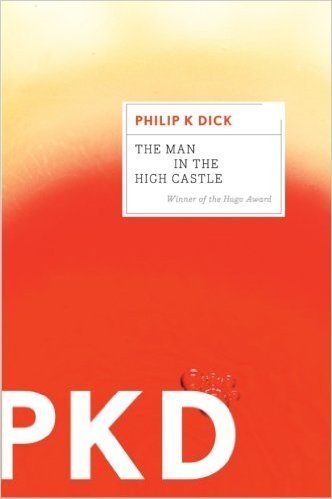
It is not a random acronymization. Philip K Dick has long been referred to as PKD. There are printings of his novels with the recognizable initials PKD being printed larger than his name written out, like so:

https://www.bookforum.com/uploads/publication.000/id30191/co...

Post reply on HN