Live data from Hacker News

Windows 11’s taskbar is finally getting labels and never combine app icons

theverge.com

121–130 of 166 posts

Re: Windows 11’s taskbar is finally getting labels and never combine app icons

#121

What is meant by "labels"? What I really want is the ability to categorize and separate out certain icons. Like creating little groups. One for browsers, one for productivity, one for games, one for utilities, etc. That would be so amazing. You can hack a way of doing it by creating an empty executable with an icon that looks like a divider, but that's just painful to do.

By labels I believe they just mean window titles in the taskbar.

Re: Windows 11’s taskbar is finally getting labels and never combine app icons

#122

Earlier quoted context omitted.

> Something is very wrong with a business when a big proportion of the customer base is viewed as a burden on the product. The curse of products that are - in their foundations - over thirty years old and used by billions of people. To expand: - any time Microsoft does fundamental changes to the look and feel or to management/configuration, enterprise users (the kind that buys tens of thousands of licenses at a time,…

> at the same time, desktop Linux distributions and macOS keep iterating and innovating without having that burden. That's a bit of a re-write of history. Mac OS tried to throw away all backwards compatibly on day one but major software vendors told them to pound sand so they had to spend another year building out Carbon. Not to mention that Mac OS X itself is built on NextSTEP. Linux breaks front-end compatibility s…

MacOS breaks compatibility much faster than Linux.

New features or APIs in MacOS are adopted much faster than in Linux world, too (see also: Wayland. Or, on similar complexity level, global dark mode).

Re: Windows 11’s taskbar is finally getting labels and never combine app icons

#123

What is meant by "labels"? What I really want is the ability to categorize and separate out certain icons. Like creating little groups. One for browsers, one for productivity, one for games, one for utilities, etc. That would be so amazing. You can hack a way of doing it by creating an empty executable with an icon that looks like a divider, but that's just painful to do.

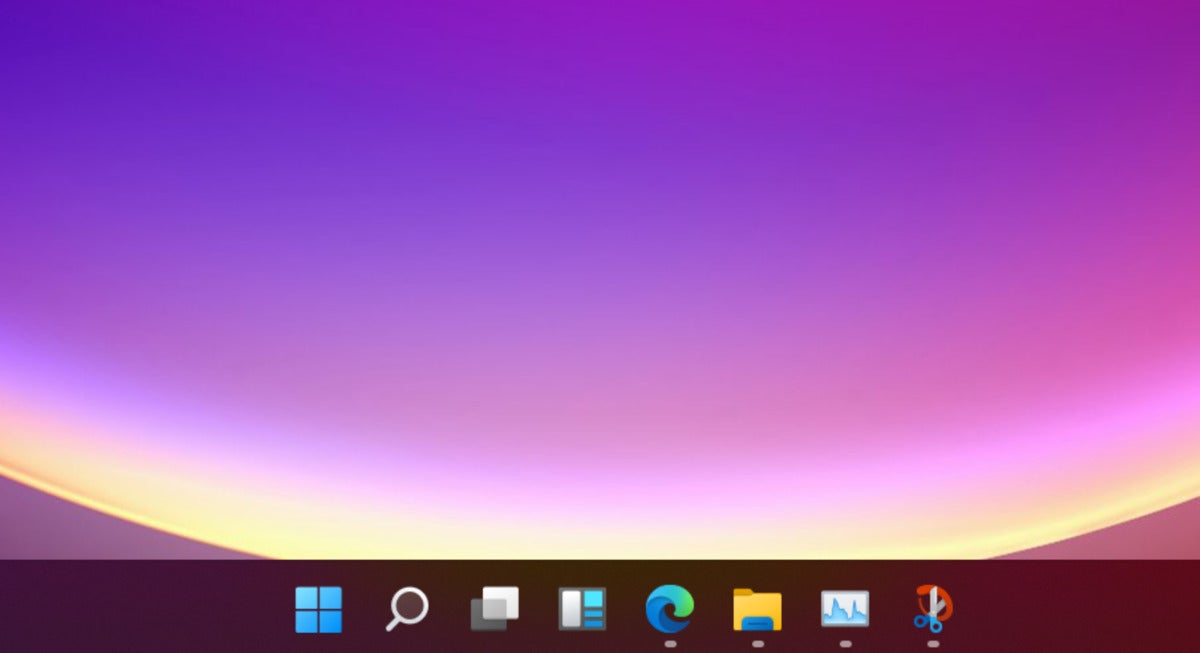
The existing windows 11 taskbar just has the application icon with the windows grouped - so if you have 3 firefox windows open, you get one icon for firefox and never any text associated. If there's an open application its differentiated from a shortcut with a dot underneath.

https://images.idgesg.net/images/article/2021/06/microsoft-w...

It seems windows is bringing back text in the taskbar items, and exists in windows 10 (you get an icon and text in a rectangle), and allowing you to leave windows ungrouped which isn't currently possible.

Re: Windows 11’s taskbar is finally getting labels and never combine app icons

#124
post #107

Earlier quoted context omitted.

Like the good old times with Windows ME and 2000!

NT4 and 2000. Please leave Windows ME behind closed doors, thank you.

No NT4 is of the same lineage as 2000. I was referring to the other lineage of Windows with ME being the last one. The unification that XP provided was good for stability, but the eventual result is this whole Windows 11 ordeal.

Re: Windows 11’s taskbar is finally getting labels and never combine app icons

#125

Earlier quoted context omitted.

> Something is very wrong with a business when a big proportion of the customer base is viewed as a burden on the product. The curse of products that are - in their foundations - over thirty years old and used by billions of people. To expand: - any time Microsoft does fundamental changes to the look and feel or to management/configuration, enterprise users (the kind that buys tens of thousands of licenses at a time,…

> at the same time, desktop Linux distributions and macOS keep iterating and innovating without having that burden. That's a bit of a re-write of history. Mac OS tried to throw away all backwards compatibly on day one but major software vendors told them to pound sand so they had to spend another year building out Carbon. Not to mention that Mac OS X itself is built on NextSTEP. Linux breaks front-end compatibility s…

> That's a bit of a re-write of history. Mac OS tried to throw away all backwards compatibly on day one but major software vendors told them to pound sand so they had to spend another year building out Carbon.

Yes, and other than that the only non-workaroundable - but reasonable - break has been the removal of 32-bit x86 support. The PPC->Intel and Intel->ARM transitions had fully fledged and (at least in the latter case, didn't have a Mac at PPC time) high performant and fully functional runtime emulation/translation to ease it.

> Microsoft had a fully functional build of Windows 7 for ARM a long time ago.

That depends on your definition of "fully functional". Apple invests insane amounts of effort to tape out good hardware that isn't riddled with weird bugs and edge cases. They don't even publish much documentation, and yet not even a dozen people (iirc, please correct me if wrong) managed to reverse engineer enough to get support merged to Linux mainline.

In contrast, the utter bullshit that the rest of the ARM world dares call a CPU is so riddled with bugs that it's a nightmare even for the vendors to keep their custom kernel patches / BSPs up to date, and completely forget about ever upstreaming it to the Linux kernel. And now imagine someone has to write Windows drivers for all that buggy crap.

The completely sorry state of how the entire "embedded" world works is holding everyone back so immensely that it takes companies the size of Apple and Amazon to show that the problem isn't ARM itself - and unfortunately, Apple doesn't sell to anyone else and Amazon only makes server CPUs, which means there is zero market pressure, neither for a re-imagine of x86/64 without legacy crap in the instruction set and die, nor for anyone with an ARM license to tape out a SoC at above "barely works, fix the rest in software" quality and decent open source Linux and Windows drivers, nor is there much pressure on AMD/Intel to improve because as long as there is no quality competition from ARM they don't have to fear anyone else eating their lunch.

Sorry for the rant, this topic has annoyed me ever since I tried putting an at-the-time modern kernel to an at-the-time-current Mediatek based phone and miserably and utterly failed a decade-ish ago. And nowhere I have looked at in the embedded space since then has shown me any sign of improvement. To the contrary, even projects as popular as Raspberry Pi couldn't arse Broadcom enough to check if the PCIe implementation passed standards validation, they only cared if the USB (and iirc, wifi too) chipset worked. J F C
Re: Windows 11’s taskbar is finally getting labels and never combine app icons

#126

Earlier quoted context omitted.

> Something is very wrong with a business when a big proportion of the customer base is viewed as a burden on the product. The curse of products that are - in their foundations - over thirty years old and used by billions of people. To expand: - any time Microsoft does fundamental changes to the look and feel or to management/configuration, enterprise users (the kind that buys tens of thousands of licenses at a time,…

> - at the same time, desktop Linux distributions and macOS keep iterating and innovating without having that burden. Linux userland generally doesn't care a bit about backwards compatibility,... Well yeah, and we still don't see Linux on every corner (android excluded). Linux desktop is a joke. You can either pick DE whick breaks compatibility every now and then (Gnome, KDE, ...) or which has more or less stopped de…

The thing is, the Linux space at least has something nice and shiny to offer every now and then (although I'd say GTK and Gnome could go off and vanish and I wouldn't care).

And it's not just UI where Linux keeps evolving. Just look at systemd - a fucking breeze to work with, whereas on macOS you're stuck working with plist's (annoying but OK), and on Windows it's literally the same crap from 30 years ago in the NT era. A Linux VM can do a cold start in well under 30 seconds, Windows needs anything from five to ten minutes and you can't optimize anything.

Re: Windows 11’s taskbar is finally getting labels and never combine app icons

#127

Earlier quoted context omitted.

But is this fixed in win11? From what others tell me the win11 is actually just another skin on the same code. You can still find plenty of UI styles from previous windows in win11

Most of Windows 11 is indeed just a reskin, however the taskbar has been completely rewritten and isn't coupled to explorer.exe anymore, being it's own WinUI application.

Oh, that's nice. explorer.exe crashing and taking out the taskbar is common enough for me to just sigh when it happens (and then launch the task manager via ctrl+shift+esc). I'm not sure if that's a Windows issue, or corporate malware issue, but maybe that'd mitigate it.

Re: Windows 11’s taskbar is finally getting labels and never combine app icons

#128
post #124

Earlier quoted context omitted.

NT4 and 2000. Please leave Windows ME behind closed doors, thank you.

No NT4 is of the same lineage as 2000. I was referring to the other lineage of Windows with ME being the last one. The unification that XP provided was good for stability, but the eventual result is this whole Windows 11 ordeal.

I meant the UI; NT4 and 2000 were the nice and clean ones, for enterprise and professionals; ME had already first signs of the cartoon world, that XP continued on.

Looking back at the comment, yes, you are right. Both lines could share under the hood stuff, the NT/2000 line with clean UI and the ME line the colorized cartoon one. Or, they could split the line with Home and Pro, both of them they still have.

Re: Windows 11’s taskbar is finally getting labels and never combine app icons

#129

Earlier quoted context omitted.

> at the same time, desktop Linux distributions and macOS keep iterating and innovating without having that burden. That's a bit of a re-write of history. Mac OS tried to throw away all backwards compatibly on day one but major software vendors told them to pound sand so they had to spend another year building out Carbon. Not to mention that Mac OS X itself is built on NextSTEP. Linux breaks front-end compatibility s…

> That's a bit of a re-write of history. Mac OS tried to throw away all backwards compatibly on day one but major software vendors told them to pound sand so they had to spend another year building out Carbon. Yes, and other than that the only non-workaroundable - but reasonable - break has been the removal of 32-bit x86 support. The PPC->Intel and Intel->ARM transitions had fully fledged and (at least in the latter…

> And now imagine someone has to write Windows drivers for all that buggy crap.

I don't know how modders manage to get Windows 10 working on Android phones without any source code yet they still somehow manage to get it running with various degrees of success:

https://www.xda-developers.com/renegade-project-boot-arm64-w...

And yet, I don't disagree with your rant. The entire "embedded" world is a bit of a mess when it comes to hardware and software. Apple can only do what they do because they manage most of it themselves. Now Microsoft can, and has, also done that to various degrees of success but they're still both hamstrung by their own strategic decisions and by the problems you've described because they're still outsourcing much more than Apple is.

Re: Windows 11’s taskbar is finally getting labels and never combine app icons

#130

Earlier quoted context omitted.

The problem with Microsoft always looking to their competition for ideas is the fail to capitalize on their own strengths. They end up chasing Mac OS or Android and create a product that isn't as good as either of those (because chasing the competition is hard) while subsequently throwing away what made their own product competitive and interesting. Windows should not be a Mac OS clone. But every single UI update sen…

> fail to capitalize on their own strengths Well, they capitalized on their market share immencely with Azure. At the beginning it was pretty ****, but a lot of customers signed up immediately. Not because that **** is better, but because Microsoft already held all their eggs.

Microsoft is securing their position with Azure. It definitely keeps getting better in ways that work well for their customers.

Windows is the linchpin in that strategy so I don't understand why they've moved organizationally moved it so far away. It's relegated to being Bing adjacent.

Post reply on HN