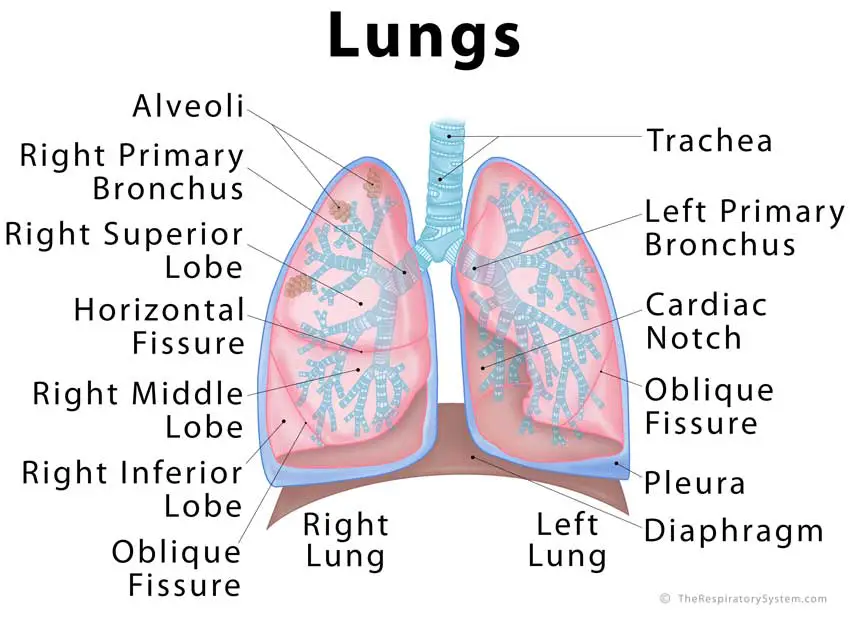
It's interesting to compare how different professions handle the ambiguity in left/right. In the maritime world they went with an approach at one extreme, where they just use two completely separate words, "port" and "starboard." (Though that's far from the only case where there's a special word for something on a boat.) At the other extreme you have the medical profession where the first thing you learn in medical s…
> At the other extreme you have the medical profession where the first thing you learn in medical school is that left/right always refer to the patient's perspective. Didn't know that! So how pervasive is this principal? Would it apply to a descriptive reference to a diagram in a book for example?
Why do ships use “port” and “starboard” instead of “left” and “right?”
111–120 of 636 posts
Re: Why do ships use “port” and “starboard” instead of “left” and “right?”
#112This explanation feels kind of awkward. My left hand does not depend on my orientation, so I am unclear why the "left side" of a boat would. I get why there are better terms to use when talking about others. At least, I think I do. But it feels like there is more history to these terms than just "needs to be fixed."
True but you are not wandering around yourself! I agree though that the first para looks like just so nonsense. I know plenty of matelots (UK Navy) that use left and right, sharp end and blunt end for the cardinal points of a vessel. I do as well and use port, starb'd, bow and stern as they do too. Ironically enough, port and starboard markers which are the red and green buoys you see near to ports (yes!) need to be…
Just to keep things fun, that's the european convention. In the US it's "red right returning", the exact opposite.
Re: Why do ships use “port” and “starboard” instead of “left” and “right?”
#113Reminds me a similar bit about some dimension of the space shuttle being limited by the width of a horse's ass [0].
[0] https://dwanethomas.com/roman-chariots-and-the-space-shuttle...
Re: Why do ships use “port” and “starboard” instead of “left” and “right?”
#114It's funny to me that some olaf 1000 years ago just called them what they were; the steering side and the docking side, and now we have to use the same words which don't make any sense to us. I vote we just call them the steering-side and the docking-side again.
It's probably for the best that they've been detached from their original meanings.
Re: Why do ships use “port” and “starboard” instead of “left” and “right?”
#115It's interesting to compare how different professions handle the ambiguity in left/right. In the maritime world they went with an approach at one extreme, where they just use two completely separate words, "port" and "starboard." (Though that's far from the only case where there's a special word for something on a boat.) At the other extreme you have the medical profession where the first thing you learn in medical s…
Your medical comment reminded me of the fascinating constellation of terminology used to identify locations and orientations in anatomy: https://en.wikipedia.org/wiki/Anatomical_terms_of_location Some of the terms: dorsal/ventral, proximal/distal, anterior/posterior, superior/inferior, oral/aboral, basal/apical When you're describing something like a microbe, the terms get fairly arbitrary; which is the "head" end of…
Re: Why do ships use “port” and “starboard” instead of “left” and “right?”
#116Earlier quoted context omitted.
They are not distracting. There are many intense situations on a boat, and a crew is required to cooperate in order to survive. This means you must have extremely precise wording to quickly explain what needs to be done. This vocabulary is important for this reason, and is able to sharpen focus, rather than distract. It requires a process of learning, and that is intentional.
In English "right" is one syllable and "starboard" is two. All things considered, using right/left is more concise. If you are aware enough of your orientation on a boat to know where port and starboard are located, you are also aware enough to know where left and right are located.
Re: Why do ships use “port” and “starboard” instead of “left” and “right?”
#117It's interesting to compare how different professions handle the ambiguity in left/right. In the maritime world they went with an approach at one extreme, where they just use two completely separate words, "port" and "starboard." (Though that's far from the only case where there's a special word for something on a boat.) At the other extreme you have the medical profession where the first thing you learn in medical s…
Outdoor recreation often uses climbers left/right and skiers left/right (even when there's no rock or snow) to orient direction relative to slope, which is similarly descriptive and clear to those who haven't heard the terms before.
Except for rivers, where True Left and True Right are commonly used in New Zealand for hiking and kayaking, and I can never remember which way round they go!
Re: Why do ships use “port” and “starboard” instead of “left” and “right?”
#118This is not the same explanation that I was familiar with. The one I heard was that long ago boats didn't have the rudder on the centerline, but was to one side. Because of this configuration you also had to have the dock on the other side. The rudder was called the a steer-board (eventually pronounced starboard). And the dock was the port so that became the port side. So now we have starboard and port sides of the s…
Re: Why do ships use “port” and “starboard” instead of “left” and “right?”
#119It's interesting to compare how different professions handle the ambiguity in left/right. In the maritime world they went with an approach at one extreme, where they just use two completely separate words, "port" and "starboard." (Though that's far from the only case where there's a special word for something on a boat.) At the other extreme you have the medical profession where the first thing you learn in medical s…
Re: Why do ships use “port” and “starboard” instead of “left” and “right?”
#120It's interesting to compare how different professions handle the ambiguity in left/right. In the maritime world they went with an approach at one extreme, where they just use two completely separate words, "port" and "starboard." (Though that's far from the only case where there's a special word for something on a boat.) At the other extreme you have the medical profession where the first thing you learn in medical s…