I see your curry imported by British, and I raise you Spaghetti Naporitan[0], pasta with ketchup and american bacon invented by a Japanese who was inspired by US army rations. [0] https://en.wikipedia.org/wiki/Naporitan
The roots of Japan's Indian curry
61–70 of 168 posts
Re: The roots of Japan's Indian curry
#62"Now to be clear, India has no such dish as a curry. No self-respecting Indian restaurant has a "curry" on their menu. They would have a Palak Paneer or a Malai Kofta or a Murgh Makhani - all of which we lump into "curry" - but no "curry" - This is patently wrong. Curry is a South Indian word referring to vegetables originally (Malakkarry means vegetables). Come to Kerala - you have Moru Curry (Butter Milk Curry) , E…
As I clarified in another comment, I was trying to make the point that curry is a genre of foods (as your examples illustrate). https://news.ycombinator.com/item?id=35400253#35400453
Re: The roots of Japan's Indian curry
#63Earlier quoted context omitted.
As I clarified in another comment, I was trying to make the point that curry is a genre of foods (as your examples illustrate). https://news.ycombinator.com/item?id=35400253#35400453
With all due respect, you failed at making that point, but now at least your intentions are understood.
Re: The roots of Japan's Indian curry
#64Earlier quoted context omitted.
The point is that “curry” is a British generalization. Indian restaurants were historically called curry houses as a pejorative. India has many dishes that one might consider a curry, but we have no dish called curry. The only use of the word curry in restaurants is to appeal to British nationals (and anyone they spread their culture to). It’s an artifact of colonialism. I also don’t understand why you think it’s vir…
> Now, there is a word “Kari” in several South Indian languages but it’s used to mean spicy sauce or “kadipoda” which means spice mix, both derived from “black” in reference to the use of black peppercorns. Is this the same word as "kara", black, in Turkic languages? Apparently, speculatively, yes: https://en.wiktionary.org/wiki/Reconstruction:Proto-Japonic/... Also Japanese "kuro".
Re: The roots of Japan's Indian curry
#65Interestingly, the Nepali entrepreneurs also run a lot of restaurants here in Finland - along side Indian ones. Though I feel that there are more Nepalese ones. The cuisine is almost indistinguishable from North Indian cuisine, and I have heard from some folks who have visited Nepal, that authentic dishes from Nepal are missing from these restaurants. Though I suspect that might not entirely be true.
Unfortunately the local Nepalese restaurants seem to have very very similar menus, and themed decor, along with a poor record of treating their workers fairly.
I do miss UK-styled curries, and Indian food, I think even though the foods have obviously been adjusted for the UK tastes there is a lot more variety available than in Finland. (Which I guess makes sense given the relative populations, and differences in terms of the number of Indian people who've integrated to both countries over recent decades.)
Re: The roots of Japan's Indian curry
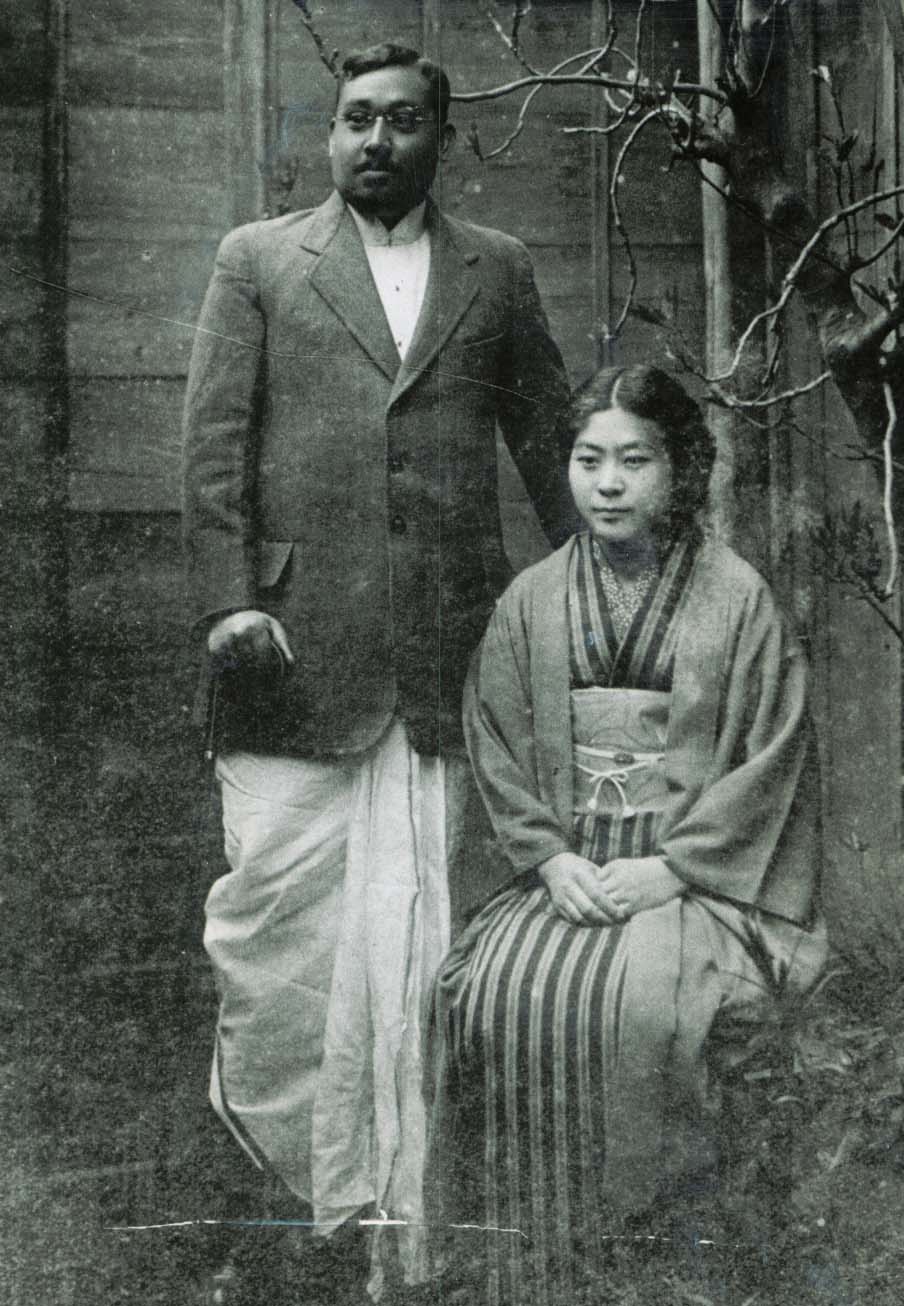
#66Bose’s original Nakamuraya original restaurant is still open and running, located in a passenger tunnel between shinjuku-sanchome and shinjuku station. I found it a quite odd spot and configuration, considering the history. More detail here: https://wattention.com/restaurant-review-shinjuku-nakamuraya...
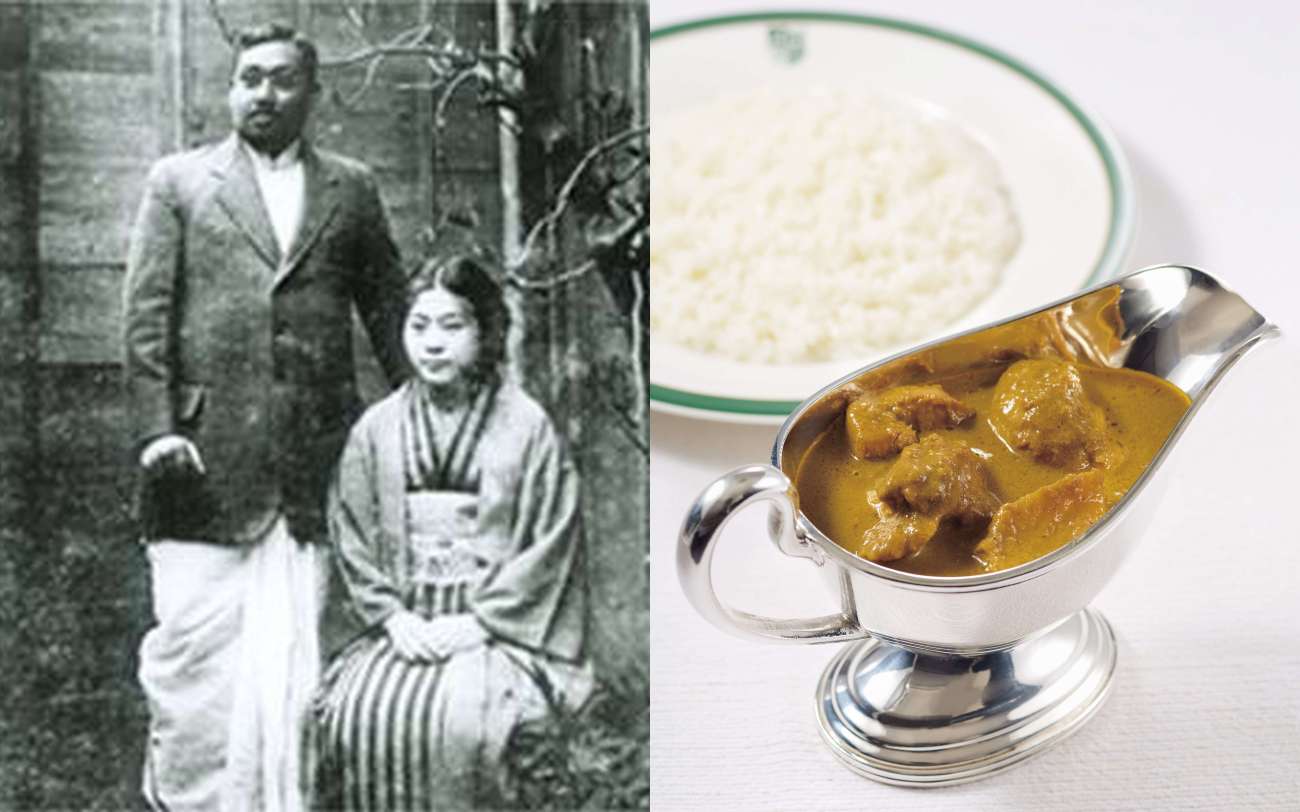
On a side note, I find it quite curious how the resolution on this image from WAttention [1] mismatches. From the OP, the couple portrait attributed to Wikipedia, which is the latest 2018 retouched version [2], has a much higher resolution and specifies @Press as the source. The 2016 original version [3] matches the couple portrait on @Press [4], which has the same blueish hue and the additional artifacts. This links back to Nakamuraya's website itself [5], which has the same food photo combination as [1], but in consistent resolution.
At first, it seems to me that the couple portrait on [1] was (intentionally?) degraded because of the different lighting than [5], and the food photo is simply another version that was available during the retrieval (notice the crop). On second thought, it could have simply been another version that was available from Nakamuraya's. TIL images uploaded to Wikipedia are encouraged to be enhanced [6].
I wonder, as AI tools getting more pervasive, how many variations with artificial details will exist due to constant upscaling/downsizing? (Accurate replication might not be important in certain contexts, but I imagine artificial details will eventually leak into the chain of reference)
Of course, old photos like this are scanned/photographed into digital format in the first place.
[1]: https://wattention.com/wp-content/uploads/2015/07/Shinjuku-N...
[2]: https://upload.wikimedia.org/wikipedia/commons/f/f5/Rash_Beh...
[3]: https://upload.wikimedia.org/wikipedia/commons/archive/f/f5/...
[4]: https://www.atpress.ne.jp/releases/104283/img_104283_8.jpg
[5]: https://www.nakamuraya.co.jp/common/img/top/pavilion_img07.p...
[6]: https://en.wikipedia.org/wiki/Wikipedia:How_to_improve_image...
Re: The roots of Japan's Indian curry
#67I see your curry imported by British, and I raise you Spaghetti Naporitan[0], pasta with ketchup and american bacon invented by a Japanese who was inspired by US army rations. [0] https://en.wikipedia.org/wiki/Naporitan
Re: The roots of Japan's Indian curry
#68> So if you are craving for spice in Japan, try one of the two thousand "Indian" restaurants and you will not be disappointed. Erm, if you've had a proper curry recently then you probably will be. Like everywhere else, foreign foods get tailored to their locality or they die. If you fancy a naan filled with sugar and some pretty bland dishes then try an "Indian" restaurant in Japan. Which should come as no surprise,…
> spicy foods here are a) not spicy Ha. Can confirm. Lived there 2 years and while I love the food, as far as I can tell there is no food available anywhere in Japan, at all, that the average south east asian would recognise as even mildly spicy. And outside the home islands I have observed Japanese people reacting hilariously to the actually spicy local food. My favourite was a co-worker who literally collapsed to t…
But also at a wagamamas in London I had them do double extra hot on their hottest dish and could barely tell. I'm American from the Midwest living in Seattle.
I refer to many spicy thing like that golden extra spicy as "spicy as katsup"
Re: The roots of Japan's Indian curry
#69> So if you are craving for spice in Japan, try one of the two thousand "Indian" restaurants and you will not be disappointed. Erm, if you've had a proper curry recently then you probably will be. Like everywhere else, foreign foods get tailored to their locality or they die. If you fancy a naan filled with sugar and some pretty bland dishes then try an "Indian" restaurant in Japan. Which should come as no surprise,…
> spicy foods here are a) not spicy Ha. Can confirm. Lived there 2 years and while I love the food, as far as I can tell there is no food available anywhere in Japan, at all, that the average south east asian would recognise as even mildly spicy. And outside the home islands I have observed Japanese people reacting hilariously to the actually spicy local food. My favourite was a co-worker who literally collapsed to t…
Re: The roots of Japan's Indian curry
#70"Now to be clear, India has no such dish as a curry. No self-respecting Indian restaurant has a "curry" on their menu. They would have a Palak Paneer or a Malai Kofta or a Murgh Makhani - all of which we lump into "curry" - but no "curry" - This is patently wrong. Curry is a South Indian word referring to vegetables originally (Malakkarry means vegetables). Come to Kerala - you have Moru Curry (Butter Milk Curry) , E…
As I clarified in another comment, I was trying to make the point that curry is a genre of foods (as your examples illustrate). https://news.ycombinator.com/item?id=35400253#35400453