I can say, that I grew up on "well done" meat... Even as an adult, It's taken years to get used to medium-rare steak. The texture of raw fish is still really hard for me to get past. It's definitely a learned thing, and the hyper-palatable "foods" we have today doesn't exactly help things at all.
Rotten meat may have been a staple of Stone Age diets
111–120 of 171 posts
Re: Rotten meat may have been a staple of Stone Age diets
#112I recall reading, a long time ago, of a person who was eating just meat and only meat for his diet. He was struggling for a while with it, until he intentionally allowed a small amount of meat to rot for a bit, consumed that, and from then on he did much better on that diet. The principle I believe was in play was that the rotting meat contained a lot of bacteria that was very good at breaking down that meat (it woul…
Kind of curious how much this may correlate to the fact that we don't dry age meat nearly as much as in times past.
Re: Rotten meat may have been a staple of Stone Age diets
#113Earlier quoted context omitted.
Not to mention diet of the peoples living in tundra that includes such wonderful stuff as e.g. igunaq.
Had to look that up. -- http://www.nmto.ca/sites/default/files/igunaq.pdf -- Igunaq-Aged meat Igunaq is fermented ( aged ) walrus or seal meat that has been cached away for future use. Meat is usually cached beneath stones or pebbles. Aged walrus meat is extremely high in protein, iron and vitamins. Igunaq has been traditional medicine to keep the digestive system clean, as it flushes away anything in its way. It is…
There's also kiviaq:
"a dish made by packing 300 to 500 whole dovekies—beaks, feathers, and all—into the hollowed-out carcass of a seal, snitching it up and sealing it with fat, then burying it under rocks for a few months to ferment. Once it’s dug up and opened, people skin and eat the birds one at a time."
Here is one of the articles I found that wasn't too focused on how gross it is that these people eat this and instead digs into the history and purpose of the food. https://www.atlasobscura.com/articles/what-is-kiviaq
Re: Rotten meat may have been a staple of Stone Age diets
#114Earlier quoted context omitted.
> If they had access to primitive weaponry, why would they waste energy running when they could instead ambush? Have you ever fought a dog, a deer or a boar? Fighting means wounds, possibly fatal ones. Spear or no spear, you're going to die in one of those fights. Running on the other hand is pretty safe and not that tiring, especially if you've been doing it for years and your weight is close to 50-60kg. Ability to…
Would you want to chase animals you wouldn't want to fight? What if they turned around and tried to fight you? You have less tactical advantage than trying to hunt or ambush them with stealth, and if you turn to run maybe you get away but then you've burned up a lot of your extra stamina? Give me the bow and arrow or spears so I can wound the target before /while chasing it, vs just popping out and hoping it ran away…
Deer and such will not fight unless there are no other options and it has the necessary energy and verve. Apart from immediate physical entrapment, they do not realize that they likely have no options in the long run (pun fully intended). So they run and keep running until they fall into the trough of energy exhaustion.
The first weapons would have been far more basic and require closer proximity than that of a bow and arrow or a throwing spear. So, to your point, prudent early humans would have targeted only the weak, sickly or fatigued. A hot and extended hunt would inevitably result in fatigue, so early humans would have learned the tactic naturally.
Re: Rotten meat may have been a staple of Stone Age diets
#115So why rotten meat smells terrible and a steak delicious? Why would we evolve that perception of something that nutritious and which could prevent me from starving. Why my nose keeps telling me to keep away from rotten meant?
There is an interesting related point in that cruciferous vegetables and allium roots synthesize specific chemicals which have been correlated with healthy effects. Many of these chemicals have significant amounts of sulfur and tend to smell quite strong not necessarily in a pleasant way. Olfactory associations seem to be complex.
Re: Rotten meat may have been a staple of Stone Age diets
#116I recall reading, a long time ago, of a person who was eating just meat and only meat for his diet. He was struggling for a while with it, until he intentionally allowed a small amount of meat to rot for a bit, consumed that, and from then on he did much better on that diet. The principle I believe was in play was that the rotting meat contained a lot of bacteria that was very good at breaking down that meat (it woul…
Menaquinones are the naturally occurring form of vitamin K identified in bacteria.
Different bacteria make different chemicals which can be useful to humans.
https://www.ncbi.nlm.nih.gov/pmc/articles/PMC7928036/
Is it any different to the Germans eating fermented sauerkraut, or Asians eating fermented Soy source?
Re: Rotten meat may have been a staple of Stone Age diets
#117Earlier quoted context omitted.
Had to look that up. -- http://www.nmto.ca/sites/default/files/igunaq.pdf -- Igunaq-Aged meat Igunaq is fermented ( aged ) walrus or seal meat that has been cached away for future use. Meat is usually cached beneath stones or pebbles. Aged walrus meat is extremely high in protein, iron and vitamins. Igunaq has been traditional medicine to keep the digestive system clean, as it flushes away anything in its way. It is…
There's also kiviaq: "a dish made by packing 300 to 500 whole dovekies—beaks, feathers, and all—into the hollowed-out carcass of a seal, snitching it up and sealing it with fat, then burying it under rocks for a few months to ferment. Once it’s dug up and opened, people skin and eat the birds one at a time." Here is one of the articles I found that wasn't too focused on how gross it is that these people eat this and…
am ~ashamed that that description immediately made me wonder how gross it must be :}
https://modernfarmer.com/wp-content/uploads/2014/10/fermente...
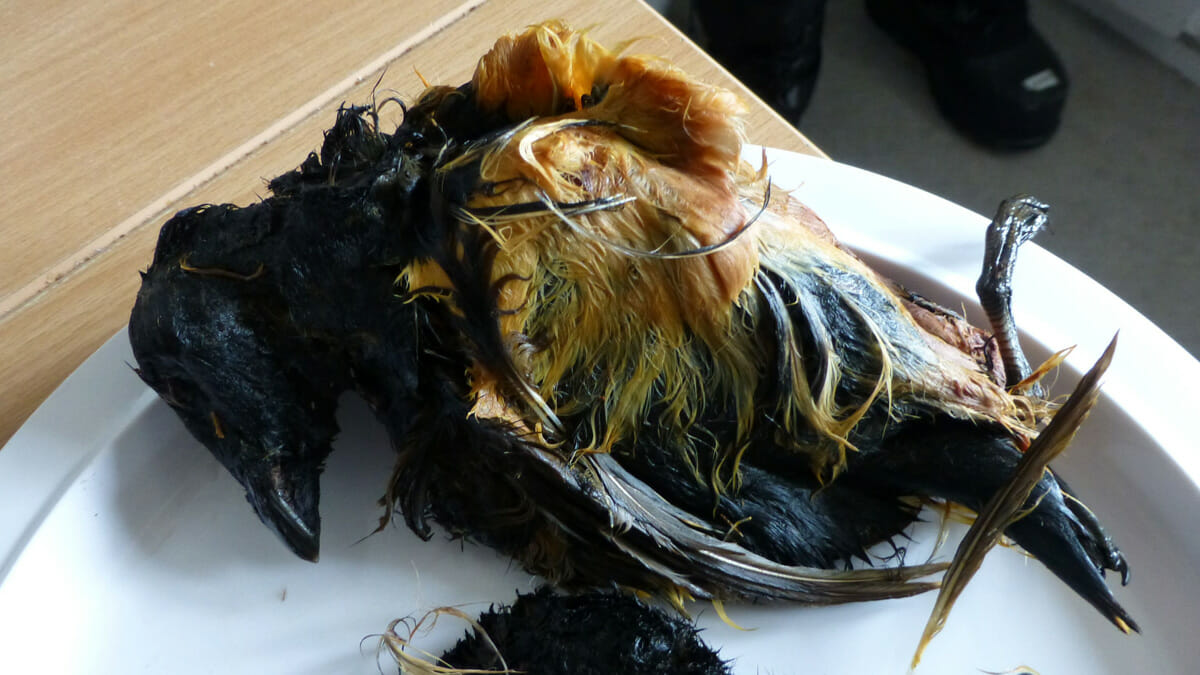
But seriously, the extraordinary power of hunger and culture are on full display with the items discussed in this thread.
Re: Rotten meat may have been a staple of Stone Age diets
#118So why rotten meat smells terrible and a steak delicious? Why would we evolve that perception of something that nutritious and which could prevent me from starving. Why my nose keeps telling me to keep away from rotten meant?
IIUC, the digestive system (and the gut bacteria in it) provide feedback to your taste buds over time.
If the appropriate "paleo diet" bacteria settled in (e.g. using the gradual method to build tolerance), your nose would probably change its mind soon enough.
Not a biologist, just a layman here.
Re: Rotten meat may have been a staple of Stone Age diets
#119Earlier quoted context omitted.
this somehow always comes up when anybody mentions human sweating or how good we are walking large distances. But whoever thinks it's feasible to hunt any animal worth its calories just jogging behind it has never chased a playful dog. A furry mammal with no sweat glands has way more endurance than any fit man and let's not talk about top speed. You'd never catch it.
Not so: https://www.nytimes.com/2009/10/27/health/27well.html "But when it comes to long distances, humans can outrun almost any animal. Because we cool by sweating rather than panting, we can stay cool at speeds and distances that would overheat other animals. On a hot day, the two scientists wrote, a human could even outrun a horse in a 26.2-mile marathon."
> distances that would overheat other animals
what other animals? I used the dog example because it fits perfectly here: they don't sweat yet it's impossible to catch up to them if they are running away. Even if they overheat they don't just drop dead, they slow down to a human's walking pace.
And what about running animals that do sweat like horses? makes no sense. What makes more sense is to approach from multiple fronts and spear/arrow it down. Plus, all remaining hunter-gatherers hunt with the help of dogs. Sure, you do have to run, a lot. But the endurance side is the least important.
Re: Rotten meat may have been a staple of Stone Age diets
#120I don't see how that's surprising, at least if you subscribe to the Endurance Running Hypothesis (and I do). Any prey humans used to hunt using what we now know as persistence hunting would have been large game. Especially in the hot, tropic climates early humans seemed to have thrived in, such meat would have started to spoil, even if hunted fresh, before any such hunter would have had the time to bring it back to t…
Why subscribe to the endurance running hypothesis, though? There are no contemporary examples of humans hunting that way, and hominids were already making tools by the time they had developed to subsist on meat. The endurance/persistence hypothesis doesn't even make sense without tools like spears, knives, or arrows, because humans don't kill their prey by biting into them. If they had access to primitive weaponry, w…
[deleted]