Live data from Hacker News

Leaving China

persuasion.community

511–520 of 686 posts

Re: Leaving China

#511
post #98
post #87

Earlier quoted context omitted.

You sure your ESL class is a bigger contribution to a host economy than a skilled welder?

[flagged]

Why, you can still be useful but only marginally so.

For instance the demand for ESL classes is largely driven by school curriculum, which in China is set by the government rather than organic market forces. Welding, on the other hand, is necessary for physical production of certain goods. It can be argued about second order effects from learning a language but from purely libertarian economic POV a welder creates more added value.

Re: Leaving China

#512

Earlier quoted context omitted.

This hits home for me a lot. I've lived in Spain, Argentina and Finland, all in hoping to fill whatever gap I thought it would, whether that would be life quality, weather, culture or whatever. But after the honeymoon period, the cracks started to show at every place. I'm now back in my home country, Estonia, which I (now) think is the best for me - but that creeping feeling of something better being somewhere out th…

That's very interesting, what made you leave those countries? Argentina likely has money issues, but the other two come very "highly recommended" (high quality of life, law & order, etc), especially Finland.

Argentina has big economical issues indeed, and the resulting inconveniences were what drove me away eventually, and yet out of everywhere I've been, Argentina has had by far the friendliest people I've ever met, and the easiest people to make friends with.

Spain (the government and regulations around renting places) was unfriendly to newcomers as its a very socialist country and not very welcoming to digital nomads. Everything there is built in a way to expect a local bank account, local job, etc. From the moment of trying to get a local ID card it was clear that you were not really wanted there. Processes made purposely difficult and requirements differ from police station to police station. Beautiful country, but given that I do not intend to stop working remotely as a contractor it made basic things there very difficult. Spain is quite corrupt however so if you have money you _can_ get around these issues via some lawyer agencies who get you through the door in a matter of days of what otherwise can be a half-year wait in queue, but I just found the system fighting me too much.

Finland is great though, everything runs efficiently, most of everything can be done online, just like in Estonia, but much like Estonia, very difficult to make friends and the culture in general is quite closed and people keep to themselves a lot. Most people I know here have had the same friends since highschool. So when it came down to Finland or Estonia, I just chose the one I already had friends at.

Re: Leaving China

#513

Earlier quoted context omitted.

Taiwan, SH, MB did not do batshit insane things like spraying bleach on the streets, dna swab testing imported fish, metal vehicle surfaces, not to mention welding doors of apartment complexes shut, barricading entire neighborhoods, requiring full neighborhoods to take pcr tests en masse, quarantine camps, etc.

Oh you're upset about the testing fish. Agree, that's crazy, we should all be up in arms about the unnecessary fish testing! Melbourne, 100% did lock people in their apartments, they didn't used welders, just Police, Guns, and force. They also required mass PCR tests, and had Quarantine Camps (though they used hotels).

Maybe Australia wasn't a good example of what to do under a pandemic.

Re: Leaving China

#514

Earlier quoted context omitted.

Wait why is that a problem? Nationality and ethnicity are two different things.

They have the same name, which makes it confusing. E.g. if someone is French does that mean their ethnicity or their nationality?

That's a bad example because France isn't really an ethnicity. It's a group of regions that used to speak different languages even after World War II.

You have Bretons that are ethnically close to Irish/Scotish, Alsaciens who are ethnically Germans, Basque who are similar to the Spanish Basque, Corse who want to be independent...

A better example of a country that more or less encompass an ethnicity would be Germany, or Japan. But even there you'll find exceptions (Ainu in Hokkaido, Okinawa being also ethnically different as Ryukyu vs Yamato...)

Re: Leaving China

#515
post #312
post #108

Earlier quoted context omitted.

>Chinese diaspora I had no idea how wide it is until a family member married someone from Asia and he explained ot me that his family thinks of themselves as ethnically Chinese, although they're totally disconnected from China.

It's actually pretty fascinating if you spend time in SE Asia. Chinese have been immigrating to all the countries for centuries. There are super old communities of Chinese in Vietnam, Thailand, Malaysia, Indonesia, everywhere in fact. And they are often a distinct community, with their own language (a dialect from where they came from in China). They were often economic migrants, so tend to be seen as a "merchant cla…

Yes I believe Singapore was more of less kicked out of Malaysia because there were too many ethnical Chinese?

Re: Leaving China

#516
post #223

Earlier quoted context omitted.

I think GP is delusional, but you're not seriously suggesting Latin American countries vilify the US for no reason, right? US interventions in Latin American affairs are well documented[1]. You can't just kick the can to Spain, when the US had a much more direct and recent involvement. It doesn't seem you learned much from your time there, as this history is discussed openly and known in detail, from school children…

> you're not seriously suggesting Latin American countries vilify the US for no reason I am stating an absolute fact: In LATAM, blaming others for everything is a national sport. And the US is a favorite bad guy. I can't tell you how many times I have heard this in person in the context of social gatherings, local news and even government/political party communications. The point is they blame it all on the US. Alway…

> The point is they blame it all on the US. Always.

Maybe because historically the US has been behind a lot of things?

> Trust is a delicate thing. Once you lose it,

Exactly, people simply do not trust the US in countries where they have meddled in. Rightfully.

Ridiculous to make this into a sob story about people vilifying the US "unfairly".

Re: Leaving China

#517

I've got some years in China. I speak Chinese, I'm eating a jianbing[1] as I write this. Didn't leave during the three years of zero covid. Reopening has changed everything about daily life in the best way. But I'm also looking for a way out. For the reasons outlined in the article, yes, and others. General sentiment toward foreigners has rebounded a bit since the early days of the pandemic, but it's pretty clear tha…

Berlin as an option stands out both geographically and in cost of living. What makes it attractive despite that?

That about tracks.

Re: Leaving China

#518

Earlier quoted context omitted.

> Of course it was all nonsense, Clinton and Bush were just listening to Wall Street interests I'm not a fan of either Clinton or Bush, but this is unfair. There was far more going on. At the time, there was a strong sense that democracy had won, and that it was inevitable. That empowering people economically would eventually, without fail, lead to democratic reform. Fukuyama's "The End of History and the Last Man" i…

> They created an incredibly unequal world that has eroded democracy to the point where we can seriously discuss a US that isn't a democracy anymore in our lifetimes. Could you elaborate? I find this too much of a stretch to think about and am not knowledgeable enough on the topic

>> They created an incredibly unequal world that has eroded democracy to the point where we can seriously discuss a US that isn't a democracy anymore in our lifetimes.

> Could you elaborate? I find this too much of a stretch to think about and am not knowledgeable enough on the topic

Until the 1970s and 1980s we lived in a totally different world. Taxes on the rich were high. Productivity gains were shared with workers whose wages went up. After the 1980s (Nixon, Reagan, Thatcher, Fukuyama, and more broadly neocons) everything changed.

It's incredibly striking, you can see it even is basic graphs.

The share of wages as percentage of GDP https://fred.stlouisfed.org/graph/?g=2KkM Until the 1970s it was pretty stable, then you have a steep downward trend. The capital class who owns things, now that they had many fewer regulations and didn't need to pay taxes, they decided to keep far more of the wealth for themselves.

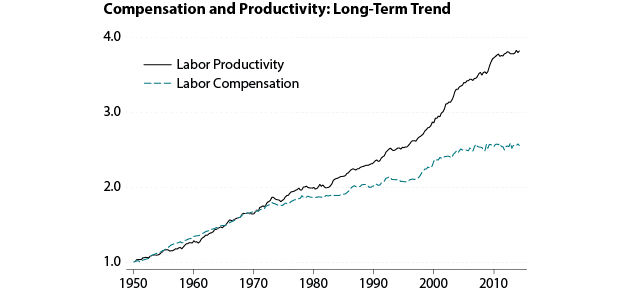
This is also what gives rise to this famous graph https://www.counterpunch.org/wp-content/dropzone/2016/10/unn... The gap between labor productivity and labor compensation.

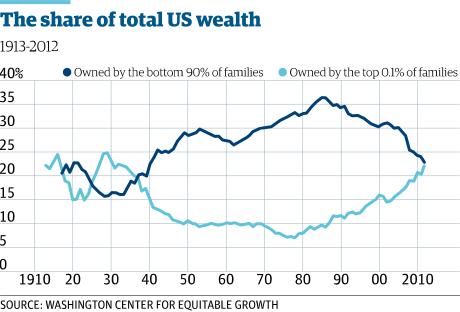
Or just look at a graph of who owns what https://static.guim.co.uk/ni/1415721490539/Wealth_line-chart... You can see it clearly, in the 80s the top 0.1% take off and the bottom 90% of people start to lose.

Even our language clearly shows what's going on. Look at when the term "Rust belt" became a thing: https://books.google.com/ngrams/graph?content=Rust+belt&year...

Companies in 2022 spent nearly $1 trillion in stock buybacks. Those were illegal until 1982! That money would have gone to workers, instead, it's going to owners.

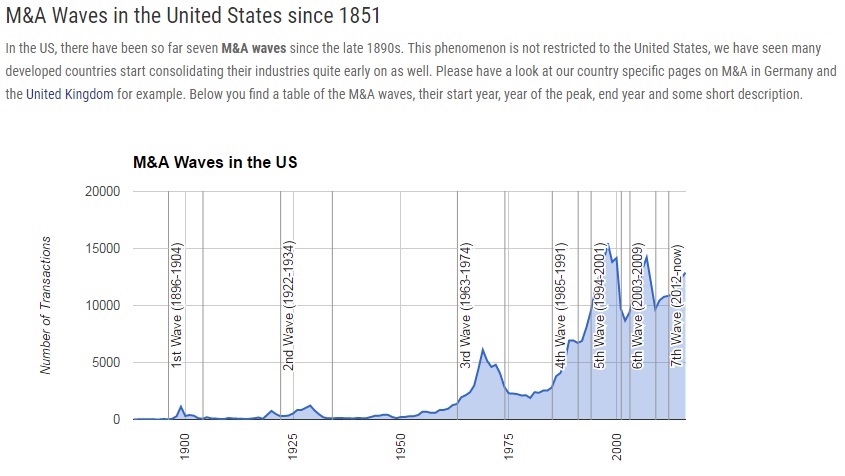
There's also been a huge shift in competition. Instead of competing with one another, companies now consolidate. This used to be a very rare event, now, in most industries we have only a few big players that absorb everyone else. That's a direct consequence of deregulation, not enforcing antitrust laws, and giving money to capital instead of people. https://2.bp.blogspot.com/-wyvntk8Krq0/WQdL-4X-WjI/AAAAAAAAI...

Guess why Trump talks about Making America Great Again? People have a collective memory of a time when wages were going up and when there was optimism about the American Dream.

The crisis we're seeing in the US today is all about these charts and this timing; it's really striking how the 80s are the focal point for all of the problems that people talk about today. People are hurting now, their wealth is sapped, their wages aren't going anywhere, they have little security left. They feel like they have no future and that their children't won't have a future. Not to mention that large parts of the country are deindustrialized.

It's really sad that instead of turning to organized labor, like we saw in the 19th century, these people are mostly turning to the exact people who marginalized them in the first place (conservatives, Republicans and large businesses).
Re: Leaving China

#519
post #499

Earlier quoted context omitted.

What democracy? Citizen interests haven't mattered for a looong time.

Really? Why is Biden canceling student debt then?

He isn't. State governors sued him over the potential loss in tax revenue and SCOTUS is likely going to rule against it because the court is stacked with right-wingers. Also see gun laws being nowhere near as strict as people would like, and Roe v. Wade being repealed, with hard anti-abortion laws and bans being enacted in states where a majority of citizens are pro-choice. The politics of the general American populace is far to the left of what the spectrum of "left" to "right" within the government allows.

The only citizens whose interests really matter in the US are conservatives, Christians and (of course, because the US is an oligarchy) billionaires. Everyone else is a serf who takes whatever scraps fall from the table.

I mean, Americans are bringing child labor back. Do you think the majority of Americans support child labor? No. Does it matter? No, because even with a Democrat (ostensibly 'leftist' but, being pro-military, pro-cop and anti-labor nowhere near it in practice) in charge, American laws are moving further right than ever.

Re: Leaving China

#520
post #510
post #508

Earlier quoted context omitted.

Sinovac, Sinopharm, etc that China made weren't working up to the required standards. It wasn't something anyone wanted to come out and admit. To make vaccination mandatory they'd have to admit, kill off their own producers and import. It'd be a political disaster.

Their vaccines weren't great but mandating them would have been a lot better than nothing.

It could actually have been a lot worse than nothing. Compare covid deaths in Japan and Korea prior to the mRNA vaccine rollout in 2021 to afterwards; afterwards the infection and death rates sky-rocketed.
Post reply on HN