Live data from Hacker News

You just gotta tell a good story

kampheyapproved.medium.com

31–40 of 75 posts

Re: You just gotta tell a good story

#31

Earlier quoted context omitted.

> Plato said it best, "Those who tell stories rule society." Source? This quote appears in many places online, but never with any source, besides "attributed to Plato", or "as Plato once said" etc. Usually this means it's not something Plato said. The internet is full of fake Plato quotes. I got to the 6th page of google results before seeing anything like a source, and followed that trail - "Leadership Manipulation…

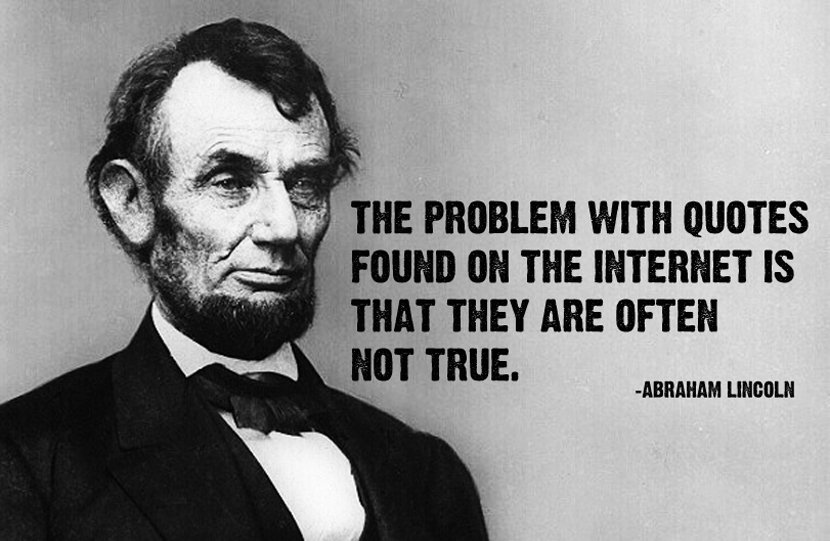
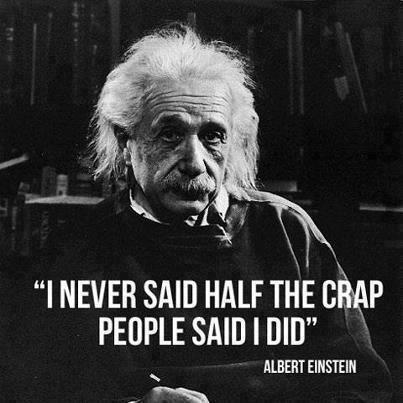
imho that story should have ended like: "I didn't say that" - Plato

It's been done to death already. e.g. https://www.redbubble.com/i/art-board-print/Plato-I-Didn-t-S...

Some variants:

Einstein https://innovativewealth.com/wp-content/uploads/2015/10/Eins...

Lincoln https://innovativewealth.com/wp-content/uploads/2015/10/quot...

Buddha https://superaalifragilistic.files.wordpress.com/2013/03/new...

Re: You just gotta tell a good story

#32
post #14

The other day I was aimlessly browsing through Youtube, and I found a video by a man named Ira Glass. I had never heard of him but apparently he's a famous NPR journalist. He told a story about how in English class he learned to start with a theses and then explain facts. But, in broadcasting, he learned that doesn't work. Instead, you start with an anecdote - the purest form of a story. Ira pointed out that humans a…

> Instead, you start with an anecdote

This also works in math.

Best professor I had, he spent half of the lesson explaining the life and motivations of some mathematician (Riemann, Fourier, Weierstrass, ...), and why he was so obsesed with such and such problem. He surely added a lot of salt and pepper to his story. Then, once everybody was craving for the technical details, he stated the main result and told us just a couple of crucial details in the proof. The complete, formal, proof was given as a handout, and you really worked through it in the afternoon.

An unusal teaching method, but very engaging.

Re: You just gotta tell a good story

#33

You'll never believe this one weird old tip, but... I don't think there was a story in this blogpost so much as a humblebrag about a never-fail technique for teaching board games. Certainly it had nothing on the craft of storytelling, which itself is dominated by marketing-message literature of this sort. The relationship between story and teaching is baldly asserted from authority and then never brought up again.

If you have to say it you must think it's not obvious to me - for some reason.

Re: You just gotta tell a good story

#34
post #14

The other day I was aimlessly browsing through Youtube, and I found a video by a man named Ira Glass. I had never heard of him but apparently he's a famous NPR journalist. He told a story about how in English class he learned to start with a theses and then explain facts. But, in broadcasting, he learned that doesn't work. Instead, you start with an anecdote - the purest form of a story. Ira pointed out that humans a…

That style has became ubiquitous for TED-style talks and most American non-fiction books (even technical ones). The chapter uses an anecdote, if possible name-dropping a known case or famous person, then shortly expands supporting research to the general principle.

That style is very persuasive but unscientific. It is precisely designed to lower psychological defenses against the idea, which can leave the spectators dumbfounded that they did not find any counter-arguments when they heard it.

I suspect this is also while this style has high short-term information retention but a poor long-term one. A strong idea is one that withstands all attacks (coincidentally there is also "Cargo cult science (1974)" on the front page).

Re: You just gotta tell a good story

#35
post #16

This post’s writing markedly improved right when it started talking about teaching board games and dropped right when it stopped. I think it’s because the author’s passion for this anecdote about teaching board games distracted them from consciously applying that peculiar staccato style. I don’t know the reason for the staccato style. Self-imposed onto their content because it’s good for engagement? A technique for g…

Incredible gear shift into the board games. I bounced right off of the first part but dug in and flowed with the board game part and maybe I also learned something. At the end, I was like why did I dislike this writer to start...

Re: You just gotta tell a good story

#36

I coin a code comment format long long ago. Over the many years that followed I've never bothered to coin a name for it, until today! I present to the world: Talented Comments! It was late at night after spending a seemingly absurd amount of time in the coding zone. One of those winning steaks where one writes many walls of code that suspiciously lack the usual bugs and typos, draining one cup of coffee after the oth…

I'm not sure if you are sarcastically referencing online recipes nowadays, or are serious...

Re: You just gotta tell a good story

#37
post #14

The other day I was aimlessly browsing through Youtube, and I found a video by a man named Ira Glass. I had never heard of him but apparently he's a famous NPR journalist. He told a story about how in English class he learned to start with a theses and then explain facts. But, in broadcasting, he learned that doesn't work. Instead, you start with an anecdote - the purest form of a story. Ira pointed out that humans a…

About everything starts with an anecdote. And it works. But I am so sick of it and also stop reading or listening. I don't want any anecdote.

Re: You just gotta tell a good story

#38
post #14

The other day I was aimlessly browsing through Youtube, and I found a video by a man named Ira Glass. I had never heard of him but apparently he's a famous NPR journalist. He told a story about how in English class he learned to start with a theses and then explain facts. But, in broadcasting, he learned that doesn't work. Instead, you start with an anecdote - the purest form of a story. Ira pointed out that humans a…

I hate that this style is shoehorned into absolutely everything, though. I can barely stand to read most nonfiction books anymore, even highly regarded ones about subjects I'm interested in. The part of my brain that likes a good story is very different than the one that's ready to refine my model of the universe, and it's jarring to have Malcom Gladwell artificially stitching together unrelated events, people, and ideas in order to form his pet narrative. I guess he does it to cover the fact that he has absolutely no useful insights about the world and is just trying to give the reader the impression that they're getting smarter, but even people with meaningful things to say end up copying that style. I find myself neither learning anything nor being engaged in the story, because it's much more boring than an actual novel where the story is the point. I really just don't get why so much non-fiction is this way now.

Re: You just gotta tell a good story

#39
post #34
post #14

The other day I was aimlessly browsing through Youtube, and I found a video by a man named Ira Glass. I had never heard of him but apparently he's a famous NPR journalist. He told a story about how in English class he learned to start with a theses and then explain facts. But, in broadcasting, he learned that doesn't work. Instead, you start with an anecdote - the purest form of a story. Ira pointed out that humans a…

That style has became ubiquitous for TED-style talks and most American non-fiction books (even technical ones). The chapter uses an anecdote, if possible name-dropping a known case or famous person, then shortly expands supporting research to the general principle. That style is very persuasive but unscientific. It is precisely designed to lower psychological defenses against the idea, which can leave the spectators…

I think it's less about lowering the listener's defenses to the idea so that they're easily persuaded, and more about giving them the impression that they're actually learning something of substance, when they're actually not. In a week they'll be completely unable to articulate any of the important ideas from the talk, not because it's a poor learning style, but because there were never any important ideas to begin with. "You just have to watch it." It's like thought junk food. It's instantaneously satisfying but provides no actual mental nutrition.

Re: You just gotta tell a good story

#40
post #34
post #14

The other day I was aimlessly browsing through Youtube, and I found a video by a man named Ira Glass. I had never heard of him but apparently he's a famous NPR journalist. He told a story about how in English class he learned to start with a theses and then explain facts. But, in broadcasting, he learned that doesn't work. Instead, you start with an anecdote - the purest form of a story. Ira pointed out that humans a…

That style has became ubiquitous for TED-style talks and most American non-fiction books (even technical ones). The chapter uses an anecdote, if possible name-dropping a known case or famous person, then shortly expands supporting research to the general principle. That style is very persuasive but unscientific. It is precisely designed to lower psychological defenses against the idea, which can leave the spectators…

Can you name any ideas, strong or otherwise, just any one, that would actually stand up to the kinds of misinformation and bad faith arguments that are common on the Internet though? If TED was, instead of being intellectual entertainment for the wealthy, but instead tried to portray itself as a serious scientific conference where papers are presented, it would stoop to "fighting with pigs", as it were, and open itself up to all sorts of stupid arguments. Like viruses don't cause disease, level of conversation, backed by faith-based arguments.

TED isn't a scientific conference with papers, and it doesn't pretend to be. It's there to drum up interest from the wealthy in the speakers and their projects. If you present there and Bill Gates hears your moving speech on, say, a better cure for malaria, he, and others with that kind of wealth, are liable to invest. But if your speech makes it sound like you're unsure and don't know what you're doing and are just fumbling around, hedging your bets, then you and project might end up langushing in obscurity. (Which, imo, a properly scientific presentation would consist of, because there are no guarantees, just probable possibilities vs improbable impossibilities.)

"If you want to build a ship, don't drum up the men to gather wood, divide the work and give orders. Instead, teach them to yearn for the vast and endless sea.”

-Antoine de Saint-Exupéry

TED sells yearning for the sea, and not how much wood to gather in order to build the ship. There are other, better forums for that. What you're looking for wouldn't fit neatly into their format.

Still, if you're wealthy and see a TED talk, and then want to invest in the person in the basis of a good TED talk, I'll just close with a link to Elizabeth Holmes' convincing talk. I encourage you (or a hired scientist) to do your due diligence on a particular idea.

https://m.youtube.com/watch?v=ho8geEtCYjw
Post reply on HN