Live data from Hacker News

Turn your backyard into a biodiversity hotspot

wired.com

121–130 of 214 posts

Re: Turn your backyard into a biodiversity hotspot

#121

Earlier quoted context omitted.

I did this when I bought a house in Santa Cruz. Planted a bunch of natives, in particular bushes that flowered at different times of the year - ceanothus, manzanita, etc. I happily had bees and other insects around the yard almost all the time. It's worth doing. Funny thing, monarch butterflies (and the caterpillars) seem to prefer the non-native Milkweed to the native variety.

Which milkweed did you plant? I find that our Monarchs love narrow-leaf milkweed but HATE showy milkweed. They have to be absolutely desperate to nibble on it. Both are technically native, but clearly one of them is tastier.

The milkweed that I planted is common milkweed and swamp milkweed. I find swamp milkweed to be prettier, but they both seem extremely popular and they seemed to bloom at different times, which is a nice benefit. (I'm not certain about the bloom times as I'm going only on a year's experience.)
Re: Turn your backyard into a biodiversity hotspot

#122
post #115

Earlier quoted context omitted.

> I sort of disagree with the article though. I think one should actually take a relatively hardline approach to planting only native plants. Just because you have a lot of activity around a plant doesn't mean it's the right activity. You could be attracting non-regional and non-native species which is generating the activity. I disagree. Native plants are great, but so are tomatoes or some bell and habanero peppers.…

I was distinguishing plants from crops. I think it's perfectly fine to be growing non-native vegetables and fruits that you'd like to eat or sell.

Ah, gotcha. Makes sense.

Re: Turn your backyard into a biodiversity hotspot

#123

During the process of buying our house, one of the disclosures was that the house has a huge inground swimming pool, but some aspect of the plumbing was broken, and nobody knew how much it might cost to repair. So, as-is. Nobody in our house swims, and the costs of repairing and running the pool would be excessive. At first I thought about having it drained and either removed or converted to some kind of outbuilding…

The backstory for one of the main characters from The Southern Reach Trilogy involves a pool turned into a freshwater pond.

Maybe you're somehow influencing a future anarco biologist

Re: Turn your backyard into a biodiversity hotspot

#124
post #3

After getting a house with a decent sized yard and trees, I have been having a lot of fun with planting native plants. While my neighbors are cutting down trees, which is honestly hard to watch, and paying landscapers to plant non-native plants, I'm spending a lot of time researching and planting native plants. It is honestly one of the more fulfilling things to walk outside and see all sorts of bees, butterflies, mo…

What’s the size of your lot?

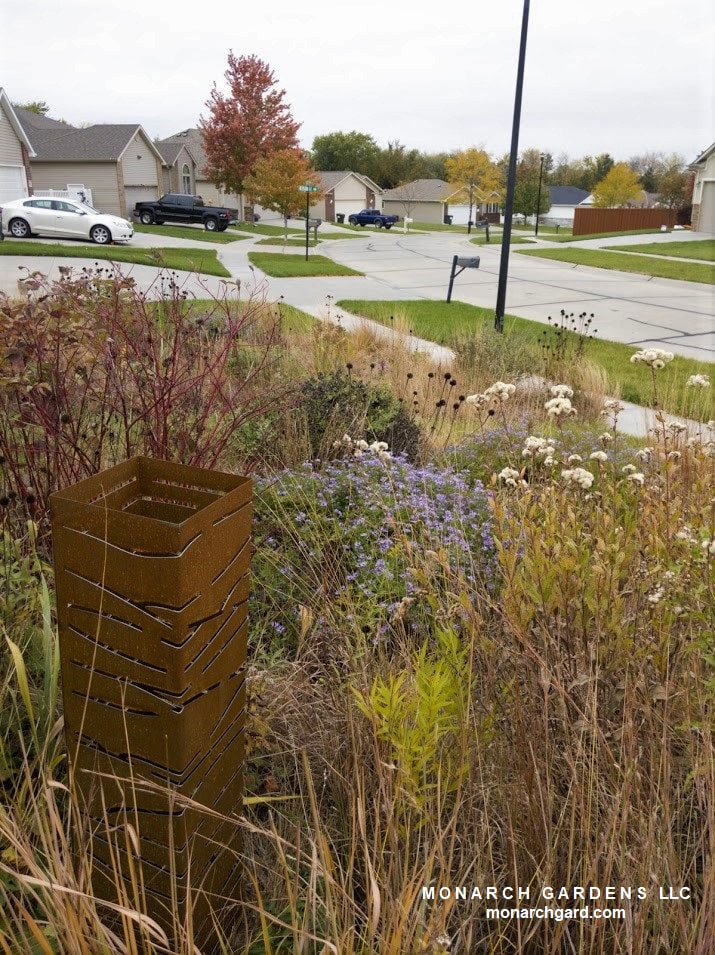
It can be small or big. Checkout Benjamin Vogt's work: https://www.monarchgard.com/portfolio.html

In particular, his house is on a small lot typical of suburban sprawl neighborhoods.

https://www.monarchgard.com/uploads/6/7/1/6/67169427/pxl-202...

Re: Turn your backyard into a biodiversity hotspot

#125
post #61

Earlier quoted context omitted.

That's an example of part of the problem though. By originally cutting everything down and destroying the ecosystem, it pushed out the predators that would keep the rodents in check. We have rodents here for sure, but there are also foxes, coyotes, fisher cats, hawks, raccoons, bobcats, and owls.

I dont want coyotes and bobcats around my house. neither does anyone who has pets or livestock. There's a reason they were pushed out. We still have owls and other birds of prey. We have raccoons and they are annoying and can damage property.

>I dont want coyotes and bobcats around my house. neither does anyone who has pets or livestock

Only people who do a poor job of looking after their pets and livestock fear natural predators the way you do.

Re: Turn your backyard into a biodiversity hotspot

#128
post #3

After getting a house with a decent sized yard and trees, I have been having a lot of fun with planting native plants. While my neighbors are cutting down trees, which is honestly hard to watch, and paying landscapers to plant non-native plants, I'm spending a lot of time researching and planting native plants. It is honestly one of the more fulfilling things to walk outside and see all sorts of bees, butterflies, mo…

> I am really hoping that all the milkweed we're planting brings more monarchs. Last year, we saw a couple.

The numbers went up a bit during Covid, surprisingly. I wish we could do something about the general downward trend, there are far, far fewer now than there were even 30 years ago.

Re: Turn your backyard into a biodiversity hotspot

#129
post #86
post #61

Earlier quoted context omitted.

That's an example of part of the problem though. By originally cutting everything down and destroying the ecosystem, it pushed out the predators that would keep the rodents in check. We have rodents here for sure, but there are also foxes, coyotes, fisher cats, hawks, raccoons, bobcats, and owls.

A simple proposition for homeowners - trade your lawn for a bunch of coyotes and raccoons. I wonder why more suburbs don't do that.

That's a false dichotomy. I'm sure you could come up with something better than that if you put your mind to it.

Re: Turn your backyard into a biodiversity hotspot

#130

I've always had a dream to buy a plot of land and homestead. But I have family that is getting older and needs my help more often. The though of being far away from essential services like Hospitals is not ideal. Also I'm still too early in my career to make that move. So, more recently I've been thinking of an idea I call "urban homesteading", which is just based off the idea of not waiting until the perfect circums…

My wife and I did something like this for a while (before moving out of town to a more traditional farmstead last year). You won't be able to grow all of your own meat or grain, but you can fit a ton of tomatoes, peppers, squash, etc. in a city lot. We're on track for our canned tomatoes to make it through to next harvest from a poorly managed ~200 square foot plot for example. We ran out of frozen peppers and onions recently, but those had a rough start since we moved in in June so they had a late start.

We were also allowed to keep up to 6 hens which were enough to keep two people in eggs and provided excellent compost.

Post reply on HN