Live data from Hacker News

Toxic Exposure: The True Story Behind the Monsanto Trials

press.jhu.edu

101–110 of 116 posts

Re: Toxic Exposure: The True Story Behind the Monsanto Trials

#101
As the end user, I know the formulation of roundup has changed over the years, in particular the wetter and other additional ingredients used along with the active ingredient.

"Probably" is a weasel word and does not belong when claiming to have made decisions based on hard science, especially since at least one type of wetter used and mixed in with the final roundup product is (sources I've read) carcinogenic ... sadly the same stuff is used in ... some beauty products ... so no surprise that isn't being waved around.

On the list of herbicides used in my parts, looking at break down products and the LD50 rates, life time in soil, Glyphosate is nowhere near the top of concerning herbicides used. If coincidences is considered acceptable, I've noted the sharp decline in bandicoot population where part of their diet is earthworms and one of the more popular weed killers finding wide use the last few years, has a secondary breakdown product which in high enough concentrations lethal to earthworms.

Disclaimer: I've worked on farms spraying various herbicides on and off for near 30 years. I've always been suspicious of what's been recommended as safe ever since witnessing first hand the genetic damage old 245T formulations (used in our parts N.Q. Aust for ring barking trees) could inflict. This means I usually like to know just how bad something is if I'm using it, use sparingly if there are flags, and personally I won't use half the herbicides used that are considered safe, but roundup I consider moderately safe for the environment since the target weed doesn't need to be saturated to the point of run off for it to work and the work on testing it in the 1950s and 60s prior to Monsanto didn't raise any flags.

Re: Toxic Exposure: The True Story Behind the Monsanto Trials

#102
post #50

This story is a broken record that just repeats over and over again in different forms and industries. It follows the general form of: 1. Develop some profitable product 2. years later people report horrible effects 3. Big co denies and stalls for years/decades 4. Hundreds of thousands /millions of people are negatively effected 5. Science eventually overwhelms any counter argument and product in taken off market 6.…

One of the fascinating aspects that allows this to continue is that legal liability for a destructive product is essentially voided when a company is sold (look at the arguments Dow chemical made in Bhopal). This has created a system where nations effectively allow corporate actors to transfer the harm they cause onto the government and also let's companies skimp on doing effective due diligence when seeking a merger…

> I hope future alien historians laugh at how wildly incompetent our governments were at dealing with corporate entities.

The untold secret is Governments were built for supporting corporations, not citizens. So this is by design.

Re: Toxic Exposure: The True Story Behind the Monsanto Trials

#103
post #50

This story is a broken record that just repeats over and over again in different forms and industries. It follows the general form of: 1. Develop some profitable product 2. years later people report horrible effects 3. Big co denies and stalls for years/decades 4. Hundreds of thousands /millions of people are negatively effected 5. Science eventually overwhelms any counter argument and product in taken off market 6.…

One of the fascinating aspects that allows this to continue is that legal liability for a destructive product is essentially voided when a company is sold (look at the arguments Dow chemical made in Bhopal). This has created a system where nations effectively allow corporate actors to transfer the harm they cause onto the government and also let's companies skimp on doing effective due diligence when seeking a merger…

> I hope future alien historians laugh at how wildly incompetent our governments were at dealing with corporate entities.

Future historians will understand, I suspect, as do many modern ones (and political scientists, etc.) that governments are creations of the ruling classes to potect their interests, and corporations (in turn, a creation of governments) serve to advance that purpose, and it is by choice and design (both immediate and structural), not incompetence, that governments do not constrain them in their pursuit of that goal, even when they try to convince the non-ruling classes that they are attempting to do so.

Re: Toxic Exposure: The True Story Behind the Monsanto Trials

#104
post #89
post #88

Earlier quoted context omitted.

Only EU considers it a potential carcinogen. Rest world says it safe. No animal model study has shown it to be dangerous.

Not just EU, the World Health Organization’s International Agency for Research on Cancer classified glyphosate as “probably carcinogenic to humans” back in 2015. Here’s a systemic review showing glyphosate causes cancer in multiple animal studies: https://pubmed.ncbi.nlm.nih.gov/32050978/ “The strongest evidence shows that glyphosate causes hemangiosarcomas, kidney tumors and malignant lymphomas in male CD-1 mice, he…

By Christopher J Portier, the same Christopher Portier that served as a special advisor for IARC while at the same time secretly accepting money from law firms involved in glyphosate litigation. The IARC study was edited to remove evidence to the contrary to its findings.

https://www.judicialhellholes.org/2019/05/14/california-cour...

"Closer scrutiny of the IARC process reveals that it was advised by an “invited specialist,” Christopher Portier, in its work on glyphosate. At the same time Mr. Portier was working for the agency, he was being paid by the Environmental Defense Fund, an anti-pesticide group. Moreover, Mr. Portier received $160,000 from law firms suing over glyphosate. When asked about this potential conflict of interest, Mr. Portier initially claimed to be advising firms on other IARC-related lawsuits and not glyphosate litigation. He later acknowledged that his statement was wrong. It is also worth noting that Mr. Portier had no experience with glyphosate prior to his work on it for IARC.

Following Mr. Portier’s arrival at IARC, the final glyphosate study was altered in at least 10 ways to remove or reverse conclusions finding no evidence of carcinogenicity. The agency removed multiple scientists’ conclusions that studies found no link between glyphosate and cancer in lab animals and statistical analyses of studies with negative findings were turned into positive ones. The determination that glyphosate was “probably carcinogenic” was based on “limited evidence” of carcinogenicity in humans and “sufficient evidence” in experimental animals."

Re: Toxic Exposure: The True Story Behind the Monsanto Trials

#105
post #78

Earlier quoted context omitted.

The "Monsanto" trademark was too toxic to keep using after the merger, so they've continued using this other trademark, which is somehow apparently less toxic.

Well yeah. When I see Bayer, I think aspirin.

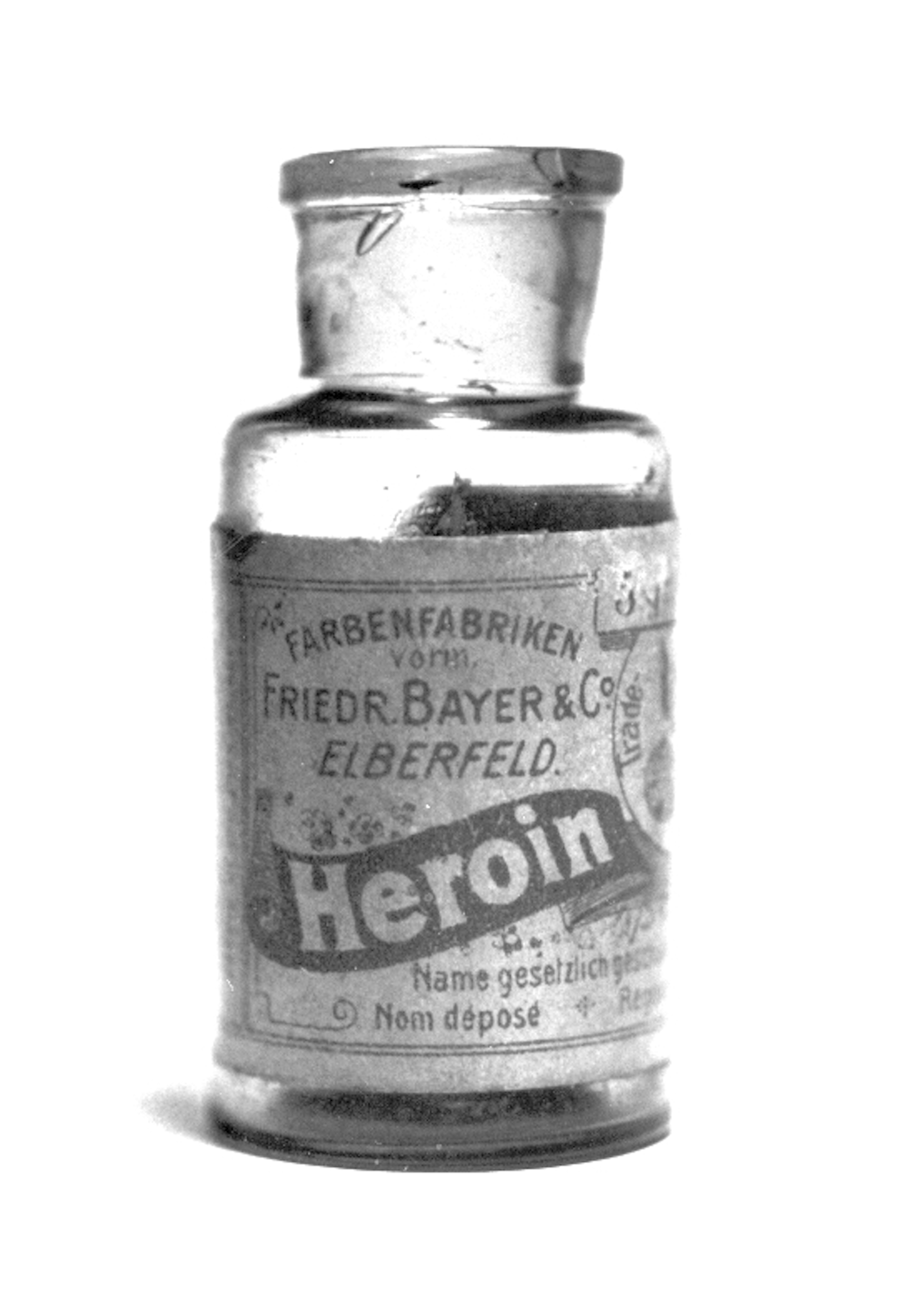
You might have heard of their classic cough medecine, too: https://upload.wikimedia.org/wikipedia/commons/3/38/Drug_sto... https://upload.wikimedia.org/wikipedia/commons/f/ff/Bayer_He...

Re: Toxic Exposure: The True Story Behind the Monsanto Trials

#106

Expanded summary from the description: > For years, Monsanto declared that their product Roundup, the world's most widely used weed killer, was safe. But that all changed in 2015, when the International Agency for Research on Cancer (IARC) analyzed data from scientific studies and concluded that glyphosate, the active ingredient in Roundup, is probably carcinogenic. The Environmental Protection Agency (EPA) disagreed…

> who testified in the first three trials against Monsanto

In other words, he's paid litigation consultant. Of course his book is going to be in alignment with those that pay him.

Re: Toxic Exposure: The True Story Behind the Monsanto Trials

#107
post #50

This story is a broken record that just repeats over and over again in different forms and industries. It follows the general form of: 1. Develop some profitable product 2. years later people report horrible effects 3. Big co denies and stalls for years/decades 4. Hundreds of thousands /millions of people are negatively effected 5. Science eventually overwhelms any counter argument and product in taken off market 6.…

One of the fascinating aspects that allows this to continue is that legal liability for a destructive product is essentially voided when a company is sold (look at the arguments Dow chemical made in Bhopal). This has created a system where nations effectively allow corporate actors to transfer the harm they cause onto the government and also let's companies skimp on doing effective due diligence when seeking a merger…

What do you think are the best ways for a government to deal with corporations?

Re: Toxic Exposure: The True Story Behind the Monsanto Trials

#108
post #104
post #89

Earlier quoted context omitted.

Not just EU, the World Health Organization’s International Agency for Research on Cancer classified glyphosate as “probably carcinogenic to humans” back in 2015. Here’s a systemic review showing glyphosate causes cancer in multiple animal studies: https://pubmed.ncbi.nlm.nih.gov/32050978/ “The strongest evidence shows that glyphosate causes hemangiosarcomas, kidney tumors and malignant lymphomas in male CD-1 mice, he…

By Christopher J Portier, the same Christopher Portier that served as a special advisor for IARC while at the same time secretly accepting money from law firms involved in glyphosate litigation. The IARC study was edited to remove evidence to the contrary to its findings. https://www.judicialhellholes.org/2019/05/14/california-cour... "Closer scrutiny of the IARC process reveals that it was advised by an “invited spe…

Negative results on cancer studies don’t mean there isn’t a cancer link.

They at best suggest a limitation on how dangerous a substance may be. Aka plenty of 2 pay a day smokers never get lung cancer. The usual approach is to have a reasonably large number of animals and increase their exposure, but that only works if the risks are linear and the animal model maps well to humans.

Re: Toxic Exposure: The True Story Behind the Monsanto Trials

#109
post #107

Earlier quoted context omitted.

One of the fascinating aspects that allows this to continue is that legal liability for a destructive product is essentially voided when a company is sold (look at the arguments Dow chemical made in Bhopal). This has created a system where nations effectively allow corporate actors to transfer the harm they cause onto the government and also let's companies skimp on doing effective due diligence when seeking a merger…

What do you think are the best ways for a government to deal with corporations?

"Sins of the father are sins of the son", basically if you buy a company who did some super sketchy human life harming activity, you are now 100% responsible for that activity.

This would also have the interesting knock on effect of promoting many small/medium sized companies, because you never really know when a mega corp with a massive history is gonna get held liable for something.

Re: Toxic Exposure: The True Story Behind the Monsanto Trials

#110
post #92

Earlier quoted context omitted.

Guessing you didn't watch to where he said "We tried to get scientists on the jury. That's how we won".

No, I watched it, I'm a little surprised that one imprecise statement is compelling to you regarding a matter of scientific facts. I mean rather than taking it second hand from a lawyer that an unknown portion or a jury were 'scientists', you could actually take it from scientists and advisory and investigatory bodies comprised of scientists the cite specific sources.

I suppose it's my Bayesian priors coming to light - I'm so distrustful of one side of this debate in general that simply having 'science' in a website title gives me a reaction similar to a lot of people who see 'truth' or 'infowards' in a headline. I'd probably be much more receptive to the same studies if you were linking to google scholar or scihub.
Post reply on HN