Live data from Hacker News

Google testing ChatGPT-like chatbot 'Apprentice Bard' with employees

cnbc.com

151–160 of 348 posts

Re: Google testing ChatGPT-like chatbot 'Apprentice Bard' with employees

#151
post #97

I think tests should be easy for ChatGPT to pass. It has been trained on data that has the answers and it's good at getting the data. I'm starting to doubt its long term usefulness since it does not seem to have good decision making abilities and even the slightest bit of cognitive ability. I suspect the current crop of AIs will find very specific functions and hit a hard stop. They will change how we function but we…

Why are you making these assumptions? Do you believe that human intelligence is based on something ethereal that cannot be recreated by machines, and if so, why?

It’s a machine doing calculations on inputs you give it. The day it says no I’d rather paint pictures I might be shocked. It’s so bad that we had to redefine the word AI in last 20 years into AIG so we could start saying we have AI.
Re: Google testing ChatGPT-like chatbot 'Apprentice Bard' with employees

#152

Earlier quoted context omitted.

I don't think chatgpt lacks an explanation. It can explain what it's doing. It's just that it can be completely wrong or the explanation may be correct and the code wrong. I gave some code to ChatGPT asking to simplify it and it returned the correct code but off by one. It was something dealing with dates, so it was trivial to write a loop checking for each day if the new code matched in functionality the old one. Yo…

Would you trust code coming from a junior developer more?

Right now yes. Hypothetically that may change but the hype is vastly beyond what it’s actually capable of right now.

Re: Google testing ChatGPT-like chatbot 'Apprentice Bard' with employees

#153

Earlier quoted context omitted.

You're not wrong, but until you actually play with ChatGPT yourself, you just don't understand how _dumb_ it is. All people see is the cheating, and possibly this scary new AI that's going to get smarter than humans in a short period of time. I suspect the best way to educate people on both the powers and limits of the technology is to get them to sit down for 15 minutes with it.

When I read this I feel people must be using it in the wrong way. I use it all the time to quickly solve tech problems I mostly know something about, however it’s so smart it regularly takes 1-2 hour problems for me and turns them into 10 mins ones. That is definitely not dumb from my perspective, but obviously it’s also not smart in it will give me profound understanding of something, but ok whatever, it’s still a m…

It's dumb in the sense that it doesn't actually have a symbolic understand of what it's actually saying.

I use it quite frequently too, mostly for solving coding problems, but at the end of the day it's just regurgitating information that it read online.

If we took an adversarial approach and deliberately tried to feed it false information, it would have no way of knowing what's bullshit and what's legit, in the way that a human could figure out.

A lot of people who've never used ChatGPT make the mistake of thinking it has symbolic reasoning like a human does, because its language output is human too.

Re: Google testing ChatGPT-like chatbot 'Apprentice Bard' with employees

#154

So if we divide the cost of training and running a specifically-tailored ChatGPT by $183k, at what point would the company save money were it to go with the AI, versus paying for the engineers (and their office rent, etc...)? Because I suspect that's almost certainly the kind of calculation they hoped to sit down and make were they to conclude this experiment successfully.

In 1800 what was the cost to from New York to LA at over 200 mph average speed?

What is the cost today?

The real question is over time how much will be able to reduce the energy and computation requirements to successfully train a model. The cost per unit conversions are also rather screwy in comparing AI with humans. For AI we have a rather well defined hardware + power + programming time that gives us a realistic answer. With humans we externalize the time and cost of training onto society. For example if your jr engineer that is getting close to going above the jr state gets hit by a bus what is the actual cost of that event to the company for onboarding and training? It's far more than the salary they are paid.

Re: Google testing ChatGPT-like chatbot 'Apprentice Bard' with employees

#155

I think tests should be easy for ChatGPT to pass. It has been trained on data that has the answers and it's good at getting the data. I'm starting to doubt its long term usefulness since it does not seem to have good decision making abilities and even the slightest bit of cognitive ability. I suspect the current crop of AIs will find very specific functions and hit a hard stop. They will change how we function but we…

Why do you think an AI Winter is coming? In the last year we witnessed a BIG BANG of AI solutions.

I think your expectations are in line with my hopes: That our state of the art "AI" performance is very close to local minima that we won't escape from for quite a while.

I really don't want lose my overpaid job gluing together overengineered shite into CRUD applications.

Re: Google testing ChatGPT-like chatbot 'Apprentice Bard' with employees

#156
post #61

Earlier quoted context omitted.

I've worked in ML for awhile (on the MLOps side of things) and have been in the industry for a bit, and one thing that I think is extremely common is for ML researchers to grossly underestimate the amount of work needed to make improvements. We've been a year away from full self driving cars for the last six years, and it seems like people are getting more cautious in their timing around that instead of getting more…

>We've been a year away from full self driving cars for the last six years Try at least 12 [0] (I would say 15 but my 45-second search didn't yield anything that far back) [0] https://spectrum.ieee.org/how-google-self-driving-car-works

https://www.youtube.com/watch?v=I39sxwYKlEE was a self-driving van in 1986 which could detect obstacles by 1999 and drive in a convoy using that.

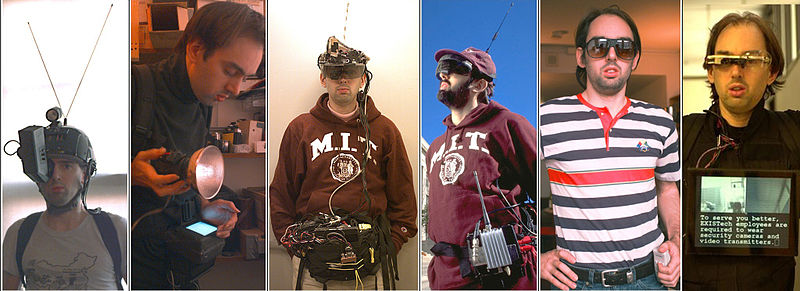
This is a bit like seeing Steve Mann's wearable computers over the years ( https://cdn.betakit.com/wp-content/uploads/2013/08/Wearcompe... ) and then today anyone with a smartphone and smart watch has more computing power and more features than most of his gear ever had, apart from the head mounted screen. More processing power, more memory, more storage, more face recognition, more motion sensing, more GPS, longer runtime on battery, more bandwidth and connectivity to e.g. mapping, more assistants like Google Now and Siri.

And we still aren't at a level where you can be doing a physical task like replacing a laptop screen and have your device record what you're doing, with voice prompts for when you complete different stages, have it add markers to the recording, track objects in the scene like and solve for questions like 'where did that longer screw go?' or 'where did this part come from?' and have it jump to the video where you took that part out. Nor reflow the video backwards as an aide memoire to reassembling it. Or do that outside for something like garage or car work, or have it control and direct lighting on some kind of robot arm to help you see, or have it listen to the sound of your bike gears rattle as you tune them and tell you or show you on a graph when it identifies the least rattle.

Anything a human assistant could easily do, we're still at the level of 'set a reminder' or 'add to calendar' rather than 'help me through this unfamiliar task'.

Re: Google testing ChatGPT-like chatbot 'Apprentice Bard' with employees

#157
post #61

Earlier quoted context omitted.

I've worked in ML for awhile (on the MLOps side of things) and have been in the industry for a bit, and one thing that I think is extremely common is for ML researchers to grossly underestimate the amount of work needed to make improvements. We've been a year away from full self driving cars for the last six years, and it seems like people are getting more cautious in their timing around that instead of getting more…

Based on my experience watching How It’s Made, many factories are extremely automated including lots of robots. Warehouses are not factories though.

It really depends on what you're talking about. Individual components can often be automated fairly successfully, but the actual assembly of the components is much harder. Even in areas of manufacturing where it's automated you have to do massive amounts of work to get it to that point, and any changes can result in major downtime or retooling.

AI companies such as Vicarious have been promising AI that makes this easier. Their idea was that generic robots with the right grips and sensors can be configured to work on a variety of assembly lines. This way a factory can be retooled between jobs quicker and with less cost.

Re: Google testing ChatGPT-like chatbot 'Apprentice Bard' with employees

#158
post #77

Earlier quoted context omitted.

While I think the jury is still out on whether ChatGPT is truly useful or not, passing an L3 hiring test is not evidence of that one way or another.

If it doesn't point out that ChatGPT is useful, especially if its proven it is not, then maybe the hiring tests are not useful.

The hiring tests are designed to serve as a predictor for human applicants. How well an LLM does on them doesn’t necessarily say anything about the usefulness of those tests as said predictor.

Re: Google testing ChatGPT-like chatbot 'Apprentice Bard' with employees

#159
post #16

Earlier quoted context omitted.

If it helps, this likely is coming. I think we have a tendency to mentally move the goalposts when it comes to this kind of thing as a self-defense mechanism. Years ago this would have been a similar level of impossibility. Since all a codebase like that is is a kind of directed graph, then augmentations to the processing of the network to allow for the simultaneous parsing of and generation of this kind of code may…

I don't think ChatGPT or its successors will be able to do large-scale software development, defined as 'translating complex business requirements into code', but the actual act of programming will become more one of using ML tools to create functions, and writing code to link them together with business logic. It'll still be programming, but it will just start at a higher level, and a single programmer will be vastl…

That's my assumption as well - the human programmers will far more productive, but they'll still be required because there's no way we can take the guard rails off and let the AI build - it'll build wrong unit tests for wrong functions which create wrong programs and will require humans to get it back on track.

Re: Google testing ChatGPT-like chatbot 'Apprentice Bard' with employees

#160
post #35

Earlier quoted context omitted.

> The rest of us aren't going to care that much. If you don't adapt, you'll be out of a job in ten years. Maybe sooner. Or maybe your salary will drop to $50k/yr because anyone will be able to glue together engineering modules. I say this as an engineer that solved "hard problems" like building distributed, high throughput, active/active systems; bespoke consensus protocols; real time optics and photogrammetry; etc.…

You really think in <10 years AI will be able to take a loose problem like: "our file uploader is slow" and write code that fixes the issue in a way that doesn't compromise maintainability? And be trustworthy enough to do it 100% of the time?

> You really think in We have no idea how AI models will be in 10 years. At the speed the industry is moving is true AGI possible in 10 years? I think it would be beyond arrogant to rule out that possibility.

I would think that it's at least likely that AI models become better at Devops, monitoring and deployment than any human being.

Post reply on HN