Live data from Hacker News

Doors of McMurdo

brr.fyi

41–50 of 131 posts

Re: Doors of McMurdo

#41

It's a very cold place right...? And a place where energy is insanely expensive because all fuel has to be shipped thousands of miles? So energy efficiency is paramount. So why are these doors, even the modern ones, just a few inches thick? I'd expect to see the doors being 6 inch thick foam, and every outdoor door to be a double door (ie. into an entrance room, and another door into the rest of the building, such th…

McMurdo has a deepwater port, and a lot of fuel storage tanks as a part of its facilities. Tankers and can just drive up in summer and offload large quantities of fuel. It's not like the South Pole station where everything must be flown in. And the "waste heat" from the generators making electricity is routed throughout the base and used for heating.

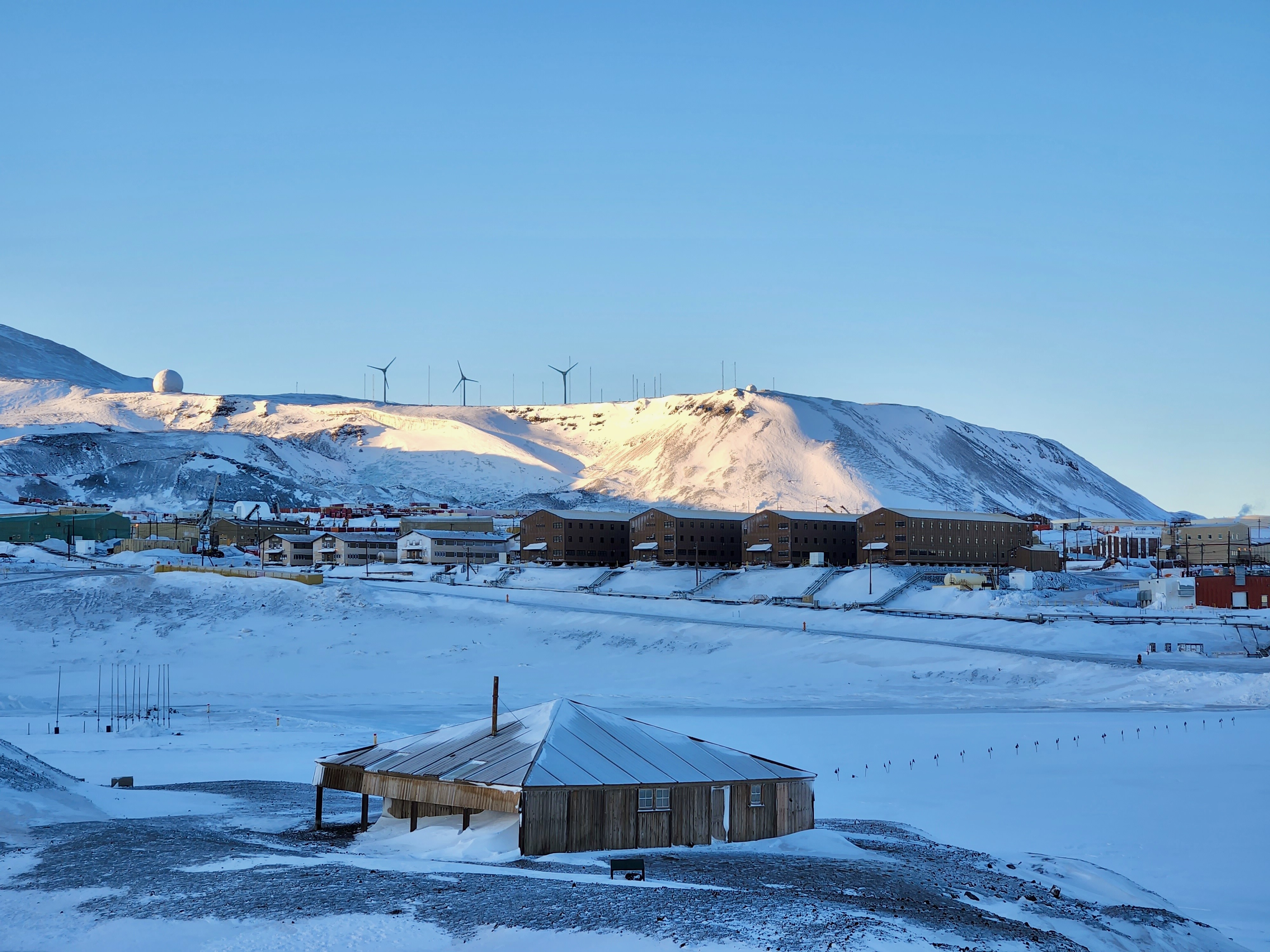
Not to mention almost a megawatt of wind turbines in the near constant wind.

A study on the feasibility of electric vehicles had the expected cost of electricity per kWh at the base lower than California residential rates.
Re: Doors of McMurdo

#42
post #20

I'm curious why many of the doors have deadbolts. In an environment where you presumably know every single human on the site and there are probably no other humans in any direction for 1000 km, is there a need for locks on anything other than bedrooms and bathrooms?

McMurdo is one of the major logistics hubs for the entire continent, this means that it has a relatively high population (~1000 in summer), but also that a lot of people pass through on their way to other parts of Antarctica. It's definitely not a situation where everyone knows everyone else.

Re: Doors of McMurdo

#43
post #20

I'm curious why many of the doors have deadbolts. In an environment where you presumably know every single human on the site and there are probably no other humans in any direction for 1000 km, is there a need for locks on anything other than bedrooms and bathrooms?

Probably just a more secure way to latch the door when there's lots of wind and snow attempting to push the door in.

Also lots of standard doors come with deadbolts pre-installed or at least a deadbolt hole drilled through.

Re: Doors of McMurdo

#44
post #8

Earlier quoted context omitted.

Certain things lend themselves well to master-planning. TCP/IP, or where transit lines are run before the city builds up around them . But only things that really need to be master-planned do better when planned that way; much of the best "large things" seem to work out better when many of the aspects are organic and human-scale.

> where transit lines are run before the city builds up around them. I'm not sure even this is true. The city may not build up in the way the planners anticipated. Even if it does, it will change over time.

From my experience playing factorio, the best way to approach it is to plan out the areas you are building to allow future "backtracking" possible - increase space between buildings, ensure new "roads" are "reasonably" arranged to allow future expansion, etc. An example of this is ensuring that driveways/building distances are a certain minimum from the road, allowing you to expand a 2 lane road to 3, etc.

You build your infrastructure to, or just past the edges of what you know is being built, and make sure you reserve space past that to accompany further expansion.

The lets you expand the ~factory~ city while still allowing some sanity to the underlying infrastructure.

* This will likely apply to anything that needs both preplanning and unknown future expansion such as codebases

Re: Doors of McMurdo

#45

Earlier quoted context omitted.

> where transit lines are run before the city builds up around them. I'm not sure even this is true. The city may not build up in the way the planners anticipated. Even if it does, it will change over time.

From my experience playing factorio, the best way to approach it is to plan out the areas you are building to allow future "backtracking" possible - increase space between buildings, ensure new "roads" are "reasonably" arranged to allow future expansion, etc. An example of this is ensuring that driveways/building distances are a certain minimum from the road, allowing you to expand a 2 lane road to 3, etc. You build…

You see stuff like that done in some places (eg: https://goo.gl/maps/q4Qm1cjjF9rA6MQY6 - the "highway" has space all around it for expansion, and has had that for decades from when there was nothing there)

Re: Doors of McMurdo

#46
post #20

I'm curious why many of the doors have deadbolts. In an environment where you presumably know every single human on the site and there are probably no other humans in any direction for 1000 km, is there a need for locks on anything other than bedrooms and bathrooms?

The threat is not from strangers, but from fully vetted and trusted community members having some kind of psychological event that leads them to bad actions.

The various entities working at McMurdo do pretty thorough pre-deployment psych evals to try to catch the kinds of people who would break vital equipment (think furnaces, or water-treatment equipment or high-cost/one-of-a-kind research equipment) or equipment necessary to fix vital equipment. But there's really no guarantee until you're out there that any given person is actually trustworthy. To say nothing of emergent psychological events that would drive a person to do such a thing. And anyway, the kind of person who wants to go to Antarctica frequently doesn't conform to our expectations of what a well-adjusted personality looks like. When your threat model is "trustworthy community members who occasionally and unpredictably become threats", you lock doors.

Re: Doors of McMurdo

#47

It's a very cold place right...? And a place where energy is insanely expensive because all fuel has to be shipped thousands of miles? So energy efficiency is paramount. So why are these doors, even the modern ones, just a few inches thick? I'd expect to see the doors being 6 inch thick foam, and every outdoor door to be a double door (ie. into an entrance room, and another door into the rest of the building, such th…

McMurdo during the summer routinely gets above freezing and isn't all too different from Alaska or northern Canada in the early spring. During the winter of course it gets cold.

As for power, McMurdo has a mix of power sources including a number of renewables. For about a decade ('62-'72), McMurdo also had a small nuclear power plant on site as well. This was also only a few years after McMurdo was established ('56). So there was definitely a time where energy was not particularly expensive and the greater issue was the cost per kilo for shipping supplies.

Of course now that shipping logistics are mostly ironed out and nuclear was deemed too problematic, various fossil fuels are used for power and heating a good chunk of the site (whatever the scattering of renewables can't handle).

Wind Turbines: https://brr.fyi/media/hut-point/town.jpg

PM-3A Nuclear Site: https://upload.wikimedia.org/wikipedia/commons/3/3c/PM3Anucl...

Re: Doors of McMurdo

#48

Earlier quoted context omitted.

Near? It's 99 miles! https://distcalculator.com/distance-between/106093/New-Zeala... "If average speed of your car will be standard for this route between New Zealand and McMurdo, Antarctica and road conditions will be as usual, time that you will need to arrive to McMurdo, Antarctica will be 1 hour."

That site is getting confused by New Zealand's Antarctic Scott base. NZ proper is about least 1,500 miles from Antarctica.

Scott Base is easy walking distance from McMurdo, not 99 miles (or 100 kilometers and 100 miles and 100 nautical miles - that site is quite confused!).

Both are actually in New Zealand depending on the purpose, due to the Ross Dependency[1]. For instance, most of those folks in McMurdo station have longer NZ visas than typical US tourists visiting NZ would get (3 months), because when they fly down to The Ice they're not technically leaving the country.

An interesting corner case is when something happens at one of the US stations in the Ross Dependency, which New Zealand wants to investigate. The Rodney Marks death[2] is a particularly well-known example.

[1] https://en.wikipedia.org/wiki/Ross_Dependency

[2] https://en.wikipedia.org/wiki/Rodney_Marks

Re: Doors of McMurdo

#50
post #8

Earlier quoted context omitted.

Certain things lend themselves well to master-planning. TCP/IP, or where transit lines are run before the city builds up around them . But only things that really need to be master-planned do better when planned that way; much of the best "large things" seem to work out better when many of the aspects are organic and human-scale.

> where transit lines are run before the city builds up around them. I'm not sure even this is true. The city may not build up in the way the planners anticipated. Even if it does, it will change over time.

They aren't independent, the city will tend to build up along the transit lines due to the easy access to transit. E.g., the NYC outer boroughs and the DC metro area.
Post reply on HN