Live data from Hacker News

“Privacy”.com–Yeah Right

ersei.net

11–20 of 172 posts

Re: “Privacy”.com–Yeah Right

#11
post #6

Earlier quoted context omitted.

If you think this one is bad: look at Plaid, which literally phishes users bank credentials as "fintech".

“Phishing” implies fraudulent deception.

I think their growth numbers would have looked much differently if they had transparently disclosed the reality on their login form from day one:

“Plaid will store your plaintext password and use it to periodically access your bank account.”

Burying truth deep in a TOS is seen by some as deceptive.
Re: “Privacy”.com–Yeah Right

#13

The use of third party KYC services like Onfido is widespread in the cryptocurrency space as well, where over-compliance is the norm right now. Consumers are given little choice as to which provider stewards their ID scans, bank statements, biometric data, etc. This user experience has trained the most vulnerable, non-tech-savvy audiences to provide just about anything requested when asked for ID verification. Includ…

If you think this one is bad: look at Plaid, which literally phishes users bank credentials as "fintech".

Last I checked, privacy.com uses Plaid, too. When privacy.com had asked me to use Plaid to add a payment method, Plaid's privacy policy talked of gathering transaction information and using it for advertising among other things.

I think Plaid's stance was that if the host service (the one asking you to use Plaid) wanted to be invasive then it's up to them, or if this host would be upstanding and maintain your privacy, that could happen, too. It was up to the customer to check their policies. But this limitation was not spelled out nor promised that I could see.

Their policy may have changed since then.

Re: “Privacy”.com–Yeah Right

#14
post #5

Privacy.com was a perfect expression of “Your business is our feature”. Practically every major card issuer provides native virtual numbers now.

Really? Visa/MasterCard/Amex have Click To Pay but it's on the merchant to offer it. This is the opposite of Privacy.com where the customer can choose to use it.

Re: “Privacy”.com–Yeah Right

#15
Privacy.com is a great service. I use them all the time to generate 1 time use card numbers for sites & then cancel the card so they cannot mysteriously charge me. I've been with them for years & their CEO is a wonderful & smart person.

When you're allowing strangers to perform financial transactions - you're taking on risk that the money that is sent needs to actually be funded. They need to conform to KYC laws like all fintech providers - so yes, they will require knowing a little bit about you to operate in the United States like all financial institutions.

Re: “Privacy”.com–Yeah Right

#16
post #5

Privacy.com was a perfect expression of “Your business is our feature”. Practically every major card issuer provides native virtual numbers now.

1) I have three different major credit cards and none of them have this feature. Your comment is still true in the abstract though, so I hope the amex product team is reading.

2) For a knowledgeable consumer, there is huge incentive to use services like this to prevent the credit companies from being a single point of financial data aggregation. But—and here I guess I'm talking to amex again—if disposable or per-merchant card numbers are widely offered by card providers, I'd expect most people would just use those instead of a more robust provider like privacy.com.

Re: “Privacy”.com–Yeah Right

#17
I worked in domain registrations in the early 2000s and it's funny how we used to put stock into what sort of TLD a domain used. Like .com would clearly be a commercial entity, while .org would be more non-profits, open source, public domain and stuff like that.

Anyways, they're probably harvesting your payments and selling that info. I've noticed that since the card issuers have such high security requirements, and audits, a lot of little businesses have cropped up who are trying to act as middlemen to your payments. Because they just found a backdoor to getting all your payment history without hacking your card issuer. I believe privacy.com is one such business.

Re: “Privacy”.com–Yeah Right

#18

I worked in domain registrations in the early 2000s and it's funny how we used to put stock into what sort of TLD a domain used. Like .com would clearly be a commercial entity, while .org would be more non-profits, open source, public domain and stuff like that. Anyways, they're probably harvesting your payments and selling that info. I've noticed that since the card issuers have such high security requirements, and…

You "believe" without any evidence? To the contrary my bank card purchases were resulting in targeted ads but privacy.com cards have not shown any sign of that after using them for over a year.

Re: “Privacy”.com–Yeah Right

#19
post #6

Earlier quoted context omitted.

If you think this one is bad: look at Plaid, which literally phishes users bank credentials as "fintech".

“Phishing” implies fraudulent deception.

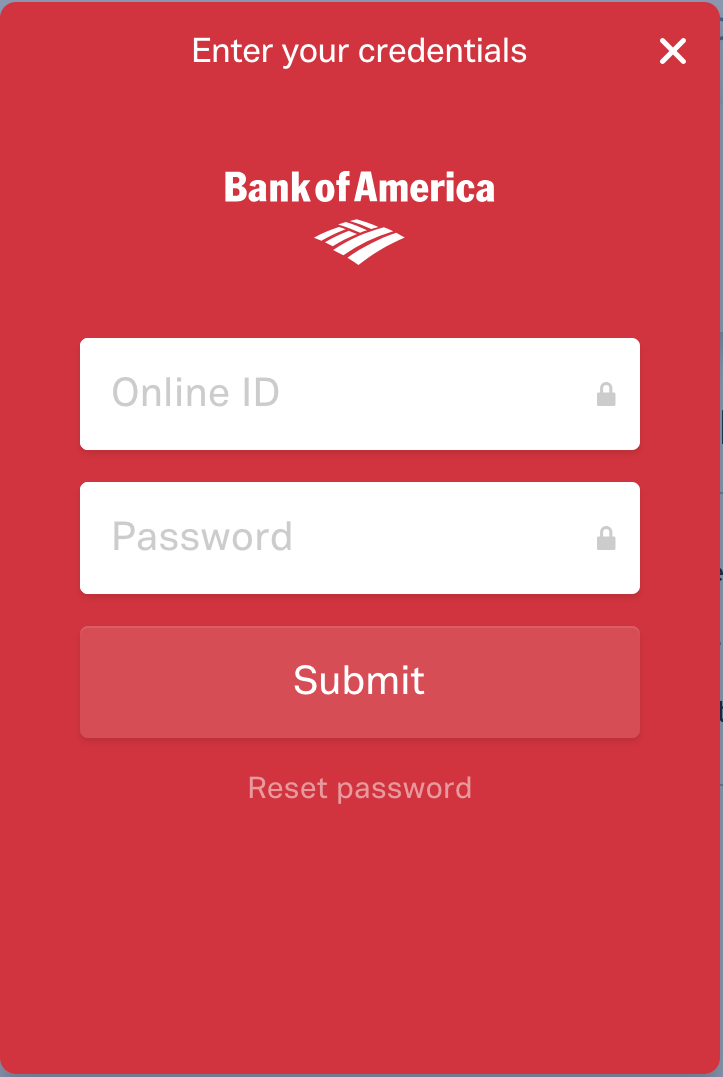
I believe they've improved it now, but their login page literally used to say "Plaid" nowhere, and at least for my bank (Bank of America) looked almost identical to the official login.

Here's an example: https://d1hzvs60s6jsjg.cloudfront.net/IMAGES-1/208624076/pla... Does this look like it's going to be shipping your credentials off to be stored by a third party?

Re: “Privacy”.com–Yeah Right

#20
Companies using Onfido [0], Stripe Identity[1] or other similar services, just want to move the "trust/fraud" problem one layer away without throwing internal resources at it.

It is a hard problem, and using a 3rd party service is more cost effective than staffing a department to do manual verification.

[0] https://onfido.com

[1] https://stripe.com/en-fr/identity

Post reply on HN