Live data from Hacker News

India's lattice buildings cool without air con

bbc.com

21–30 of 87 posts

Re: India's lattice buildings cool without air con

#21

I don't think this is correct at all: > Jaali’s cooling feature relies on the Venturi effect in a similar way to an air conditioning unit. "When air passes through holes, it picks up velocity and penetrates afar. Due to the small apertures, air gets compressed and when released it gets cooler," says Pandya. When the air passes through the holes, yes, it picks up velocity, but that velocity is lost immediately upon ex…

Absolutely correct, it's a quasiscientific sounding mumbo jumbo
Re: India's lattice buildings cool without air con

#22

I don't think this is correct at all: > Jaali’s cooling feature relies on the Venturi effect in a similar way to an air conditioning unit. "When air passes through holes, it picks up velocity and penetrates afar. Due to the small apertures, air gets compressed and when released it gets cooler," says Pandya. When the air passes through the holes, yes, it picks up velocity, but that velocity is lost immediately upon ex…

As the air shrinks in volume (and as you say, speeds up) it goes up in temp. It dumps sone of that heat into the marble. So when it opens back up, it slows down and cools down. The material choice would seem to be very important. Marble and sandstone both have high thermal mass but low thermal conductivity.

Re: India's lattice buildings cool without air con

#23

I don't think this is correct at all: > Jaali’s cooling feature relies on the Venturi effect in a similar way to an air conditioning unit. "When air passes through holes, it picks up velocity and penetrates afar. Due to the small apertures, air gets compressed and when released it gets cooler," says Pandya. When the air passes through the holes, yes, it picks up velocity, but that velocity is lost immediately upon ex…

I agree that the explanation given in the article seems wrong.

I think the correct way to reason is to consider the building as whole as a system.

There is pressure difference between two sides of the building, one in the sun and one in the shade. It seems that jaali is best understood as air flow diffuser. It reduces the overall air velocity flowing trough the building and decreases the pressure. It's a good at mixing air, thus temperature behind jaali is lower but not as much lower as it would be with solid sun shade.

Re: India's lattice buildings cool without air con

#24
post #9

Really interesting! It reminds me of Majorcan shutters (in spanish persianas mallorquinas). In Majorca/Minorca you cannot shut the windows when theres hot outside: humidity will make interiors as hot as the outside; but you can open the window while you have the shutter closed... and survive. Probably in California there are some Majorcan shutters, too (Juniper Serra was from Majorca after all) ???

> It reminds me of Majorcan shutters

I'm like 90% sure I've seen a similar article posted here, featuring middle-eastern or possible north-african/south-european buildings with this exact effect, predating these Indian ones by many centuries.

Re: India's lattice buildings cool without air con

#25
This is all just a distraction.

We either de-carbonize energy in which case air-conditioning doesn't contribute to CO2, or else we fail.

There is no world where we convince the vast majority people to forgo air-conditioning. Billions of people in India, China, and Africa want air-conditioning.

Energy austerity is not going to save us.

Re: India's lattice buildings cool without air con

#26

I don't think this is correct at all: > Jaali’s cooling feature relies on the Venturi effect in a similar way to an air conditioning unit. "When air passes through holes, it picks up velocity and penetrates afar. Due to the small apertures, air gets compressed and when released it gets cooler," says Pandya. When the air passes through the holes, yes, it picks up velocity, but that velocity is lost immediately upon ex…

As the air shrinks in volume (and as you say, speeds up) it goes up in temp. It dumps sone of that heat into the marble. So when it opens back up, it slows down and cools down. The material choice would seem to be very important. Marble and sandstone both have high thermal mass but low thermal conductivity.

> As the air shrinks in volume (and as you say, speeds up) it goes up in temp.

It does not shrink in volume, it does not compress, it only speeds up so the debit remains the same. If anything it would expand as an effect of the Venturi, because the pressure drops.

Re: India's lattice buildings cool without air con

#27

This is all just a distraction. We either de-carbonize energy in which case air-conditioning doesn't contribute to CO2, or else we fail. There is no world where we convince the vast majority people to forgo air-conditioning. Billions of people in India, China, and Africa want air-conditioning. Energy austerity is not going to save us.

Decarbonizing the grid will be much easier if we have less of a "grid" to decarbonize. The article mentions this aspect, if you had cared to read it. Modern buildings can use this lattice to reduce the load on their air conditioners.

Although I do agree with you in principle. One of the lasting impressions I got from the early Covid lockdowns was that even though we stopped a good chunk of the world from driving to work, flying, running factories, etc., we didn't come close to reducing our energy use enough to prevent more warming. Those lockdowns were a huge exercise in "energy austerity", and they weren't enough.

Re: India's lattice buildings cool without air con

#28

Modern Indian housing in major Indian cities has done a complete 180 from these tried-and-tested architectural practices. The materials used seem to be deliberately chosen to maximize human misery. There's glass everywhere which, besides being impossible to keep clean in India's dusty summers, also retains heat and makes most housing unbearable without AC. Then there are the designs themselves. Faux wood is everywher…

In the example you give, there’s no way of knowing if it’s been properly designed for Indian climate per given budget constraints. There appears to be windows on only 2 sides of the building, 1 of which is far enough inset to create significant shade. Depending on what direction the building faces, this could in fact be optimal design for staying cool while still having windows. Now, of course, the best design for st…

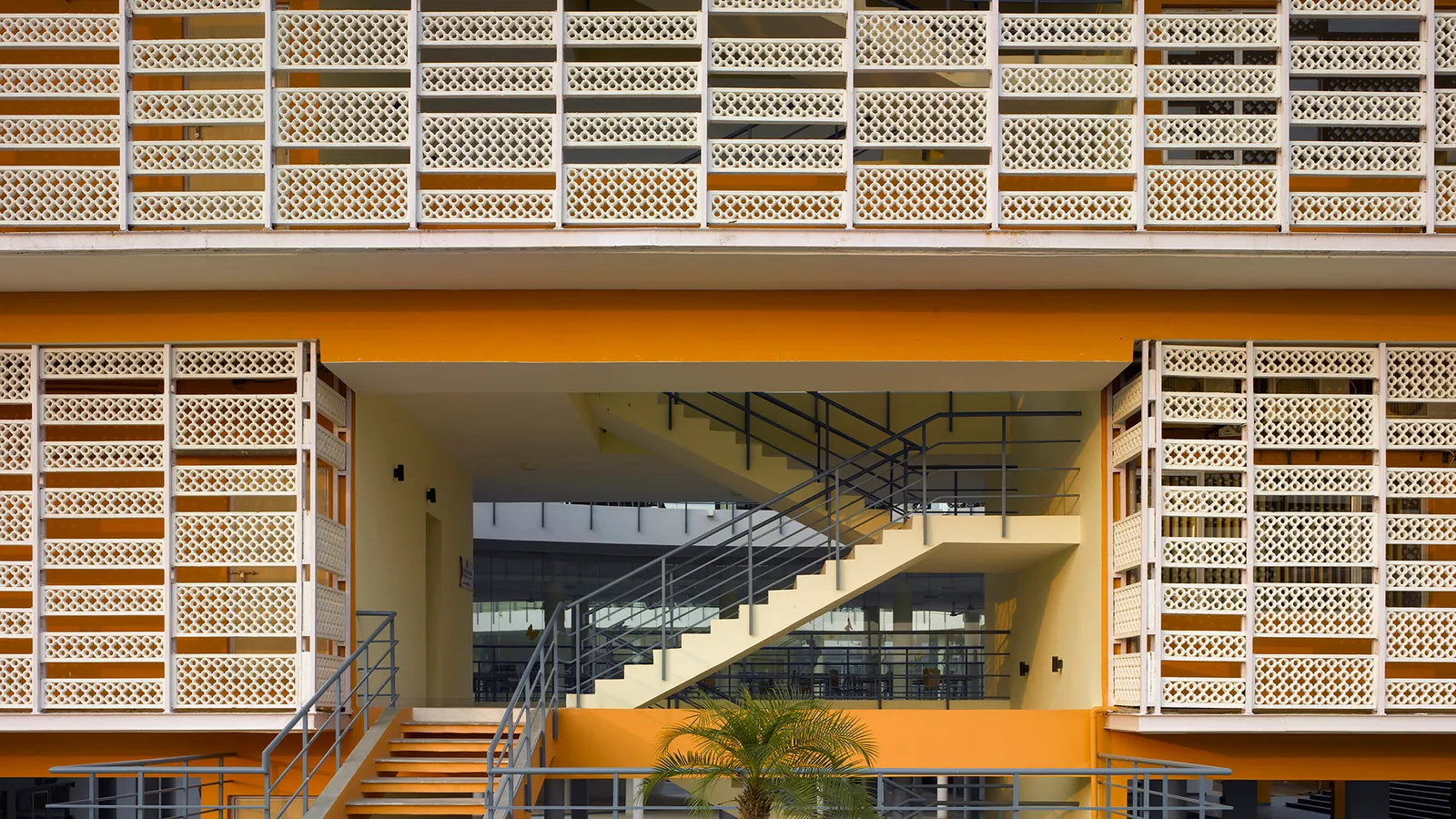
I think this facade [1] demonstrates a better way to maximize shade, along with windows that are normal-sized instead of floor-to-ceiling. It doesn't look "modern", but it's a lot more practical

1: https://ychef.files.bbci.co.uk/1600x900/p0cyz4dz.webp (yes, it's from the article)

Re: India's lattice buildings cool without air con

#29

They also make it impossible to add air conditioning if I'm reading this right and can only really cool things down to the surrounding temperature (basically attempts to keep buildings from turning into greenhouses). Very cool but I don't see this being implemented anywhere where someone can afford AC

The examples of modern buildings incorporating jaali all seem to use it too keep the exterior cool (and shaded), with the interior then further air-conditioned as necessary.

Re: India's lattice buildings cool without air con

#30

Modern Indian housing in major Indian cities has done a complete 180 from these tried-and-tested architectural practices. The materials used seem to be deliberately chosen to maximize human misery. There's glass everywhere which, besides being impossible to keep clean in India's dusty summers, also retains heat and makes most housing unbearable without AC. Then there are the designs themselves. Faux wood is everywher…

In the example you give, there’s no way of knowing if it’s been properly designed for Indian climate per given budget constraints. There appears to be windows on only 2 sides of the building, 1 of which is far enough inset to create significant shade. Depending on what direction the building faces, this could in fact be optimal design for staying cool while still having windows. Now, of course, the best design for st…

>Now, of course, the best design for staying cool would be an underground cave carved out of rock with no windows—-but is that really how we want to live?

Adding light and some ventilation is a lot less energy intensive than cooling

Post reply on HN