Live data from Hacker News

Poor writing, not specialized concepts, drives difficulty with legal language

sciencedirect.com

321–330 of 337 posts

Re: Poor writing, not specialized concepts, drives difficulty with legal language

#321

Earlier quoted context omitted.

Wrong. A long phrase requires the user to keep the entire meaning in their head until the end. Can you show us some "long readable phrases"?

It was the best of phrases, it was the worst of phrases. https://www.charlesdickensinfo.com/quotes/it-was-the-best-of... Also, how do you read paragraphs? Don't you have to keep the entire meaning in your head?

Dots separate clauses. They let you catch your breath, both literally and figuratively. There comes a point where you run out of oxygen, and you forgot how the sentence started anyway.

I think of sentences as cutting information into bite-sized chunks. Paragraphs separate ideas, like different plates separate flavours.
Re: Poor writing, not specialized concepts, drives difficulty with legal language

#322

Earlier quoted context omitted.

It's easy to forget that the United States of the ratification of the Constitution is a different United States than the one we live in now. Both the Civil War and the radical reinterpretations of several federal powers during the Great Depression fundamentally changed the nature of federal and state government. The Second Amemdent's in there because without it, the states wouldn't have been willing to ratify a Const…

I think that’s actually a coherent view of the 2A. But when you pull on the 14A incorporation thread quite a lot unravels with it. The Establishment Clause, for example, was intended to prevent the federal government from interfering with state established churches, some of which still existed at the time. It actually makes no sense to incorporate that provision against the states.

Makes no sense other than we had just fought a war over the concept of states' rights overriding federal protections. Hypothetically, they could have narrowly-tailored the 13th through 15th amendments to end slavery and do little else, I think it is possible that lawmakers of the day came to a rational conclusion that the next time the states challenged federal authority so brazenly, it wouldn't be over slavery but over some other issue of fundamental rights... And if the protections laid out in the Constitution were good enough for people when exposed to law at the federal level, they should be good enough for citizens of the states as well. One certainly can't expect that anyone would have benefited if, hypothetically, Georgia were to dedicate itself to Roman Catholicism and declare all federal laws null and void, replaced by the law from the Vatican (a scenario that could have been possible prior to the 14th).

One advantage the chosen approach has is, in a sense, interpretive simplicity, even though in practice it strips much authority from the states and moves it up to the federal level.

Re: Poor writing, not specialized concepts, drives difficulty with legal language

#323
post #79
post #18

TBF those structures do exist for a reason. Just take the “Total Compensation” as an example. Breaking it out as shown in the paper does work, but now some language is repeated; in an edit (and most contracts are edited rather than being created de novo ) one of the duplicated clauses could be edited and the other overlooked, especially if they become separated by successive edits. I’m sure there are obscurantist

The inconsistent-edits problem is a real one; failure to follow D.R.Y. cost a Dallas lender $693K because a guaranteed repayment amount was written as "one million seven thousand dollars ($1,700,000)" and words take precedence over numbers, so the lender was repaid $1.07 million and not $1.7 million. In another example, the agreed deadline for a party to cure a breach of contract was written as "fifteen (30) days"; t…

I really enjoy your contributions to this thread

Re: Poor writing, not specialized concepts, drives difficulty with legal language

#324
post #226

Earlier quoted context omitted.

Are you suggesting that our legal system should be understandable by the dumbest person? I don't see how that's feasible or desirable.

> Are you suggesting that our legal system should be understandable by the dumbest person? If possible, on a case by case basis. If it's difficult, we lock people in a room for 8 hours a day from age 5 to 17, and don't let them leave until they understand. If it still doesn't work, we get rid of the law.

There is another solution. Write laws in at least two languages: English and Spanish.

This approach does wonders in Switzerland and in Belgium.

It's a boon to EU to get rid of most of native English speakers, btw. See this opinion by a famous Belgian philosopher on the matter [1].

[1] https://www.brusselstimes.com/290948/forced-to-speak-in-a-fo...

Re: Poor writing, not specialized concepts, drives difficulty with legal language

#325
post #314

Earlier quoted context omitted.

It's not even the writing - it can be blatant misinterpretation. There's precedential opinion that states that you can't ignore the letter of the law to pursue it's spirt. Yet there's a law that has "reasonable care" in it, but the precedential opinion on that is that it's a strict liability offense because 'applying reasonable care would frustrate enforcing the legislature's intent'... The judges don't care. They're…

Judges get paid whether the state wins or not.

Yes, but collecting fines can be a big revenue stream that helps keep their salary high. This is especially true at the municipal level where all the players know each other. It's also a big deal for judges that get elected to look like they're for law and order.

Re: Poor writing, not specialized concepts, drives difficulty with legal language

#326

Earlier quoted context omitted.

The assumption of most of the comments here is that bad writing is a matter of incompetence, but in the case of public policy I think Hanlon's Razor no longer applies. Given what we know about Texas politics and American ballot measures in general, it's quite possible that the ambiguity was introduced deliberately to give big landowners (or rather their lawyers) extra wiggle room. If that's true then the only communi…

Hanlon's razor never applies when politics or money is involved. Best to just suspend your judgement instead of giving politicians the benefit of the doubt.

It never applies when there are benefits to be had that don’t need rocket science. The concept itself was probably introduced in bad faith.

Re: Poor writing, not specialized concepts, drives difficulty with legal language

#327

Earlier quoted context omitted.

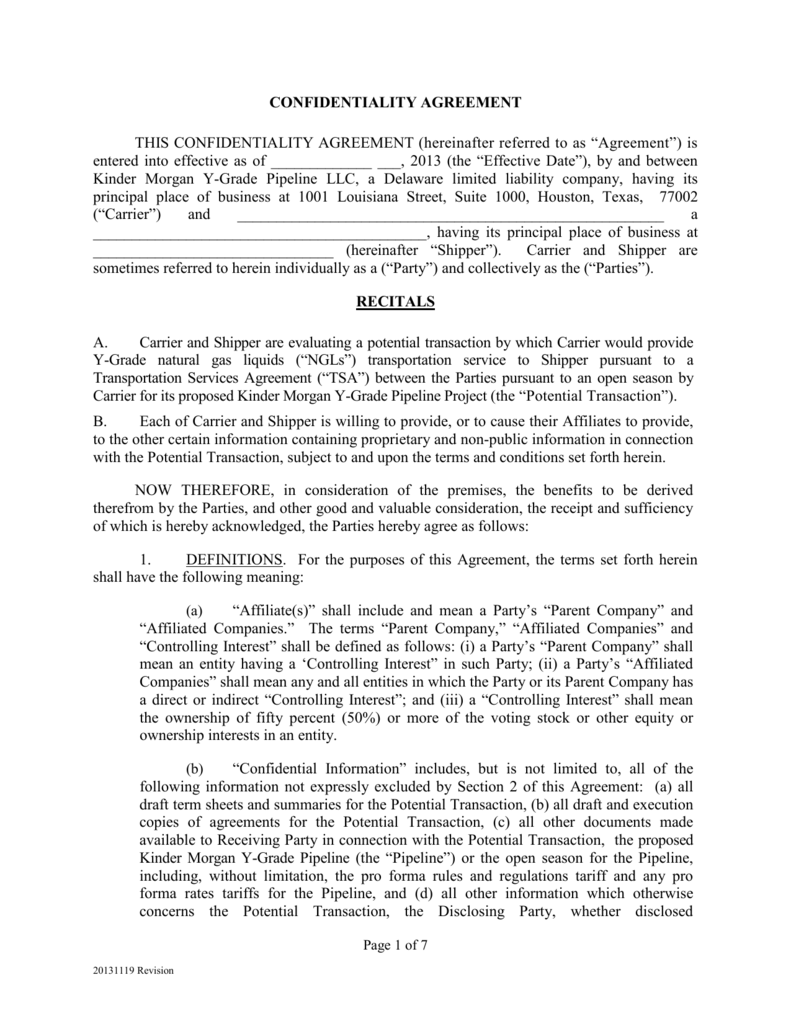
I don't know about that, for example contracts usually define their terms as they go along. "Hereinafter referred to as...". That's basically a #define macro.

Isn't that more akin to a constant? Because #define macros are quite powerful, they can also express constants.

Not sure (not a lawyer), but at the very least the "Hereinafter referred to as…" statement can point to the entire agreement containing that statement: https://s3.studylib.net/store/data/008711807_1-e257ae31713cf...

The advantage of natural languages is self-referential infinite recursion is basically fine. The downside is, no compile-time checks for logical inconsistencies.

Re: Poor writing, not specialized concepts, drives difficulty with legal language

#328
post #327

Earlier quoted context omitted.

Isn't that more akin to a constant? Because #define macros are quite powerful, they can also express constants.

Not sure (not a lawyer), but at the very least the "Hereinafter referred to as…" statement can point to the entire agreement containing that statement: https://s3.studylib.net/store/data/008711807_1-e257ae31713cf... The advantage of natural languages is self-referential infinite recursion is basically fine. The downside is, no compile-time checks for logical inconsistencies.

Right, in theory, but in practice they don't really use that functionality, right? I think the reason they don't is that they have macro hygiene issues with the language because while natural language has supreme flexibility, it does not have easy to use scoping constructs and so things inside the macro will leak to outside the macro.

Re: Poor writing, not specialized concepts, drives difficulty with legal language

#329
Something I think would be helpful would be to replace a "definitions" section with a "terms" section, with three subsections:

General Terms of Art provide a vernacular English explanation for widely-used legal terms within the section. Example: "Joint tenants. A legal term meaning that the tenants not only hold a single undivided parcel together, but that ownership of the property passes to the other tenants if one tenant dies. If a tenant sells their interest, and the remaining tenants entered into a joint tenancy at the same time and on the same deed, the remaining tenants remain as joint tenants."

Specific Terms of Art describe terms of art used in the particular contract or act. An example would be "protected health information" or "covered entity" in the context of HIPAA.

Terms of Clarification are standard vernacular English terms that, for the sake of reducing frivolous navel-gazing, are defined precisely. An example would be "uniformed services" within Title 10, or "machine gun" in the Gun Control Act.

A layman could read the two terms of art sections and should be able to understand most statutes or contracts.

A lawyer familiar with the general terms of art could read the specific terms of art and understand most statutes or contracts.

Terms of clarification could be consulted only if the precise scope of a term becomes an issue.

Re: Poor writing, not specialized concepts, drives difficulty with legal language

#330
post #46

Earlier quoted context omitted.

On the other hand, if it’s been championed since Nixon, that means his problem is not solved.

Yeah, I doubt it ever will be. Reading some of these before/afters gives me hope, though: https://www.plainlanguage.gov/examples/before-and-after/ Before: > This form will be used by Federal agencies to obtain applicant certification that States which have established a review and comment procedure in response to Executive Order 12372 and have selected the program to be included in their process, have been given an o…

What does "requiring an opportunity to review" mean? :o

Does the process include a review by the state or not? If yes it's mandatory, right? Not an "opportunity", and it's not just a "movie review" review, right? So it means state needs to approve it, no?

So shouldn't this be phrased as "include government permit here (whether it's applicable for you, see how your state reacted to Executive Order 12372)"?

Post reply on HN