Live data from Hacker News

The B-52 was designed in a hotel room over one weekend

sandboxx.us

151–160 of 209 posts

Re: The B-52 was designed in a hotel room over one weekend

#151
post #111
post #3

The first prototype of the B-52 may have been designed in a weekend. The B-52 of today was iteratively designed over decades and the current H models are entirely different planes than earlier models (although structurally very close to the G model). Another HN commenter mentioned GPS being designed over a holiday. But we spent years and years in the military debugging GPS and making it functional. Claiming that some…

The OP is emblematic of the "cocktail-party level of understanding" that leads people to discount how hard it is, and how much blood, sweat, and tears it takes, to build anything complicated, like a plane: https://danluu.com/cocktail-ideas/

It also downplays the absolute skill you need to be able to do even the “weekend session” and get something that’s workable - anyone can doodle a design in a weekend and even make changes to it, but getting one that’s actually a workable foundation requires people who know what they’re doing.
Re: The B-52 was designed in a hotel room over one weekend

#153
post #123
post #79

Earlier quoted context omitted.

They're still using the original TF33 engine they were delivered with in 1961. Presumably the fan blades have been replaced many times over during maintenance, but I don't know if there's any advantage to switching to better blades if you don't change the operating parameters to take advantage of them. There's a plan to replace all the engines with a modern turbofan (RR F130).

It's interesting that even though the bypass ratio changed from 1.4 to 4.2 (so it's quite a different engine, lot quieter for sure) the fuel consumption only went down 15% (22g/kN.s to 18.6g/kN.s)

Hmm, I'm not familiar enough with jet engines to say whether that is expected or not. 15% doesn't sound like a huge improvement, I agree.

But I'll note the F130 is a medium bypass business jet engine producing 'only' around 75kN. 8 of those is about 600kN, which could be achieved with two of those newest generation civilian high bypass turbofans used e.g. in the B787 or A350. I suspect the motivation was to choose a new engine that is as similar to the existing one in order to minimize work needed to install them on the plane. There being AFAIU less than 100 B52's in service, I guess minimizing engineering cost has better payoff than minimizing fuel consumption with a high bypass engine.

Re: The B-52 was designed in a hotel room over one weekend

#156
post #130

Earlier quoted context omitted.

Any recommendations for an overview resource that better explains your statements? Both about the YF-23 design being better, and about why the B-52 design is so good.

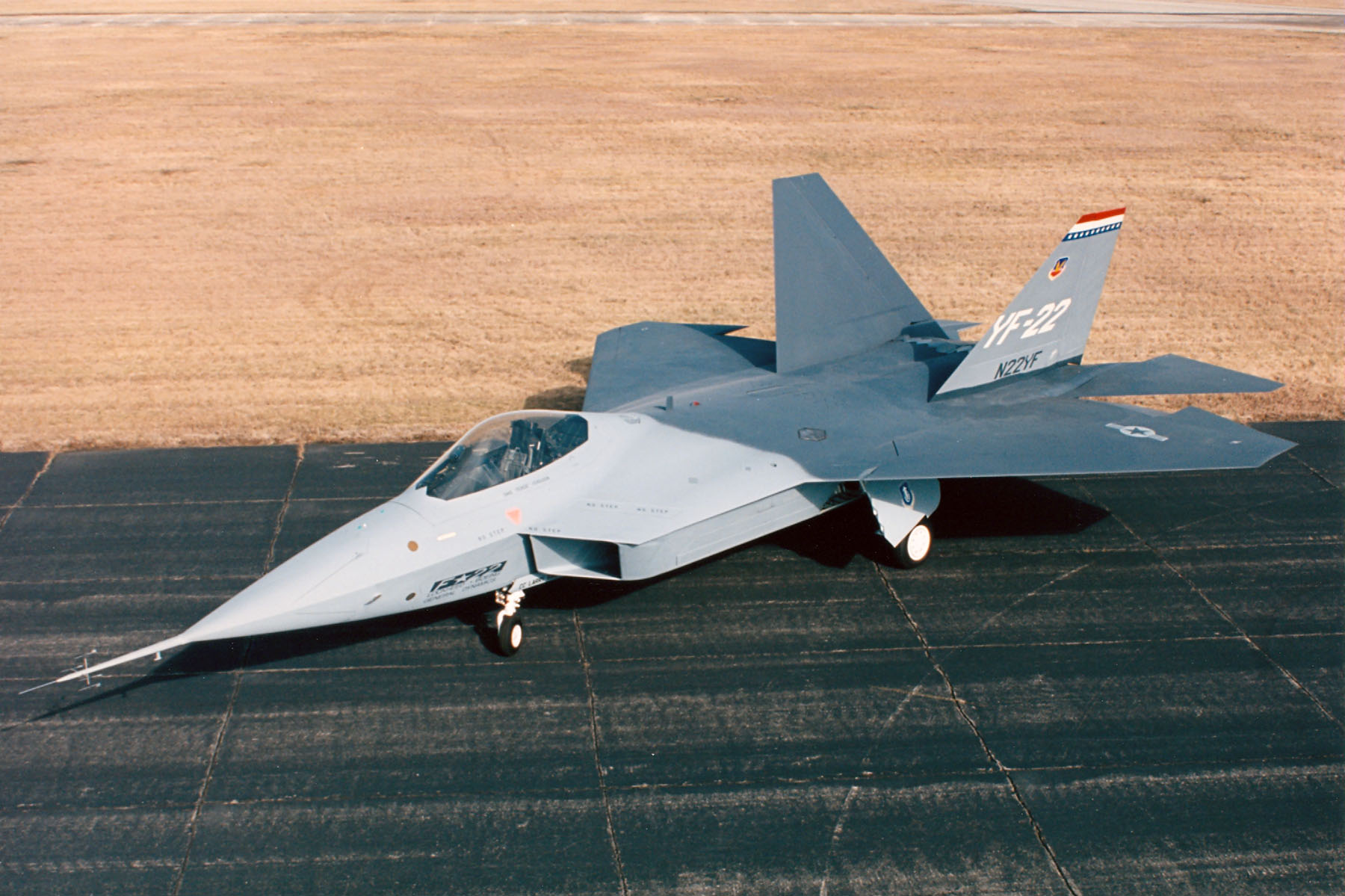
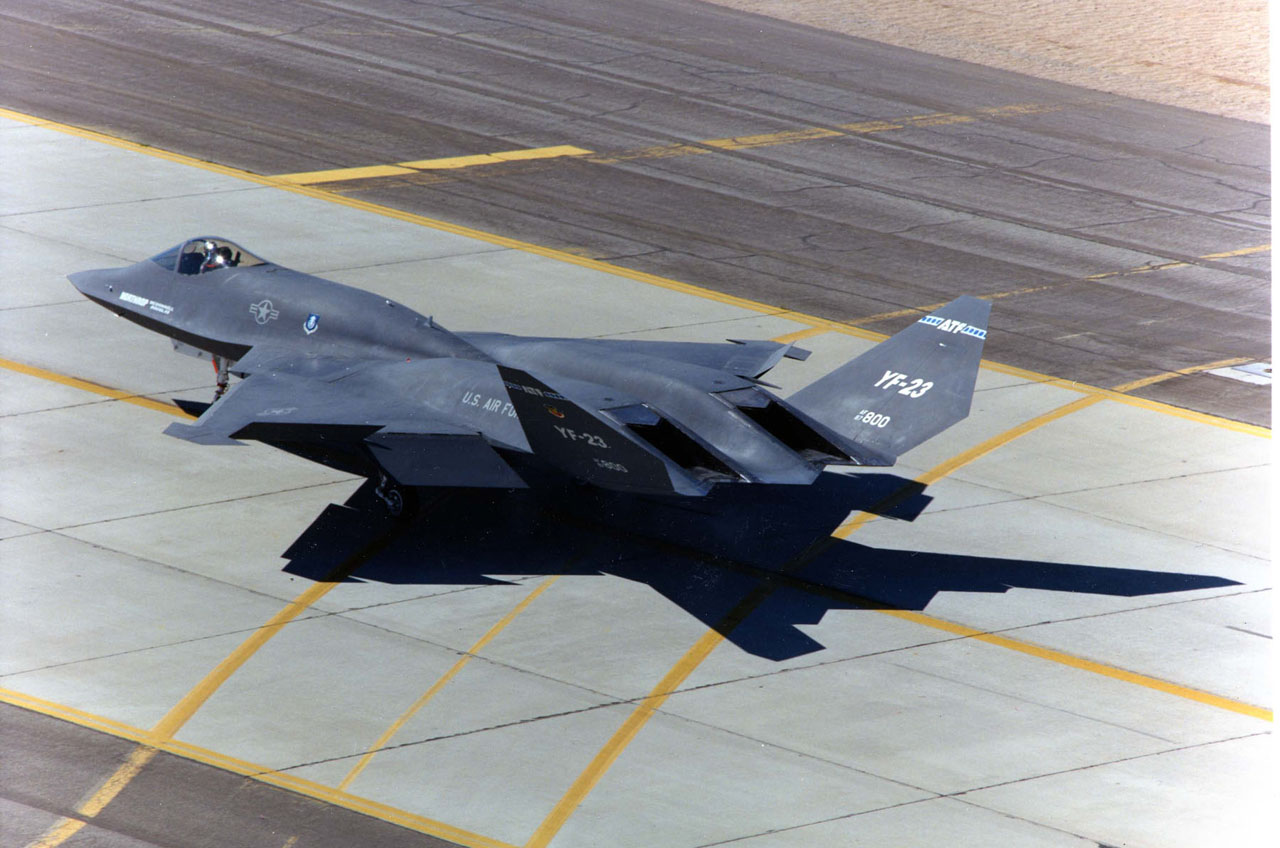
YF-23 had faster supercruise, a much bigger range, and had a way larger internal ordinance bay (external ordinance kills stealth). They intentionally skipped the sexy vectored thrusters for B-2 style inset exhausts which make infrared signature much smaller (especially to ground-based attackers). This meant the YF-23 could have delivered more ordinance faster and farther while having higher rates of mission success d…

> While the YF-23 team had worked for years to make a ready-to-ship plane in the YF-23, the YF-22 was a cobbled-together mess to the point that the entire airframe was redesigned multiple times.

The YF-23 team had to turn in their specs in the competition and you wonder if the referee was partial to the YF-22 team and gave them opposition research. That was the feeling I got from interviews & documentary.

Re: The B-52 was designed in a hotel room over one weekend

#157
post #143

Earlier quoted context omitted.

Wonder what a from-scratch B-52 equivalent would look like nowadays. I don't think they could resist the urge to give it a gimmick. Who wants to design a bomb truck?!?

You mean like a giant, tailless, stealth, flying wing? Or would that would be too gimmicky?

The B2 is great.

But, while stealth is really useful, it does require some trade-offs. Since B-52 is only useful in cases where stealth isn't required, and it seems to still be in use, I guess if the B-52 were hypothetically retired there'd be room for a non-stealth replacement. Unless the techniques they developed to come up with the F-22 and F-35 opened up a possibility of a zero-compromise stealth design (I'm skeptical, but I don't know anything about plane development).

Re: The B-52 was designed in a hotel room over one weekend

#158
post #125
post #106

Earlier quoted context omitted.

The current F-22 looks and acts nothing like the YF-22 that won the competition (despite the YF-23 being much better, but that's another story). The fact that the B-52 production was not just similar to the prototype, but similar to a complete mockup is a testament to the accuracy of their initial vision. The fact that the US continues to use that design after so many decades is even more amazing.

The YF-23 was better in some ways, worse in others. Compared to the YF-22 it was faster, longer ranged, and (probably) more stealthy. But it had a smaller weapons bay and was less maneuverable. Both aircraft met the ATF program technical requirements. The final selection was based primarily on the Air Force having greater confidence in Lockheed over Northrop in being able to run the program on schedule and budget. Th…

> The final selection was based primarily on the Air Force having greater confidence in Lockheed over Northrop in being able to run the program on schedule and budget

Unexpected. The Lockheed YF-23[1] looks like it would fall apart if you breathed on it wrong, while the Northrop YF-23 is such a slick design it looks like it's moving while standing still.

[1] https://upload.wikimedia.org/wikipedia/commons/f/f1/YF-22.jp...

[2] http://www.diseno-art.com/images_10/Northrop-YF-23-8.jpg

Re: The B-52 was designed in a hotel room over one weekend

#160
post #153
post #123

Earlier quoted context omitted.

It's interesting that even though the bypass ratio changed from 1.4 to 4.2 (so it's quite a different engine, lot quieter for sure) the fuel consumption only went down 15% (22g/kN.s to 18.6g/kN.s)

Hmm, I'm not familiar enough with jet engines to say whether that is expected or not. 15% doesn't sound like a huge improvement, I agree. But I'll note the F130 is a medium bypass business jet engine producing 'only' around 75kN. 8 of those is about 600kN, which could be achieved with two of those newest generation civilian high bypass turbofans used e.g. in the B787 or A350. I suspect the motivation was to choose a…

So what happens if four newest-generation high-bypass turbofans are installed on a B-52?

Is the airframe at risk in doubling the thrust at full throttle?

Post reply on HN