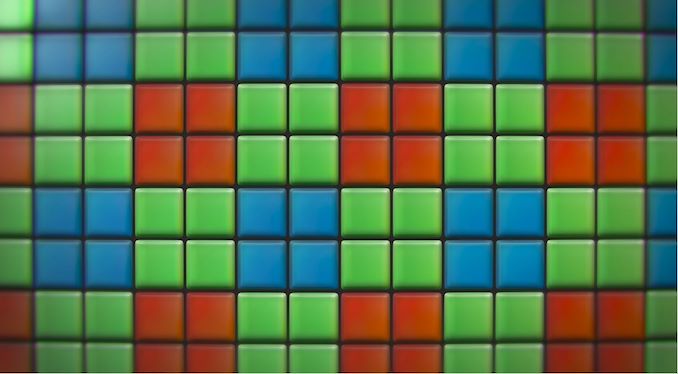
Thanks for the replies, I see now that they're talking about pixel binning.
But doesn't the iPhone 13 sensor also have sensor "sub-pixels" that it's grouping into effective pixels to get a 12 MP camera?
i.e. does the iPhone 14 do something different with the data coming from the sensor, or is the sensor different (for example, it allows some sub-pixel control that the iPhone 13 sensor does not)? Apple says the sensor (area I suppose) is 65% larger, but that's not enough to account for this 4x'ing.
Thanks!
---
I might be totally wrong, but could the 48 MP not be... real megapixels of any one camera or sensor, but a software fusion of the 3 cameras' sensors? Is that possible?
There's language on the iPhone page that makes me think this -- "So the new sensor groups four pixels together into one large quad pixel, gathering 4x more light and producing spectacularly better photos at the practical 12MP size"
What does "at the practical 12MP size" mean? Which "four pixels"? Where are the pixels captured/coming from?
There's also "For the ultimate combination of detail and flexibility, shoot in ProRAW at 48MP resolution. A new machine learning model delivers sharper images and less noise for unprecedented detail."
How much is the 48 MP a mix of sensor fusion (which could be purely software, or running on a chip, but still, post-sensor) and AI versus an actual 48 MP sensor?
---
I have similar feelings about the crash detection (accelerometer-based) and even the satellite (5G-based?) capability. Are these features just... rebranded existing things // new software features?