It seems like the only “leap” is partnering with some other group. Which, yes, organizing is critical on large scale projects… but for those of us looking for a breakthrough, I guess we’ve been clickbaited.
The submitter altered the headline
21–30 of 60 posts
It seems like the only “leap” is partnering with some other group. Which, yes, organizing is critical on large scale projects… but for those of us looking for a breakthrough, I guess we’ve been clickbaited.
I wonder, have they asked the people of Tasmania if they want it back? It's Jurassic Park writ small.
Earlier quoted context omitted.
There are periodic sightings of them. Although not with high enough confidence or documentation to say definitely, "They are still out there".
It's not plausible that such a large animal can have a self-sustaining population in the wild, and not be properly detected by the scientific community for 100 years.
Wonder if they are successful if they just go extinct again. Will they know how to hunt and reproduce? Interesting test of nature vs nurture.
https://earthlymission.com/wp-content/uploads/2022/03/tasman...
vs
https://www.unimelb.edu.au/__data/assets/image/0004/4255339/...
Wow, I was just reading about Benjamin, the last known captive thylacine filmed in 1935 > https://www.smithsonianmag.com/smart-news/new-footage-benjam...
There are periodic sightings of them. Although not with high enough confidence or documentation to say definitely, "They are still out there".
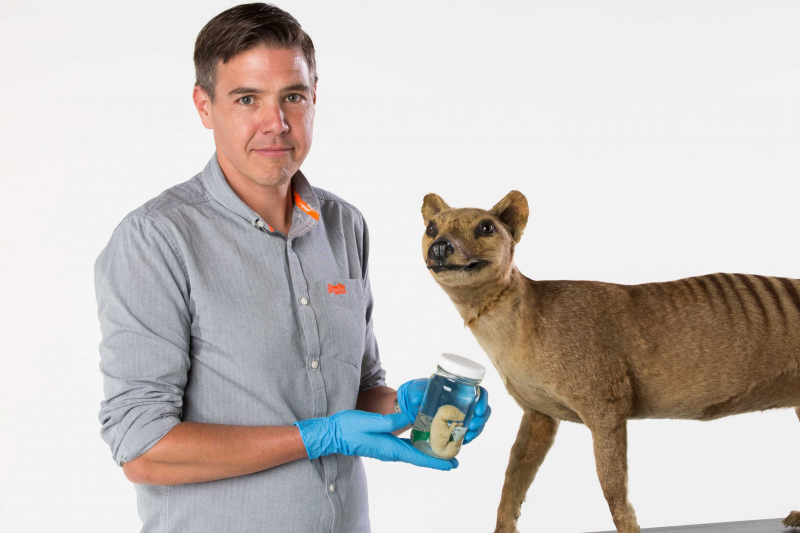
that taxidermy job should be redone. the head/face looks nothing like the real thing. it looks comical, like a bad sock puppet. https://earthlymission.com/wp-content/uploads/2022/03/tasman... vs https://www.unimelb.edu.au/__data/assets/image/0004/4255339/...
Earlier quoted context omitted.
There are periodic sightings of them. Although not with high enough confidence or documentation to say definitely, "They are still out there".
It's not plausible that such a large animal can have a self-sustaining population in the wild, and not be properly detected by the scientific community for 100 years.