Live data from Hacker News

The benefits of “low tech” user interfaces

uxdesign.cc

401–410 of 410 posts

Re: The benefits of “low tech” user interfaces

#401

Today I was running some errands in my car. The AC was too cold. Without taking my eyes off the road, I felt around for the temperature knob. My car has large, grippy knobs. It's an off-roading focused model and the knobs were made to be usable while driving on bumpy roads. I found the temperature knob, I figured where it was set with the easy-to-feel tactile indicator, and I adjusted it down, all without having to u…

> Today I was running some errands in my car. The AC was too cold.

This literally never happens on any of my cars. I'd rather not have to be distracted with an uncomfortable car in the middle of driving and then have to feel around navigating a few different knobs and buttons to make my car comfortable, my car should just automatically be comfortable.

> There's enough distracted drivers on the road to watch out for

You were more distracted having to think about the climate, take your hand off the wheel, feel around for the knobs, and adjust them properly than someone using automatic climate control where they just never have to make that adjustment in the first place.

Re: The benefits of “low tech” user interfaces

#402
post #395

Earlier quoted context omitted.

> the touch controls never bring any new features to the table. 1. Far easier to clean (you even mention this despite saying it brings no features...) 2. Easier for a lock function to help prevent kids/accidental turning on of the stove 3. Take up less space, makes the stove top a flush surface making it more reusable as a counter top There are pros and cons to knobs vs capacitive buttons on a stove. In my kitchen I…

Never seen a stove with knobs on top of the stovetop. They are usually on the front of the bench. Removing point 1 and 3.

There are tons of stoves which have their controls on the top. It is an incredibly common feature. You're practically arguing there aren't cars with four doors because you've only personally driven coupes.

https://www.bestbuy.com/site/searchpage.jsp?st=stove+top

Lets compare two pretty similar stoves and see how they compare to my 3 points above:

Electric stove with knobs: https://www.bestbuy.com/site/ge-profile-36-built-in-electric...

Electric stove with touch controls: https://www.bestbuy.com/site/ge-profile-36-built-in-electric...

1. Which one looks easier to clean, the one that's literally a flat plane of glass, or the one with six protrusions which would need to be removed to clean under, which then need to be individually cleaned themselves?

2. It looks like this one actually has some kind of lock function, so that's nice. Not all knob-based stoves have this idea. Looking around at other stoves this feature is somewhat uncommon, but not ultra rare.

3. Once again, one is truly a flat plane of glass, while the other has six protrusions on it which you then have to deal with when moving things around the counter. Its nice not having those dials in the way when you're just trying to use that space as a counter in a pinch.

Re: The benefits of “low tech” user interfaces

#403
post #286

This article strangely undersells the advantages of low tech. It's true that they're not better for everything, but they have advantages well beyond the basic things mentioned. A tactile button has far fewer accuracy issues with positioning: if you can feel the button, you won't start pressing 2/3 off and then get further and further off until you're triggering something else, as happens all the time on touchscreens.…

All very good points. I'd like to add that several of the advantages you list also apply to the old-school mouse vs. the touchscreen & touchpad.

Re: The benefits of “low tech” user interfaces

#404
post #286

This article strangely undersells the advantages of low tech. It's true that they're not better for everything, but they have advantages well beyond the basic things mentioned. A tactile button has far fewer accuracy issues with positioning: if you can feel the button, you won't start pressing 2/3 off and then get further and further off until you're triggering something else, as happens all the time on touchscreens.…

Right?

Modern computers, GUIs, and even the TUI, provide flexibility for a device. They're good at manipulating many different types of information.

If you have something that is meant to do something very well and it is critical then it makes sense to have a machine with purpose built physical controls. Controls which enable you to manipulate that one critical type of information accurately and easily.

The dedicated machine with physical controls will have to be correct, complete, and durable. But it will always work better because the controls are designed for real human bodily movement. They become truly enmeshed in muscle memory. You know where a control is relative to the others. It's just different.

Re: The benefits of “low tech” user interfaces

#405
post #191
post #5

Modern cars seem to be moving towards all controls on a touch screen somewhere. I suppose this allows for more frequent updates, but in my experience it just leads to more bugs and more painful factory updates. Not to mention using a touchscreen to adjust the temperature while driving is incredibly dangerous compared to a dial you can feel for without taking your eyes off the road.

> I suppose this allows for more frequent updates, but in my experience it just leads to more bugs and more painful factory updates. What is allows for is: cost cutting. Not having to install a mask, a button, wire harness and QA everything is a massive manufacturing cost saving. It speeds up production and lowers the amount of components that need to be sourced, installed and later made available for replacement as…

But it's not cheaper. And the car companies make money off aftermarket parts. QA just moves to software, so you're not saving anything there either. Plus so far, screens are less reliable than analog controls, so instead of replacing a cheap knob, you're replacing a top quality screen with special manufacturing requirements due to the environment of the car cabin.

Re: The benefits of “low tech” user interfaces

#406
post #397

Earlier quoted context omitted.

The best microwave I've ever used lived in the break room at my last job. It had one big knob, which worked like a standard kitchen timer: you would just twist it right until it pointed at the amount of time you want, then let it tick back down to the left until cooking was done. Want more? Just twist it right a little more, and let it keep ticking. I have no idea why domestic microwaves come with a maze of buttons w…

Such knobs should be the most obvious interface but sadly most of the analogue models on the market lack a lot of accuracy. Some times even up to 30s-1min range. Enough to be the difference between cold or over-cooked food. The best are often a big knob controlling a digital LCD timer. Started with a single start button doubling as +30s.

> The best are often a big knob controlling a digital LCD timer.

That's exactly how this one worked. I wish I could recall the brand, but I don't; it felt more like an industrial device than a home appliance.

Re: The benefits of “low tech” user interfaces

#407
post #395

Earlier quoted context omitted.

Never seen a stove with knobs on top of the stovetop. They are usually on the front of the bench. Removing point 1 and 3.

There are tons of stoves which have their controls on the top. It is an incredibly common feature. You're practically arguing there aren't cars with four doors because you've only personally driven coupes. https://www.bestbuy.com/site/searchpage.jsp?st=stove+top Lets compare two pretty similar stoves and see how they compare to my 3 points above: Electric stove with knobs: https://www.bestbuy.com/site/ge-profile-36-b…

Must be some American thing. Here the knobs are always on the front, usually because the stove comes integrated on top of the oven, but even for glass tops the knobs come in a separate module that you mount under the stovetop and protrude out on the front. Except knobs in the first place are rather unusual now due to the touch-trend.

Having knobs on the top sounds like an incredibly stupid idea. For all the reasons you posted and more. No wonder people look into touch solutions if that’s the baseline comparison.

Re: The benefits of “low tech” user interfaces

#408
post #113
post #99

Does anybody have sources they want to share for getting components for classic interfaces like these today? I'd imagine production has plummeted since the glory days, but there ought to be stock of some things around still and people salvaging nice parts? I don't do any hardware work worth mentioning, but I hope to get around to amending that soon, and I'd find it attractive to use interfaces appropriate to the task…

For hobbyists in the US, Sparkfun or Adafruit are a good start. Otherwise go to the big suppliers: Digikey, Farnell and Mouser. China (Aliexpress) supplies pretty much everything else. Many dropship on eBay and Amazon too, if you want convenience. You shouldn't need to salvage unless you really want some vintage pot knob or slider that you can't find elsewhere. Industrial hardware usually needs to be tactile (eg oper…

Thanks! That's very helpful, and I'm glad to learn availability today is much better than I had imagined.

Re: The benefits of “low tech” user interfaces

#409
post #407

Earlier quoted context omitted.

There are tons of stoves which have their controls on the top. It is an incredibly common feature. You're practically arguing there aren't cars with four doors because you've only personally driven coupes. https://www.bestbuy.com/site/searchpage.jsp?st=stove+top Lets compare two pretty similar stoves and see how they compare to my 3 points above: Electric stove with knobs: https://www.bestbuy.com/site/ge-profile-36-b…

Must be some American thing. Here the knobs are always on the front, usually because the stove comes integrated on top of the oven, but even for glass tops the knobs come in a separate module that you mount under the stovetop and protrude out on the front. Except knobs in the first place are rather unusual now due to the touch-trend. Having knobs on the top sounds like an incredibly stupid idea. For all the reasons y…

> usually because the stove comes integrated on top of the oven

In the US this is the norm in cheaper, smaller kitchens and especially rental units but becomes less common in larger kitchens with built-in ovens. Its not like counter top stoves are the "baseline", its just a common arrangement as well as all-in-one ranges. Sometimes cars have two doors, sometimes they have four.

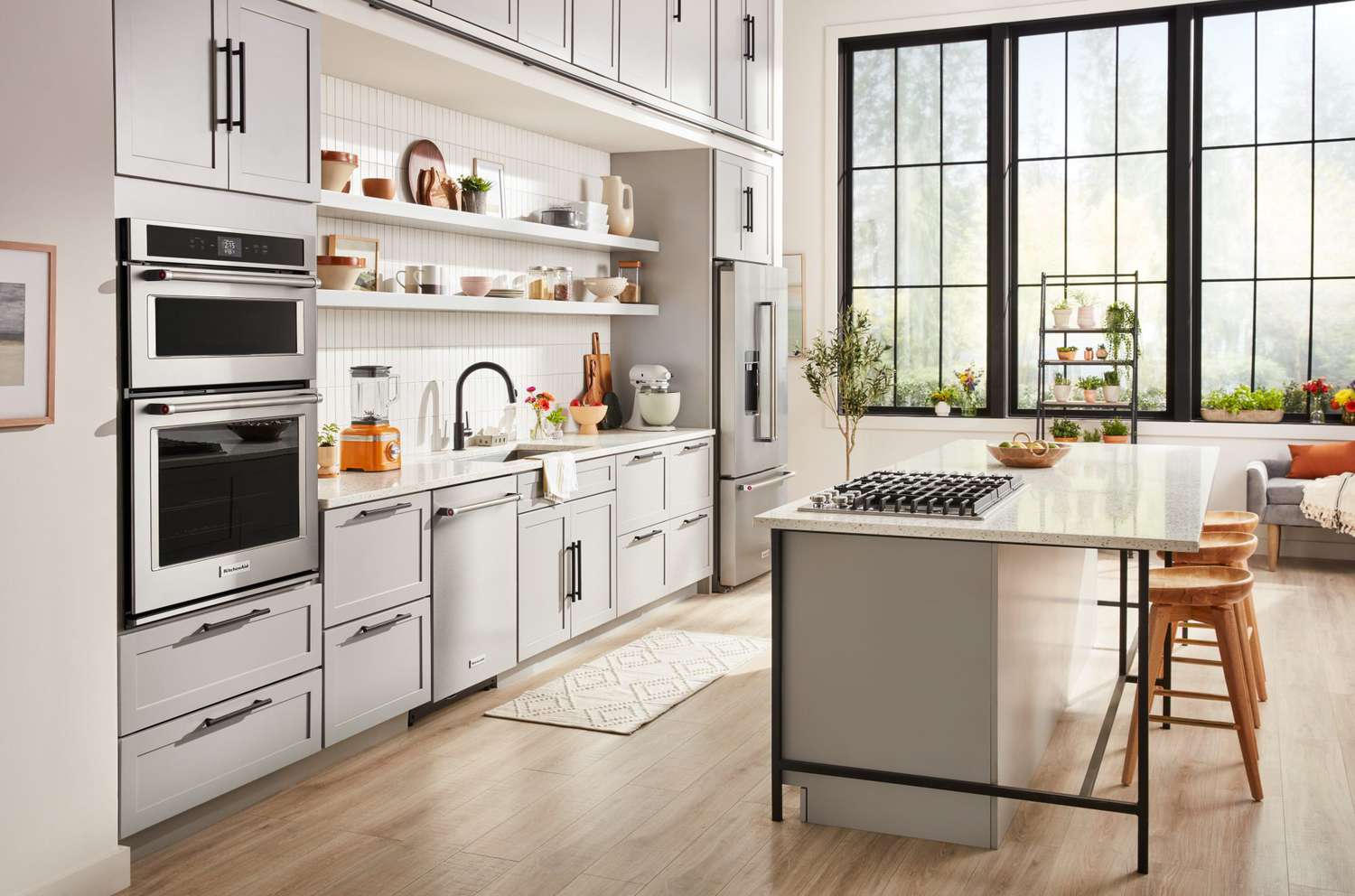
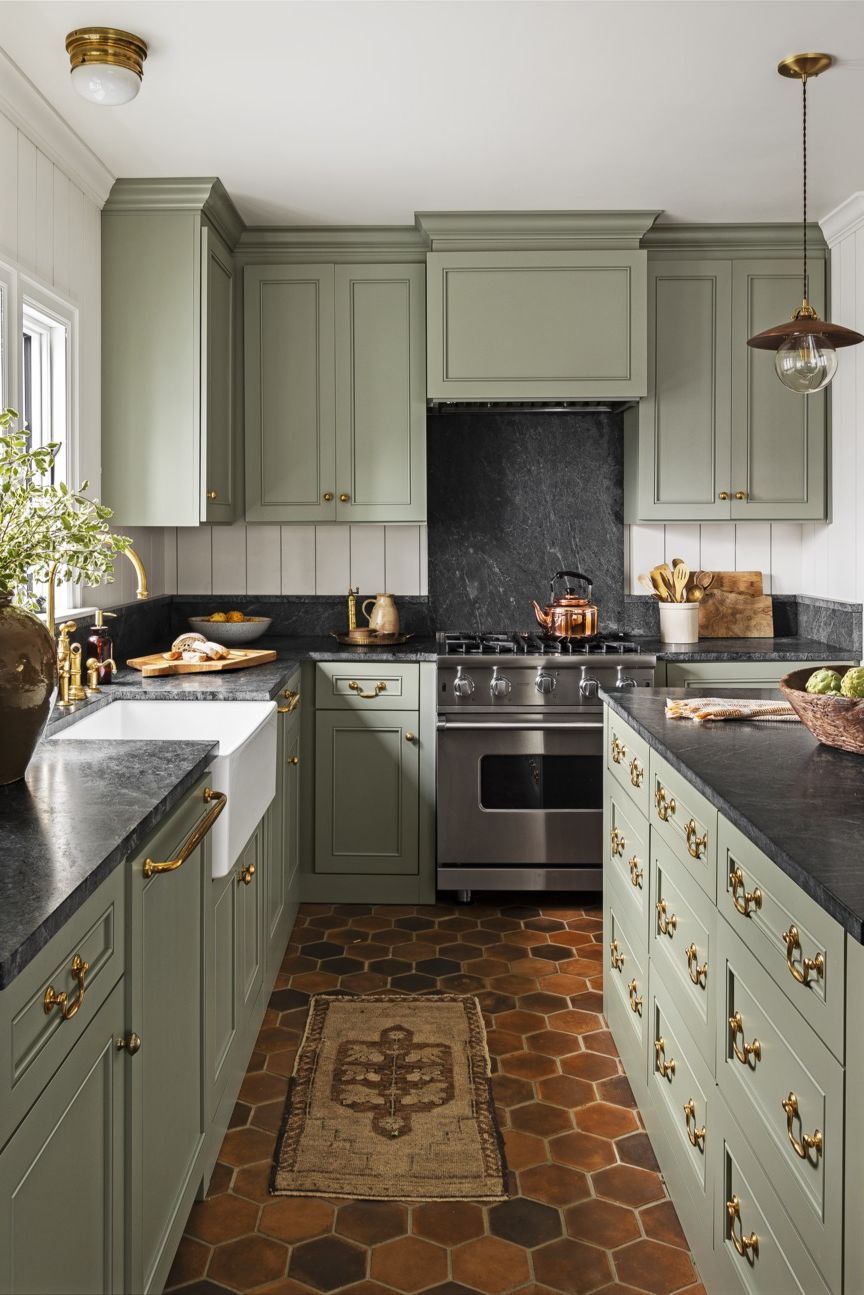
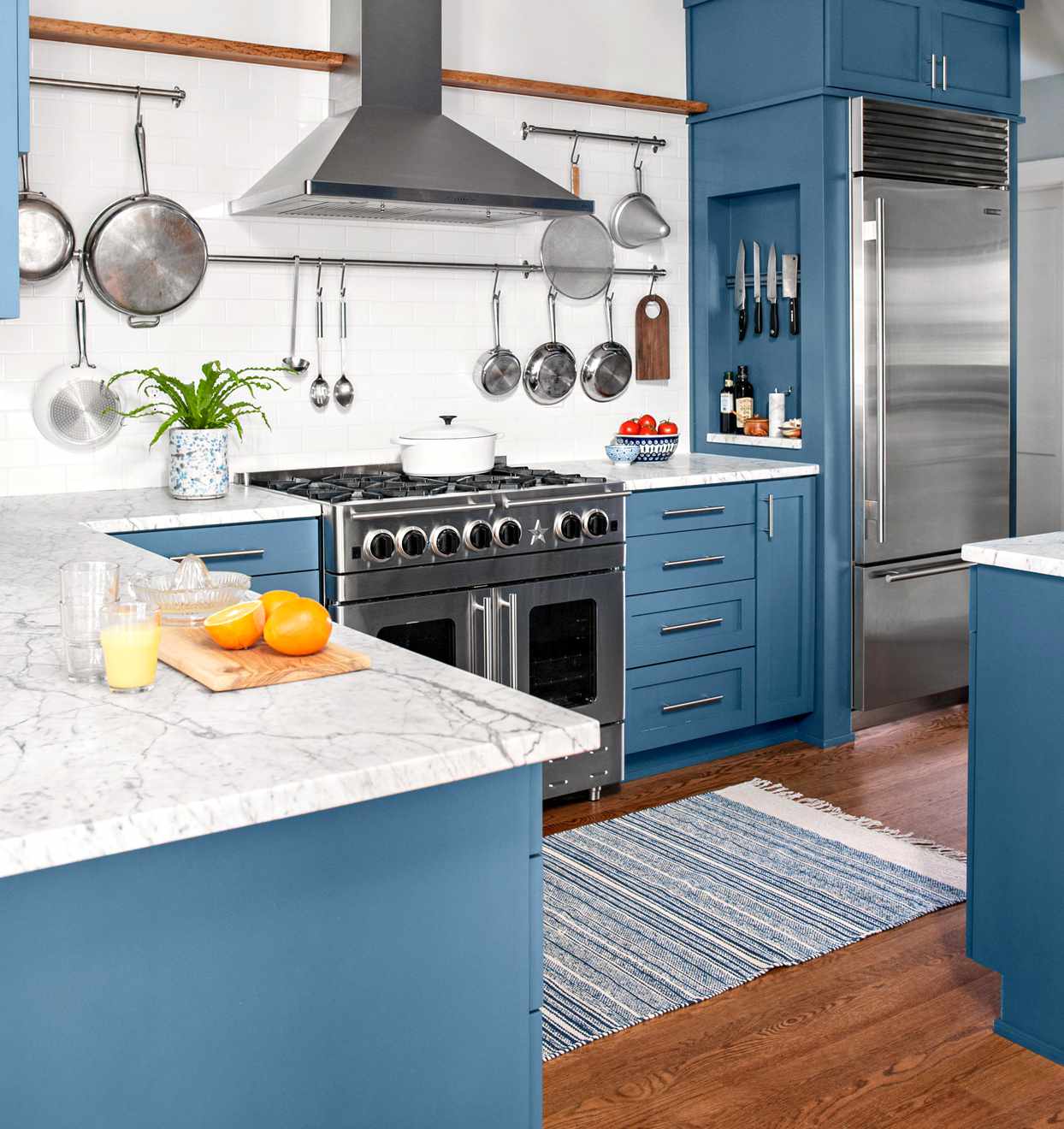
See these kitchens with a separate stove: https://irp-cdn.multiscreensite.com/6e40a3a3/dms3rep/multi/k... https://i.pinimg.com/originals/ac/2e/78/ac2e785c29d9892d155a... https://imagesvc.meredithcorp.io/v3/mm/image?url=https%3A%2F...

And these kitchens with a combined oven+stove: https://hips.hearstapps.com/hmg-prod.s3.amazonaws.com/images... https://cf.ltkcdn.net/interiordesign/images/orig/273067-1600... https://static.onecms.io/wp-content/uploads/sites/37/2020/11...

Both styles are pretty common in the US, it all depends on the layout of your kitchen. In my home, the oven is built in to a wall higher up off the ground with multiple drawers underneath. The stove is separate and on top of a large counter with lots of drawers underneath. Having knobs on the face of the range is less safe in a house with kids, its way easier for them to manipulate the knobs on the face than knobs on the top. Plus, having knobs on the face would mean I'd lose the wide, shallow drawer with all my quick cooking utensils right at the very top of the stove area. It would have to be several inches lower, making it less convenient. The controls on the top also make it easier to see and adjust the controls instead of having the controls be lower and pointed at my crotch. So there are positives to having the controls on the top. Like lots of things, there are tradeoffs either way.

Having touch controls on the top of the range is a nice feature for my kitchen. My experience would be worse if the controls were dials mounted where my most used kitchen drawer is currently, and would put my house in more danger from kids having easier access to them.

Re: The benefits of “low tech” user interfaces

#410
post #328

Earlier quoted context omitted.

I agree! I could rant endlessly about all the bad physical interfaces I've used. My house is full of them. All the new appliances come with the flat buttons—are they capacitive or something?—they may or may not register when you press them, that often don't work when poked with a gloved elbow, etc. And dials like you describe that change random amounts or aren't debounced or whatever. There are probably more possible…

Now that you mention it all applicances I’ve ever seen have those annoying flat buttons. If they made a microwave or oven control panel with the equivalent of a satisfying mechanical keyboard it would pretty well differentiate itself with a premium feel, though even the feel of a decent tv remote would be a huge improvement.

My microwave has four interface elements:

- rotary knob for function (microwave power level, defrost mode, some never-used oven modes) - rotary knob for time; this turns itself back towards zero as it unwinds - audible "ting" when timer elapses - physical press button for the door latch

I can heat food with a single turn of the timer knob.

Most microwaves require you to navigate. You can fuck off with that shit, not in my house.

Post reply on HN