Pong is one of the sample chapters for the "Retrocomputing with Clash" book (https://gergo.erdi.hu/retroclash/). Clash is a hardware description DSL using Haskell, and the book is all about using it to implement progressively more complex 1970s chips.
Original Pong did not have any code or even a microprocessor
21–30 of 152 posts
Re: Original Pong did not have any code or even a microprocessor
#22It'll be exciting if the clock cycles keep stalling like they've basically been doing in the last few years and we end up having to learn and do things at this level again to squeeze out what we want happen out of a long-term fixed compute budget.
Good time to pivot towards embedded and systems level programming
Probably a decade or two premature but can't hurt to hedge the bets (there's definitely opportunity to make software that makes fpga and asic compilation from higher level languages easier though - only reason it's not happening is the high talent required and low amount of people at that intersection, there's no way verilog/vhdl is the global minima).
Re: Original Pong did not have any code or even a microprocessor
#23It'll be exciting if the clock cycles keep stalling like they've basically been doing in the last few years and we end up having to learn and do things at this level again to squeeze out what we want happen out of a long-term fixed compute budget.
This is part of why Intel acquired Altera. On the other end of the spectrum, some of the latest AVR families have configurable glue logic akin to a tiny PLD.
Re: Original Pong did not have any code or even a microprocessor
#24It'll be exciting if the clock cycles keep stalling like they've basically been doing in the last few years and we end up having to learn and do things at this level again to squeeze out what we want happen out of a long-term fixed compute budget.
Good time to pivot towards embedded and systems level programming
I'm going to sound like one of those fanboys but Rust really is a breath of fresh air. Lots of people now are starting to make actually fast and performant applications due to the ergonomics of the language being more high level than something like C or C++. It's actually my favorite ML type language, I've use OCaml to a large extent before but with Rust, the DX is still pretty nice, even if you have to contend with the borrow checker.
Re: Original Pong did not have any code or even a microprocessor
#25Pong is one of the sample chapters for the "Retrocomputing with Clash" book ( https://gergo.erdi.hu/retroclash/ ). Clash is a hardware description DSL using Haskell, and the book is all about using it to implement progressively more complex 1970s chips.
FPGA's and Haskell are two topics I'm very fond of, but I would never have expected to see them used at the same level of the stack.
That's gonna be interesting.
Re: Original Pong did not have any code or even a microprocessor
#26Life is weird, I was just using this site yesterday to do some electrical diagrams for a wiring harness I am building for my ancient mobile.
My trouble was understanding how to flow something through a series of relays, and implementing "AND" and "OR" logic with a relay series.
if(AC && Temp > 160) { run both fans } if(AC || Temp > 160 { run both fans at reduced speed }
Now, the AC is already a relay, but you can just do 'and' and 'or' together without a extra set of diodes.
Anyway, falstad, I love your CircuitJS. I wish I could drag items around though, as for me the hardest part of making sense of things is having a good clean layout.
Random question to readers: does anyone know of a tool to generate the very nice wiring diagrams you'll see in bently and other automotive manuals? I imagine they were originally by hand but later were done with a CAD tool. Just wondering if there are any good open source options.
CircuitJS fails there because I want to create objects, like a 4 pin relay, that has pinouts numbered (87, 87a, 30, etc get reused a lot!) and have colored cables (because they're colored in real life!).
Anyway love this
Re: Original Pong did not have any code or even a microprocessor
#27Excluding "Spacewar", Pong is the first "classic" arcade game that has reached the milestone of being 50 years old.
https://en.wikipedia.org/wiki/Timeline_of_arcade_video_game_...
Re: Original Pong did not have any code or even a microprocessor
#28It'll be exciting if the clock cycles keep stalling like they've basically been doing in the last few years and we end up having to learn and do things at this level again to squeeze out what we want happen out of a long-term fixed compute budget.
This is part of why Intel acquired Altera. On the other end of the spectrum, some of the latest AVR families have configurable glue logic akin to a tiny PLD.
PLDesque glue logic is cool, but the coolest thing I've seen is uC's with fully programmable pins, so eg the DAC device inside the chip can be connected to any of the external pins, making board layout dramatically simpler.
Re: Original Pong did not have any code or even a microprocessor
#29Life is weird, I was just using this site yesterday to do some electrical diagrams for a wiring harness I am building for my ancient mobile. My trouble was understanding how to flow something through a series of relays, and implementing "AND" and "OR" logic with a relay series. if(AC && Temp > 160) { run both fans } if(AC || Temp > 160 { run both fans at reduced speed } Now, the AC is already a relay, but you can jus…
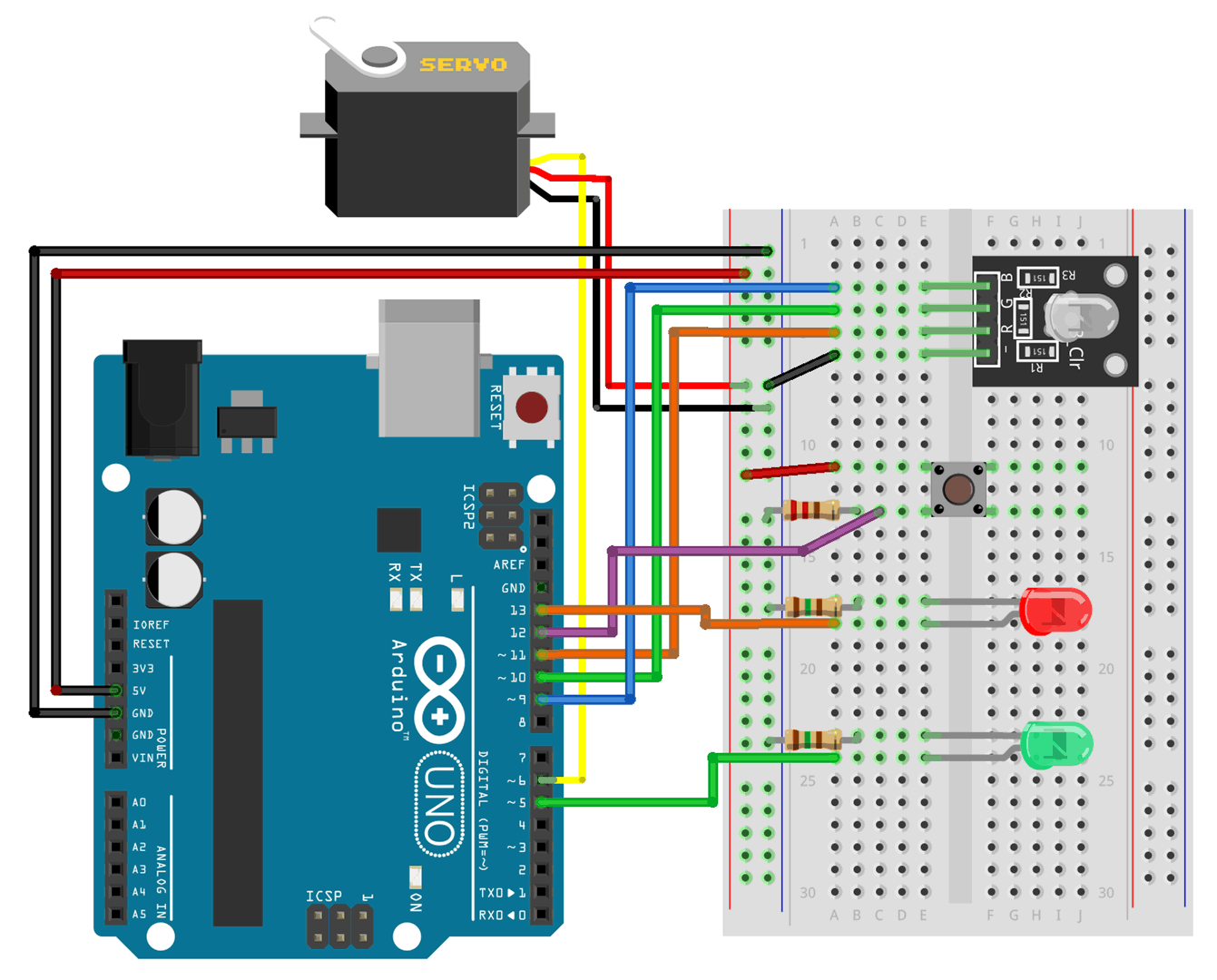
> does anyone know of a tool to generate the very nice wiring diagrams you'll see in bently and other automotive manuals?
Does Fritzing get close to what you're after?
It can create stuff like this:
http://troybaverstock.com/wp-content/uploads/2019/04/arduino...
Re: Original Pong did not have any code or even a microprocessor
#30It'll be exciting if the clock cycles keep stalling like they've basically been doing in the last few years and we end up having to learn and do things at this level again to squeeze out what we want happen out of a long-term fixed compute budget.
This is part of why Intel acquired Altera. On the other end of the spectrum, some of the latest AVR families have configurable glue logic akin to a tiny PLD.
In the same vein, the Raspberry Pi RP2040 has what they call Programmable IO modules which are tiny cores that can run small state machines doing whatever you want, separate from the main ARM cores.