Cities were a mistake, now that we have the technology we should disperse back into nature.
Nature has enormous emotional and cognitive benefits on people
121–130 of 303 posts
Re: Nature has enormous emotional and cognitive benefits on people
#122Funny thing is, making cities more green isn't even _that_ difficult. I see above conversations on living closer to nature, or mountains vs parks - but the vast majority of time spent is walking and driving in the cities. So it seems a no-brainer that before everything else, before thinking about taking a 2 hour drive to hike, or making the time for a weekly visit to the park, we should first make sure the places peo…
This is one benefit of commieblocks nobody's talking about. They lead to green cities.
This is how commieblock districts of my city look like: https://spoldzielnialsm.pl/wp-content/uploads/2018/05/Obecni... https://4.bp.blogspot.com/-ud9-Z0UHVHg/W7-qUjfNT9I/AAAAAAAAi...

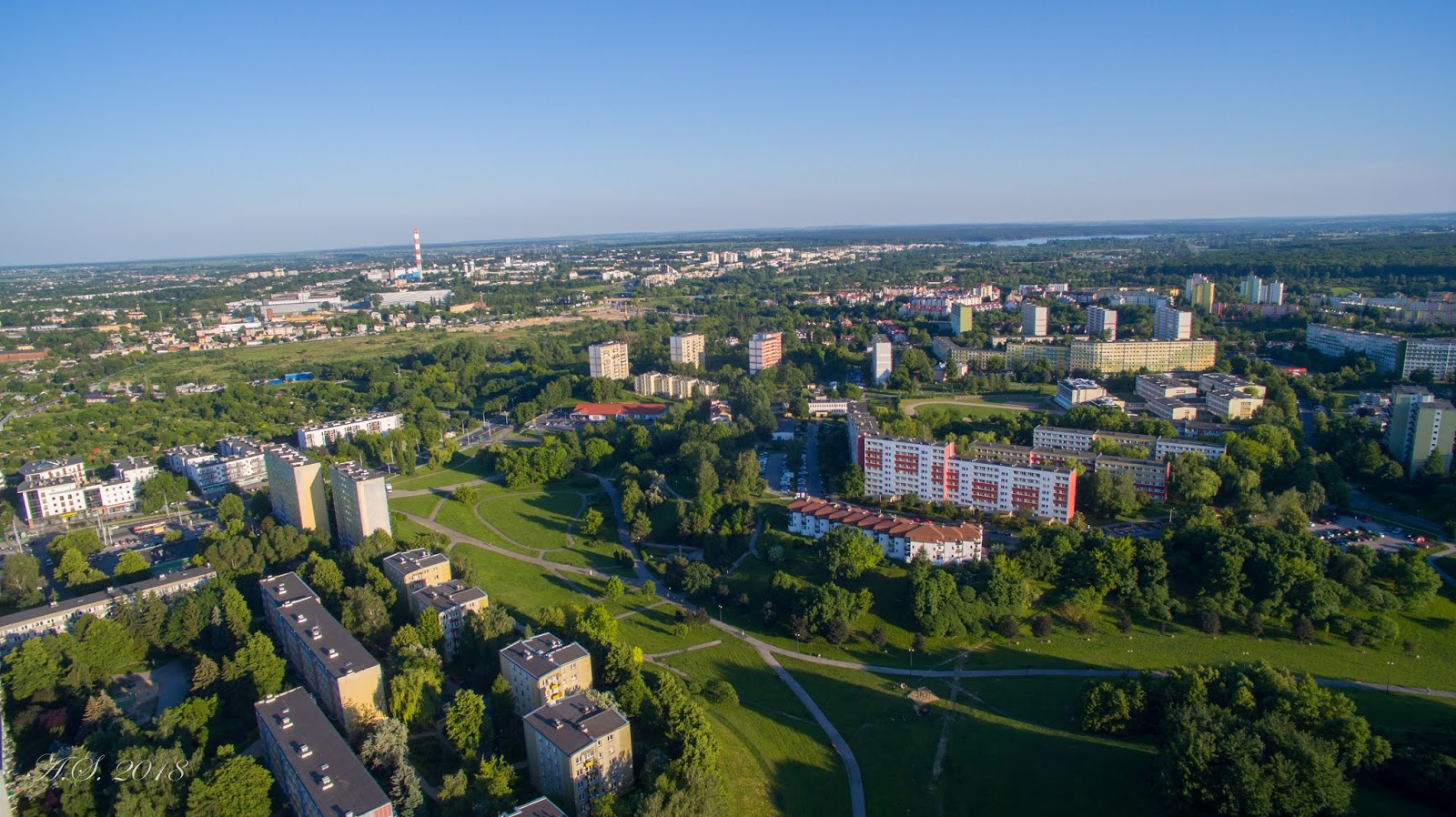
Modern car-centric districts are much worse, and single houses districts are car-centric concrete hell in comparison.
Re: Nature has enormous emotional and cognitive benefits on people
#123This is the sort of thing I think about when the pro-urban/pro-density/anti-car people talk about their vision for the world. I live in a city now, and the lack of substantial nature is suffocating to the extent that I plan to move. The idea that we should all live this way to conserve space—a resource which is only scarce in these urban places—seems excessive to put it mildly. EDIT: A lot of urban folks are rebuttin…
> I’m sure they’ve grown, but it’s still a big world out there people. I No, it just isn't. Humans have transformed seventy per cent of the land on Earth[1]. Including the deserts. Suburbs are the second most land intensive thing we do, after farming, and for almost every other developed-world country, this problem is more acute than in the US. Get some perspective. That is a "wind turbines cause global warming" leve…
[deleted]
Re: Nature has enormous emotional and cognitive benefits on people
#124Earlier quoted context omitted.
> making cities more green isn't even _that_ difficult. On the contrary it takes quite a bit of effort to keep the nature at bay. Neglect a corner of your house and next thing you notices small ecosystem developing full with small grass, mold, insects and what not. When Indian cities were locked down for a few months all sorts of birds and animals started appearing in the neighborhood.
> Neglect a corner of your house and next thing you notices small ecosystem developing full with small grass, mold, insects and what not. When Indian cities were locked down for a few months all sorts of birds and animals started appearing in the neighborhood. Is this a downside or a positive?
Mold in your house is a health risk, so yeah nah, any life in the house is best left as intentional, potted plants and the like.
Re: Nature has enormous emotional and cognitive benefits on people
#125Funny thing is, making cities more green isn't even _that_ difficult. I see above conversations on living closer to nature, or mountains vs parks - but the vast majority of time spent is walking and driving in the cities. So it seems a no-brainer that before everything else, before thinking about taking a 2 hour drive to hike, or making the time for a weekly visit to the park, we should first make sure the places peo…
I think there's a lot that the people that actually live there can do. When I think of American housing, it's either big dense cities, or suburbs. The suburbs are all... bland, a concrete driveway and grass. All very low maintenance. If those were to do some gardening - plant a tree, some bushes, flower perks, longer grasses, etc - you already will get a much nicer place to live.
And in the cities, people can do things like hanging baskets out of windowsills, or potted plants out the door. And of course things inside the house.
I will acknowledge though that this is from a position of privilege, we have a lively plant and flower industry in my country and hundreds of garden centers around the country.
Re: Nature has enormous emotional and cognitive benefits on people
#126I wonder how much of it is just relief from the constant psychological attack of advertising?
It will depend a lot on where you live and what media you consume though; I don't feel it that much over where I live. At best there's some signs along the main road.
Re: Nature has enormous emotional and cognitive benefits on people
#127Skeptical about these kinds of claims, they usually are mixing up cause and effect; People who are emotionally and cognitively healthy tend to go outside more because they are healthy , i don't know how you would control for that.
Not only healthy, but also able; live close to nature, own a car, or have enough money and time to seek it out, and of course inclination.
Re: Nature has enormous emotional and cognitive benefits on people
#128Funny thing is, making cities more green isn't even _that_ difficult. I see above conversations on living closer to nature, or mountains vs parks - but the vast majority of time spent is walking and driving in the cities. So it seems a no-brainer that before everything else, before thinking about taking a 2 hour drive to hike, or making the time for a weekly visit to the park, we should first make sure the places peo…
Europe does this much better. It's not so difficult to find yourself on a quieter, greener path just on your way to work. The countryside has a network of footpaths that connect everything. Wherever I am in Europe, I can count on a quiet evening walk. Berlin is outstanding for this. Wherever you are, it's easy to escape loud traffic and sit in a green, public space. Some have cafés and Biergarten in them. I find retu…
Berlin is better than most other places I've lived, but there is still so much room to improve. In my (sub-)district, pedestrians, cyclists, bars and trees share around 30% of the space on the street, while an additional 40% is parking and the last 30% is driving. The thing is, only around 35% of households here even own a car, and the vast majority of those probably just have it as a convenience. Public transport is quite good, and Berlin is super flat, so also really good for cycling.
Very slowly things are moving in the right direction, but it is a constant fight against a loud minority and old local and federal rules favoring cars above all.
Re: Nature has enormous emotional and cognitive benefits on people
#129Most of the studies in the linked APA article have all the hallmarks of the replication crisis: - Small sample sizes (O(100)) - Low correlation coefficients - Everybody is predisposed to believe the conclusion (what kind of monster doesn't like nature?) - There is zero incentive to report a negative finding And even if some of the studies do replicate, the response variable is often either self-reported, or performan…
Two points on this: (1) If you want to know how people feel, I’m afraid self-reports are the gold standard (2) Some other studies have large sample sizes (e.g. this one, which is based on my PhD: https://eprints.lse.ac.uk/49376/1/Mourato_Happiness_greater_... )
> If you want to know how people feel, I’m afraid self-reports are the gold standard
"How people feel" can't directly be measured scientifically, but it is a function of many things, some of which can be measured reliably (weight, blood pressure, money, etc). I'd rather have a reliable measurement of quantity that I believe contributes to well-being than a direct measurement of well-being that I think is unreliable.
This is brought into sharp relief when you consider the applications of this research. Suppose intervention A is know to promote subjective well being, whereas intervention B is known to promote healthy blood pressure levels. What would you rather spend money on?
> Some other studies have large sample sizes
This is a fair point. The 2019 Nature study also has large-n. I also like that the authors of that one write "Future studies would ideally collate as much data via non self-report measures as possible."
But as far as I can tell, all the large-n studies are observational. As other commenters have pointed out, when the treatment is so general it's really hard to control for confounding factors. The study you've linked (and the 2019 Nature study) both implemented controls, all of which look reasonable. But when we find an effect, we are still left the question: "What if we just missed a major confounder? What if the cumulative impact of small confounders for which we can't control for is responsible for the signal?"
Re: Nature has enormous emotional and cognitive benefits on people
#130Funny thing is, making cities more green isn't even _that_ difficult. I see above conversations on living closer to nature, or mountains vs parks - but the vast majority of time spent is walking and driving in the cities. So it seems a no-brainer that before everything else, before thinking about taking a 2 hour drive to hike, or making the time for a weekly visit to the park, we should first make sure the places peo…
I was walking in Glasgow, everything felt grey, bland and depressive.
At some point I realized they have zero trees in the streets. Also means no bird sounds in the background, no green leaves adding some colors to the concrete, no blossoming in the spring.
Being in a city where every street is filled with trees I realized how big of an impact it is.
It is however not "easy", the old big trees you want, destroy your streets, branches fall in storms, sometimes even whole trees fall over.