Earlier quoted context omitted.
I don't doubt that the people crafting these proposals care. I think they truly believe they are doing the right thing. I personally think it's just increasingly popular, mistaken moral beliefs that inform these types of proposals. Some of the underlying beliefs: 1. Blank slate - All humans are of equal ability 2. Any observable differences between humans are merely the result of social factors 3. Any observable diff…
1. This is kind of a founding principle of the country, so... 2. This follows from #1, if we rule out nature then it must be nurture. Also, you must not be a parent if you'll accept "some kids are just dumb" as an excuse 3,4. Replace "oppression" with "competition". I think it might sound better to you. But the conclusion is the same. You want to prevent winners from accumulating an advantage, eliminating all others…
An update on the campaign to defend serious math education in California
231–240 of 657 posts
Re: An update on the campaign to defend serious math education in California
#232Earlier quoted context omitted.
Is calculus an important highschool goal? I feel like I may have benefited more if that time was spent on statistical literacy than calculus. I encounter stats very often in my adult life, calculus style problems are rare and I don't remember the formulas offhand, so end up just looking up what I need.
Stats requires calculus; you can't even define a probability distribution without some pretty advanced notions of real analysis. Discrete math, linear algebra etc. are viable alternatives.
Most people who deal with data/statistics in their working lives do not need to know real analysis, do not utilize calculus to draw (correct) conclusions, and do not use linear algebra either. They learned all these things once and forgot them a long time ago, because they did not need them. They utilize statistics an order of a magnitude more often than they do calculus.
They are not statisticians, but people who need to deal with data as part of their job.
Re: An update on the campaign to defend serious math education in California
#233Earlier quoted context omitted.
I believe the gist of the argument is that when you split students into 'normal' and 'advanced' classes at a young age, the students who are not put into the advanced classes will believe they are just naturally not good at math and will give up on trying to get better because they will think they just "don't have a math brain". Here is a short blurb about the idea: > The framework would not forbid districts from acc…
I was in the "middle" tier math program in high school. But around sophomore year I wanted to get more into science/engineering but you can't switch tiers or catch up to those ahead of you, no matter if you're making extra effort and doing well. It was frustrating. In my case I got a letter about summer school at a local university. So I pre-calced over summer school to get moved into calculus in high school. It hone…
Re: An update on the campaign to defend serious math education in California
#234Earlier quoted context omitted.
I don't doubt that the people crafting these proposals care. I think they truly believe they are doing the right thing. I personally think it's just increasingly popular, mistaken moral beliefs that inform these types of proposals. Some of the underlying beliefs: 1. Blank slate - All humans are of equal ability 2. Any observable differences between humans are merely the result of social factors 3. Any observable diff…
1. This is kind of a founding principle of the country, so... 2. This follows from #1, if we rule out nature then it must be nurture. Also, you must not be a parent if you'll accept "some kids are just dumb" as an excuse 3,4. Replace "oppression" with "competition". I think it might sound better to you. But the conclusion is the same. You want to prevent winners from accumulating an advantage, eliminating all others…
“ 1. This is kind of a founding principle of the country, so...”
yes those slave owning people really thought their slaves were the same as them, totally dude
Re: An update on the campaign to defend serious math education in California
#235Earlier quoted context omitted.
Update - having re-read the first post about this, it seems that the issue of resources is exactly the problem. I think that opponents of the CMF would prefer to see More Resources put into careful, thorough elementary/middle school math so that middle schoolers would thrive in 8th grade Algebra. And in their view, the CMF simply lowers the bar, masking the need for more resources. I agree with that!
The lack of resources for public education, coupled with the every increasing level of competency that students are required to internalize over time drives many of the fights in education. I can understand how an electrical engineering professor like yourself is rightly concerned about your incoming students having less calculus proficiency. On the other hand, there many (possibly far more numerous than EE) educatio…
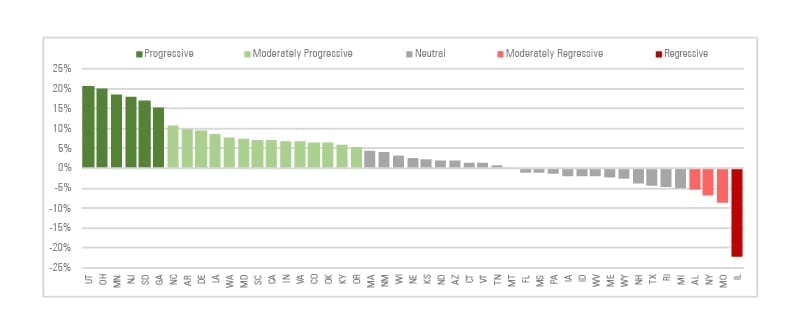
Or that 50% of total K-12 school funding comes from federal and state sources, which is directed mainly at lower-income districts? And that, when including those funds, only a few states (ironically blue ones) have more than a 5% gap between rich and poor districts: https://edtrust.org/wp-content/uploads/2018/02/Gaps-in-State.... Meanwhile about 20 states (including many red ones like Utah and Georgia) direct over 5% or more funding to poor school districts than rich ones?
Re: An update on the campaign to defend serious math education in California
#236SF CA resident, parent of two school age children chiming in. The direction with math seems pretty dismal, in that as of right now, everyone is singly tracked together for math through freshman year of high school. This results in children who have higher aptitudes[1] to not be well served by schools. The majority of people I know who have the means opt out of the public school system, which probably makes the proble…
Re: An update on the campaign to defend serious math education in California
#237Earlier quoted context omitted.
Out of curiosity, is that a hunch or are you aware of any schools teaching multiplication tables even in Kindergarten? This used to be done in second grade when I was a kid.
You're right, it's a hunch (n=1.5±0.5).
So I'm not saying it can't be done by any 5 year olds, but it seems young to teach this to the majority of 5 year olds.
Re: An update on the campaign to defend serious math education in California
#238Earlier quoted context omitted.
Is calculus an important highschool goal? I feel like I may have benefited more if that time was spent on statistical literacy than calculus. I encounter stats very often in my adult life, calculus style problems are rare and I don't remember the formulas offhand, so end up just looking up what I need.
Lets say you need to find the probability of something happening 10% of the time to 40% of the time, you need to perform definite integration of the curve ( lets say normal curve ) from 0.1 to 0.4 on the x axis multiplied by the normal curve function. This is one of the easiest examples I could remember from my undergrad. We could solve these problems with ease at undergraduate level because we grinded hard during ou…
No one does this in the real world. Not even professional statisticians who know calculus. In the old days they used table lookups. Today they use software.
You need to understand the concept of areas under curves. Calculus is just a means to compute the area.
Re: An update on the campaign to defend serious math education in California
#239From the original letter: While well-intentioned, we believe that many of the changes proposed by the CMF are deeply misguided and will disproportionately harm under-resourced students. Adopting them would result in a student population that is less prepared to succeed in STEM and other 4-year quantitative degrees in college. The CMF states that 'many students, parents, and teachers encourage acceleration beginning i…
Is calculus an important highschool goal? I feel like I may have benefited more if that time was spent on statistical literacy than calculus. I encounter stats very often in my adult life, calculus style problems are rare and I don't remember the formulas offhand, so end up just looking up what I need.
Unfortunately, I think it comes down to resource constraints: When I attended a relatively wealthy and large suburban school district that offered more courses than most other school system in the state, there were only 18 other students who took AP Calculus BC our senior years (and one anomaly who took it his junior year). There were a couple classes for Calc AB, mostly seniors and a few juniors. That special 18-student course was already pushing the limit on the minimum class size, a couple years prior they hadn't had enough students and didn't offer it at all.
If you'd split the curriculum into discrete math and statistics as well, there wouldn't be enough resources to support those branches. To take a chainsaw to the analogy, you wouldn't have the straight but sturdy tree trunk we have now, you'd have a stump or maybe a shrub.
Re: An update on the campaign to defend serious math education in California
#240From the original letter: While well-intentioned, we believe that many of the changes proposed by the CMF are deeply misguided and will disproportionately harm under-resourced students. Adopting them would result in a student population that is less prepared to succeed in STEM and other 4-year quantitative degrees in college. The CMF states that 'many students, parents, and teachers encourage acceleration beginning i…
I don't doubt that the people crafting these proposals care. I think they truly believe they are doing the right thing. I personally think it's just increasingly popular, mistaken moral beliefs that inform these types of proposals. Some of the underlying beliefs: 1. Blank slate - All humans are of equal ability 2. Any observable differences between humans are merely the result of social factors 3. Any observable diff…