Live data from Hacker News

Costs of California’s troubled bullet train rise again, by estimated $5B

latimes.com

21–30 of 67 posts

Re: Costs of California’s troubled bullet train rise again, by estimated $5B

#21

California (like most places) can clearly benefit from high quality rail infrastructure: - more pleasant commutes over greater distances - reduced housing market pressure near major offices - reduced noise and air pollution compared to motor vehicles (for the same carrying capacity) But how is it so expensive?

Every step in a project needs to go through long approval/permitting processes that cost a lot of time and money. This ignores the high cost of labor/materials in California.

The only reason why the NYC subway, and the Chicago L are there today is because they were built before all of these processes existed. You could not build anything like them in modern day.
Re: Costs of California’s troubled bullet train rise again, by estimated $5B

#22
post #17

Are there many large infrastructure projects in America that actually turn out to be a waste of time? It seems like any large infrastructure project tends to get a whole load of pushback and political shenanigans (which often are the direct cause of spiralling costs), but in the end once it's built (if it's built) it's a massive benefit. Is the real lesson here just that we should all just shut up and get on with it?

> in the end once it's built (if it's built) it's a massive benefit

Like what?

Re: Costs of California’s troubled bullet train rise again, by estimated $5B

#23
post #9

One thing about the route I don’t get… why don’t they use the space between the roads on the 5? Isn’t that mostly accounted for by the government already? Especially if so much of the tracks is raised.

It's not about space. You don't spend $105,000,000,000 on land. You can spend real money on construction that causes a minimum of inconvenience. Say you want to build on a road median, and then someone imposes a requirement that at most one lane be closed during the construction. The land isn't a problem, doing the construction while closing only one lane is expensive. There are other variants. Basically, every time…

I want to digress.

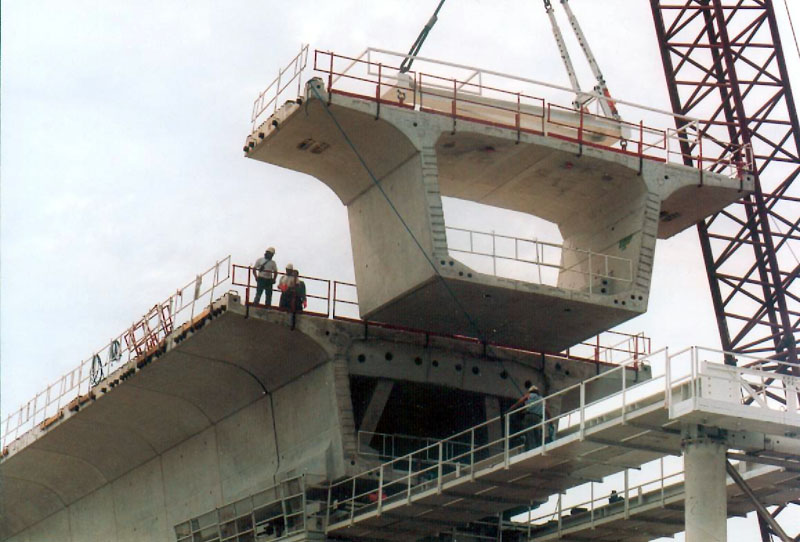
http://www.railfaneurope.net/tgv/images/construction/vdcavig... shows a part of TGV track being lifted into place. TGV is cheap high-speed track, particularly if one is willing to leverage the experience the French have built. That seems to be for a bridge, so not cheap, but the width ought to match the usual track width.

Would that fit in a road median? It seems implausible.

If not, then it's a fair assumption that building something narrower will add to the cost. The French didn't spend extra to build wider than optimal tracks, after all.

EDIT: I found http://www.railfaneurope.net/tgv/track.html and… wow.

Re: Costs of California’s troubled bullet train rise again, by estimated $5B

#24
post #18

California (like most places) can clearly benefit from high quality rail infrastructure: - more pleasant commutes over greater distances - reduced housing market pressure near major offices - reduced noise and air pollution compared to motor vehicles (for the same carrying capacity) But how is it so expensive?

>But how is it so expensive? that is a classic megaproject which will be expanding in cost until there is no more expansion is possible and then a bit more. Lets imagine some numbers - at 100B cost and say $5B/year expenses, it would need $7B/year of tickets for 50 years ROI, ie. it would need $20M/day, which is 100000 passengers/day at $200/ticket, like a 100 trains/day with 1000 riders each.

That's not how you assess ROI. You assess ROI by estimating the total economic contribution to the area.

https://www.apta.com/wp-content/uploads/Resources/resources/...

Re: Costs of California’s troubled bullet train rise again, by estimated $5B

#25
post #17

Are there many large infrastructure projects in America that actually turn out to be a waste of time? It seems like any large infrastructure project tends to get a whole load of pushback and political shenanigans (which often are the direct cause of spiralling costs), but in the end once it's built (if it's built) it's a massive benefit. Is the real lesson here just that we should all just shut up and get on with it?

> in the end once it's built (if it's built) it's a massive benefit Like what?

Been on a road or pavement lately? Airport, railway, school, park, townhall etc.?

Someone complained that thing was a waste of money when it was built.

Re: Costs of California’s troubled bullet train rise again, by estimated $5B

#26
post #17

Are there many large infrastructure projects in America that actually turn out to be a waste of time? It seems like any large infrastructure project tends to get a whole load of pushback and political shenanigans (which often are the direct cause of spiralling costs), but in the end once it's built (if it's built) it's a massive benefit. Is the real lesson here just that we should all just shut up and get on with it?

> in the end once it's built (if it's built) it's a massive benefit Like what?

I don't know. Maybe something like the Interstate Highway System.

Re: Costs of California’s troubled bullet train rise again, by estimated $5B

#27

California (like most places) can clearly benefit from high quality rail infrastructure: - more pleasant commutes over greater distances - reduced housing market pressure near major offices - reduced noise and air pollution compared to motor vehicles (for the same carrying capacity) But how is it so expensive?

As a comparison, the latest French high-speed track that opened in 2016 was built for 5 billion euros (5.4 billion dollars) for 400 km.

The Californian track being twice as long, how the heck did it end up costing ten (10!) times as much??

Re: Costs of California’s troubled bullet train rise again, by estimated $5B

#28
post #17

Are there many large infrastructure projects in America that actually turn out to be a waste of time? It seems like any large infrastructure project tends to get a whole load of pushback and political shenanigans (which often are the direct cause of spiralling costs), but in the end once it's built (if it's built) it's a massive benefit. Is the real lesson here just that we should all just shut up and get on with it?

> in the end once it's built (if it's built) it's a massive benefit Like what?

Like any literally any infrastructure, no one is standing around going "Wow, that Interstate highway system sure was a waste of time".

Re: Costs of California’s troubled bullet train rise again, by estimated $5B

#30
post #18

Earlier quoted context omitted.

>But how is it so expensive? that is a classic megaproject which will be expanding in cost until there is no more expansion is possible and then a bit more. Lets imagine some numbers - at 100B cost and say $5B/year expenses, it would need $7B/year of tickets for 50 years ROI, ie. it would need $20M/day, which is 100000 passengers/day at $200/ticket, like a 100 trains/day with 1000 riders each.

That's not how you assess ROI. You assess ROI by estimating the total economic contribution to the area. https://www.apta.com/wp-content/uploads/Resources/resources/...

Oh! you're right. Such approach though would easily allow the cost to continue balloon, and $200B by 2027 don't look unimaginable.
Post reply on HN