Live data from Hacker News

What made the NES so interesting?

nicole.express

51–60 of 127 posts

Re: What made the NES so interesting?

#51
To me the NES is the precursor of Apple and Google with closed systems that preys on the discovery of the home computer and creates waste (cartridges) when software can be written to re-writeable media (cassettes, floppies and network).

C64 and Amiga are the precursors of the Raspberry, that while not 100% good; they atleast leave you in charge of your machine to a larger extent:

http://move.rupy.se/file/commodore.png
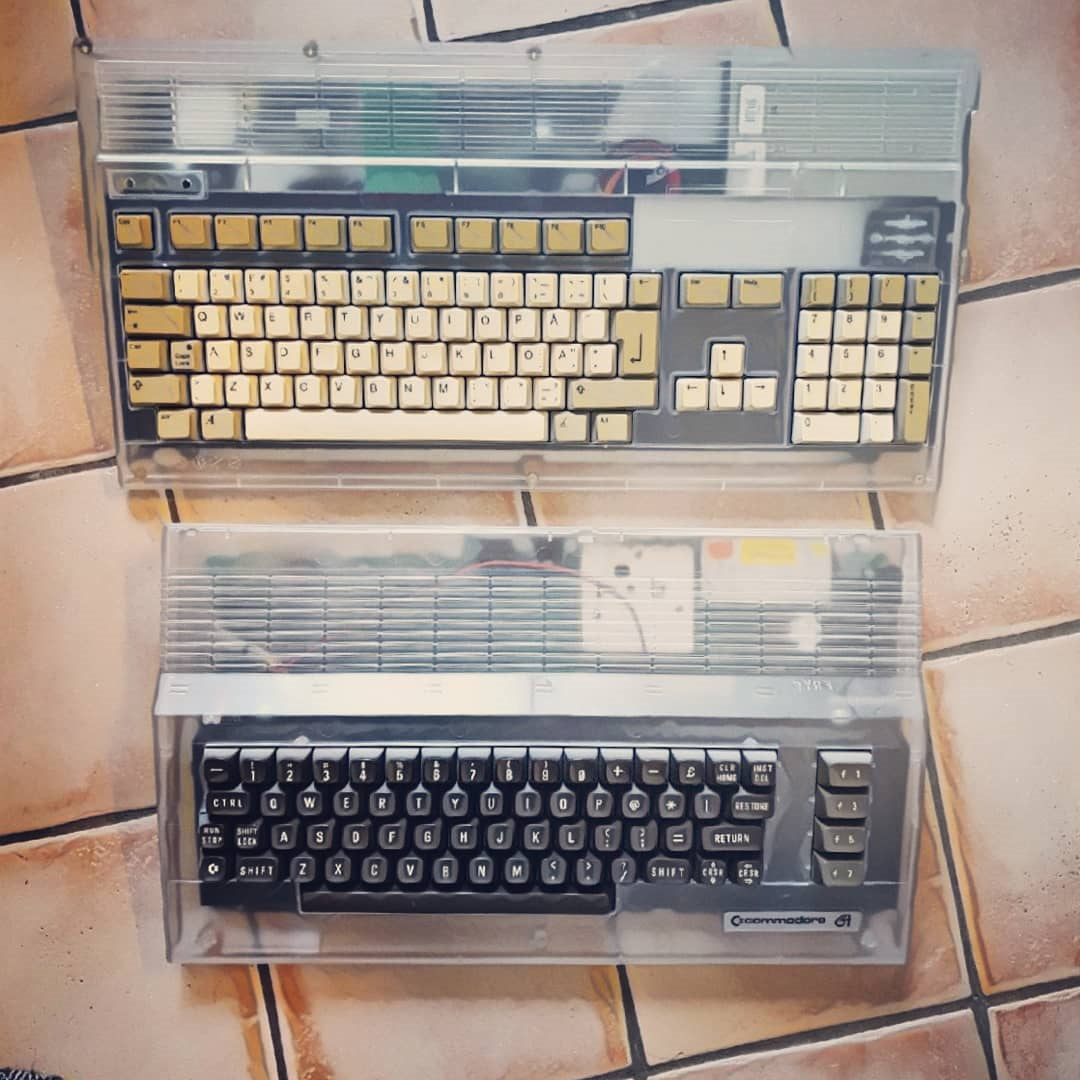
Another interesting tidbit is that Nintendo wanted Commodore to design the Famicom but Tramiel bailed in the last second when the Commodore guy was allready in Japan on his way to that first meeting.

Last but not least, the C64 had S-video before it even had that name, separating the chroma and luma. Not even the Amigas had that 10 years later.

Re: What made the NES so interesting?

#52

> The NES is in some sense a composite-only system. While there is an RGB mod, it's quite invasive[...] This is something that a lot of even very plugged into retrogaming people don't really get about the NES and RGB mods. I think it's very counterintuitive for people now that there is no part of the system that operates in actual 'color' information. The NES' video output is composite from start to finish[1], with p…

> and especially because NTSC had trouble with stable color This is why we joked NTSC meant Never The Same Color. The last thing you wanted to see in NTSC was bright red because you'd continue to see it smear for at least 1/4 of the screen to the right. NTSC "Safe" red wasn't really red. Run a broadcast safe filter on 255,0,0 and see how far off it goes. Should be somewhere around 180,0,0 IIRC. The days of looking at…

laughs in PAL

Weren't NTSC somewhat also grainier with more pronounced horizontal gaps between each scanline? Certainly seemed so.

Re: What made the NES so interesting?

#53

> The NES is in some sense a composite-only system. While there is an RGB mod, it's quite invasive[...] This is something that a lot of even very plugged into retrogaming people don't really get about the NES and RGB mods. I think it's very counterintuitive for people now that there is no part of the system that operates in actual 'color' information. The NES' video output is composite from start to finish[1], with p…

> and especially because NTSC had trouble with stable color This is why we joked NTSC meant Never The Same Color. The last thing you wanted to see in NTSC was bright red because you'd continue to see it smear for at least 1/4 of the screen to the right. NTSC "Safe" red wasn't really red. Run a broadcast safe filter on 255,0,0 and see how far off it goes. Should be somewhere around 180,0,0 IIRC. The days of looking at…

> This is why we joked NTSC meant Never The Same Color.

SECAM = System Essentially Contrary to the American Method

PAL = Perfection At Last

Re: What made the NES so interesting?

#54

> The NES is in some sense a composite-only system. While there is an RGB mod, it's quite invasive[...] This is something that a lot of even very plugged into retrogaming people don't really get about the NES and RGB mods. I think it's very counterintuitive for people now that there is no part of the system that operates in actual 'color' information. The NES' video output is composite from start to finish[1], with p…

What about the Sharp Nintendo Television? According to https://www.youtube.com/watch?v=OmhhDvncrFY , the NES has a direct RGB connection to the display.

That most likely contained a custom NES with a PC-10 chip rather than a standard PPU.

Re: What made the NES so interesting?

#55
post #52

Earlier quoted context omitted.

> and especially because NTSC had trouble with stable color This is why we joked NTSC meant Never The Same Color. The last thing you wanted to see in NTSC was bright red because you'd continue to see it smear for at least 1/4 of the screen to the right. NTSC "Safe" red wasn't really red. Run a broadcast safe filter on 255,0,0 and see how far off it goes. Should be somewhere around 180,0,0 IIRC. The days of looking at…

laughs in PAL Weren't NTSC somewhat also grainier with more pronounced horizontal gaps between each scanline? Certainly seemed so.

Yes, but at a higher refresh rate - 525 horizontal scan lines @ 60hz vs 625 @50hz.

Refresh rate is linked to mains frequency.

Re: What made the NES so interesting?

#56

There were so many things the NES did right. For instance the color palette was designed with aesthetics in mind: it had 56 colors that you'd want to use, compared to the 216 colors of the web safe palette that must have been chosen by a physicist because 60% of them make me want to puke. The Atari 400 and 800 had an elaborate system for game-friendly video that couldn't touch what the NES did with tiles. They did am…

The Web safe colours were infinitely better than the standard VGA.

Once I tried to come up with a good set of 256 colours for a fantasy console and found almost all of the existing options sucked.

I Documented an analysis and what I came up with here http://blag.fingswotidun.com/2018/04/giving-kwak8-256-colour... ( You can mouse-over the spinning colour cubes to view them in Lab space)

I think I could come up with a better set if I were to do it again today, but I was pretty pleased with this attempt.

Re: What made the NES so interesting?

#57
post #55
post #52

Earlier quoted context omitted.

laughs in PAL Weren't NTSC somewhat also grainier with more pronounced horizontal gaps between each scanline? Certainly seemed so.

Yes, but at a higher refresh rate - 525 horizontal scan lines @ 60hz vs 625 @50hz. Refresh rate is linked to mains frequency.

>Refresh rate is linked to mains frequency.

It doesn't have to be. Japan has a split power grid with 50Hz in the east and 60Hz in the west, but television frequency is 60Hz on both sides.

https://en.wikipedia.org/wiki/Electricity_sector_in_Japan#/m...

Re: What made the NES so interesting?

#58

If you have any interest in NES or video game history, and you haven't read "Super Mario" by Jeff Ryan, get it. I first read it about 10 years ago, but it was one of the most interesting books I'd read and should be evergreen. I also bought the audiobook, which is phenomenal. Read by the great Ray Porter, and DRM free on Downpour: https://www.downpour.com/super-mario You'd be amazed at how many times Nintendo almost…

can you please provide a direct download link? It seems it's unavailable for my country (Poland) - will really appreciate it!

Re: What made the NES so interesting?

#59
post #57
post #55

Earlier quoted context omitted.

Yes, but at a higher refresh rate - 525 horizontal scan lines @ 60hz vs 625 @50hz. Refresh rate is linked to mains frequency.

>Refresh rate is linked to mains frequency. It doesn't have to be. Japan has a split power grid with 50Hz in the east and 60Hz in the west, but television frequency is 60Hz on both sides. https://en.wikipedia.org/wiki/Electricity_sector_in_Japan#/m...

This explains why western Japan is so much further ahead than eastern Japan. Everything is just faster there.

Re: What made the NES so interesting?

#60

> The NES is in some sense a composite-only system. While there is an RGB mod, it's quite invasive[...] This is something that a lot of even very plugged into retrogaming people don't really get about the NES and RGB mods. I think it's very counterintuitive for people now that there is no part of the system that operates in actual 'color' information. The NES' video output is composite from start to finish[1], with p…

What about the Sharp Nintendo Television? According to https://www.youtube.com/watch?v=OmhhDvncrFY , the NES has a direct RGB connection to the display.

No post body was provided.
Post reply on HN