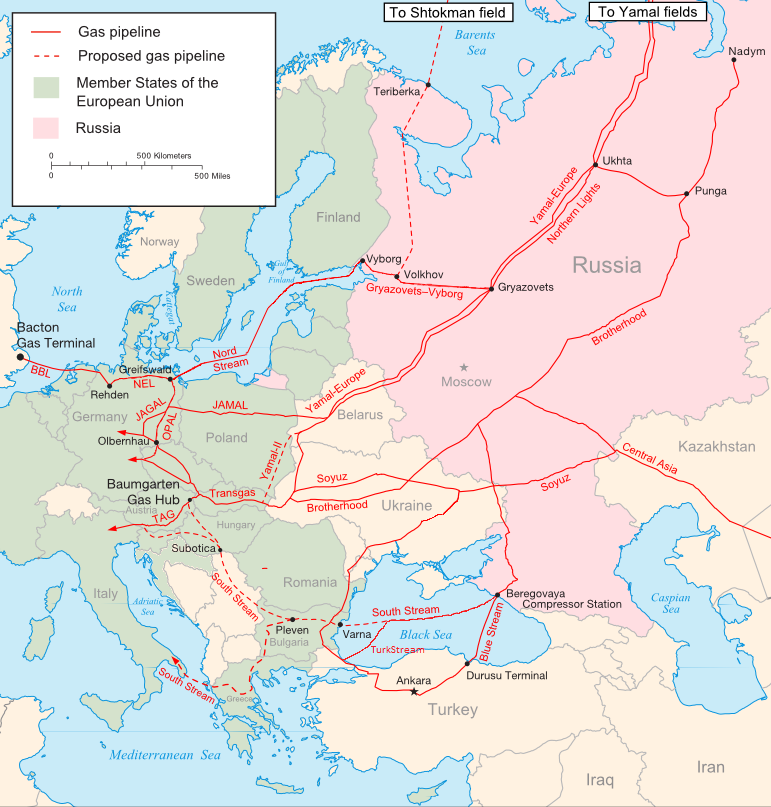
What i didn't realize until very recently was that natural gas can be liquefied and sold on an open market like a barrel of oil. With that in mind, these pipelines are not as critical. Additionally, pipelines operate by contracts which offer very generous discounts years in advance; Liquefied gas, on the other hand, is a commodity and is sold at market prices. Seems logical to assume that Russian gas will still be so…
It is more expensive. The reason why Lithuania and Poland built LNG terminals is not because it is economical or fun compared to pipelines. It is a pure sunk cost. The reason is to secure their supply incase Russia wants to exert influence through the gas supply like it did with Ukraine until 2015 when Ukraina started buying all gas from the EU instead.
They therefore cap the price they pay to what is available on the open LNG market, if the regular supply does not come through.
https://en.wikipedia.org/wiki/Russia%E2%80%93Ukraine_gas_dis...