Live data from Hacker News

How E Ink developed full-color e-paper

spectrum.ieee.org

111–120 of 208 posts

Re: How E Ink developed full-color e-paper

#111

Earlier quoted context omitted.

Those clear plastic key-caps do not look nice to type on. Also, this seems to be using a single E-ink screen underneath.

Hopefully they'd be using something slightly textured like the screens on eink note takers so it wouldn't be glass-smooth. For the single screen, wouldn't the overall effect be mostly the same? The killer for me is mostly the size. As a portable I guess it's fine, but not what I want to use for full workdays.

Yeah, I don’t think a single screen is problematic as long as the keycaps feel alright to type on.
Re: How E Ink developed full-color e-paper

#112
post #43
post #35

Earlier quoted context omitted.

I want color, to read code, I can't give up on syntax highlighting

I found out that text styling (bold, underline, italic, and different fonts) are more than enough.

I've been wondering for a while whether syntax highlighting had a role in certain code style changes. Like the one where open curly brackets were placed at the start of a new line but nowadays are just appended to the end. Without syntax highlighting the older style seems to make more sense as it makes scope delimiters more visible without using colors.

Re: How E Ink developed full-color e-paper

#113
post #92

Earlier quoted context omitted.

The devices I've seen with color e-ink need to intermittently flash the screen. I could live with a slow refresh rate, but having my screen flicker black once or twice a minute is a deal-breaker.

There is no ongoing flicker on e-ink displays. The display is absolutely stable with no flicker while you’re reading as there is no refresh. If you trigger a page change the page redraws the new image in a fraction of a second. It looks a bit like a fast cross-fade. If you are updating smaller regions of the screen it is fast enough not to notice. Scrolling would still be a problem as that requires a much faster refr…

There's a periodic full refresh to clear any "ghosted" pixesl, often at a user-definable frequency. This occurs only during a display update, so yes, as long as you're looking at static text, there won't be a flash.

The trade-off is of pixel ghosting vs. flash. The more frequently the screen is fully refreshed, the less ghosting.

In practice, I tend to set this value to about 20 refreshes for reading texts, and will frequently manually refresh the display when reading Web content in a browser where scrolling is more prevalent.

For monospace (terminal) displays, the fact that each character tends to update in the same screen cell makes the ghosting issue less significant and noticeable. What happens is that the background gets somewhat greyer as text is read or scrolled, but there isn't the effect of strong imprints under the text as with graphic or typeset content. A refresh largely has the effect of brightening the background.

Noticeable, yes. Annoying? Largely not.

Re: How E Ink developed full-color e-paper

#115

Earlier quoted context omitted.

Well, some of these patents should already be reaching their half-life at least. :) But yeah, it was a sad day for me when I learned why e-ink isn't ubiquitous.

Is it just excessive licensing fees, or other business practices?

E-Ink has the worst product management team of any company I have ever watched. There are so many applications out there begging for low-cost, low-power displays, and they are just not addressing that market.

They have an extremely limited selection of products, and the ones they do have are priced unreasonably high. They seem to be reluctant to enter into bulk OEM agreements with anyone, and they charge exorbitant license fees for anyone who wants to manufacture displays themselves.

In short, they are considered to be terrible stewards of the technology.

Re: How E Ink developed full-color e-paper

#116
post #96
post #24

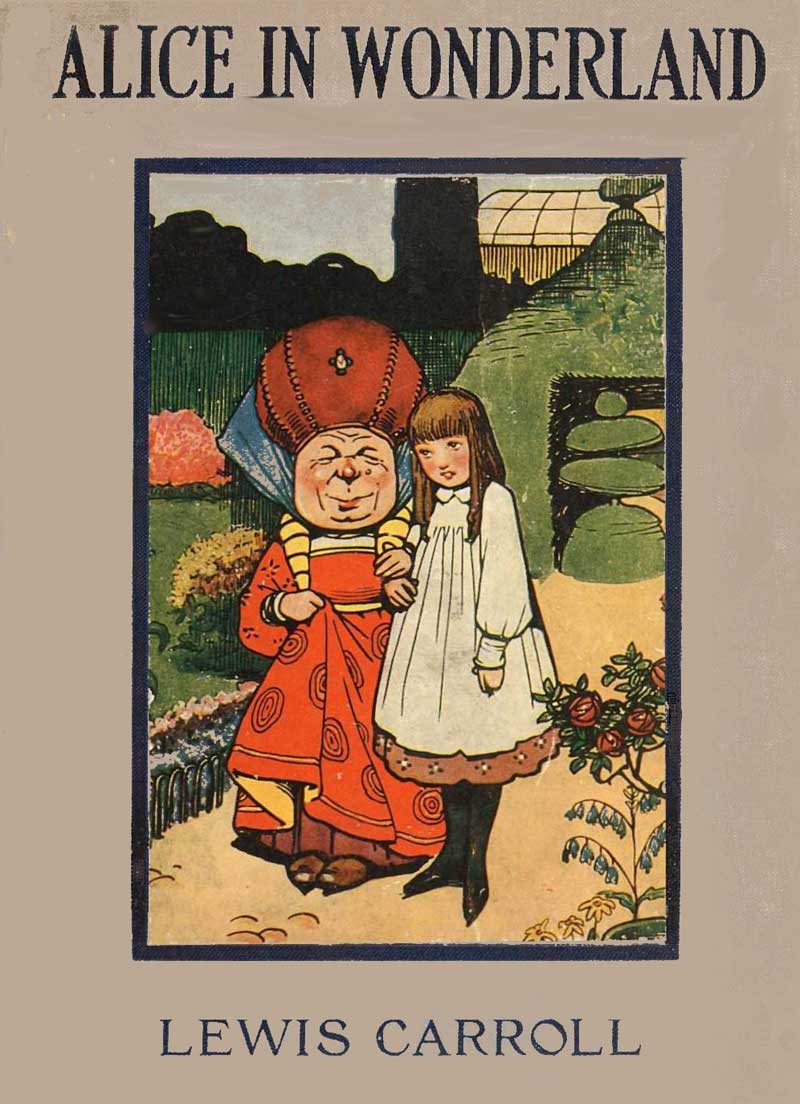
The colors in the opening image look faded.

I wish they had not used vintage magazine covers for their illustration. By using old covers, I wasn't sure how much of the drabness was caused by the device and how much was attributable to the original image being drab.

For comparison, this is what the Alice in Wonderland cover is supposed to look like:

http://1.bp.blogspot.com/-pW6QZ0TMgIU/T5t2xpQjrfI/AAAAAAAAAM...

Re: How E Ink developed full-color e-paper

#117
post #20

Every time an E Ink article is posted the patent defeatism is inevitable. I’m curious if there are other techniques to implement reflective(?) displays being explored that wouldn’t fall within the scope of E Ink’s defensible moat, or, if their parents are simply so broad as to stifle most hopes of accessible solutions and broader consumer/professional adoption. Frankly, I’m quite sick of straining my eyes and circadi…

There's the attractively named DES Slurry technology which I think has even been in shipping devices:

https://goodereader.com/blog/e-paper/des-display-electronic-...

Re: How E Ink developed full-color e-paper

#118

This is second hand info, so sorry if it's totally wrong, I'll edit this: E-ink tech is great, but patents and other paper-limitations are slowing down developments of cheap e-ink devices devices, and e-ink will become "great again", when patents expire. I personally see many, many usecases of e-ink all around me, but the prices are way too high for anything that is not either really small or a repurposed old existin…

Do you think you'd buy an e-ink device that was hackable to explore some of these use cases? I'm thinking a battery powered, WiFi/BT, minimal linux OS with good power management, powerful enough to run chromium embedded for rendering.

I can imagine a few people on here interested in such a device for calendar, home automation, surf updates, whatever. Or does it already exist?

Re: How E Ink developed full-color e-paper

#119
post #43

Earlier quoted context omitted.

I found out that text styling (bold, underline, italic, and different fonts) are more than enough.

I've been wondering for a while whether syntax highlighting had a role in certain code style changes. Like the one where open curly brackets were placed at the start of a new line but nowadays are just appended to the end. Without syntax highlighting the older style seems to make more sense as it makes scope delimiters more visible without using colors.

IMHO it's just preference - at least the last 15 years - but now propagated as a sort of common default/standard with the advent of auto code formatting tools. C# still does what you say (and practically always did - but the Mono people formatted it differently) while Java and JavaScript do the other. Before Prettier, I formatted JS code like C# - I thought it's nicer. Now I use the other because that's what Prettier does and it's usefulness greatly outweighs my preference.

Re: How E Ink developed full-color e-paper

#120

E-ink is the coolest tech with the worst business practices. The availability of affordable e-ink tech is just not there. I understand the research-intensive nature of these displays, but the company itself has been holding back the e-ink market by just operating poorly in so many ways. My biggest worry is that they'll fold at some point, leaving all the e-ink patents in the hand of a troll that will hold tech back f…

out of curiosity, isn't that irrelevant since they can just get acquired if there was a big opportunity in using this technology in a product.
Post reply on HN