Live data from Hacker News

Germany is closing half of its reactors before the end of the year

bnnbloomberg.ca

151–160 of 467 posts

Re: Germany is closing half of its reactors before the end of the year

#151

Earlier quoted context omitted.

6. Wholesale electricity rates have increased from 50 Euros/mwh to 250 Euros/mwh over the course of the last year. This isn't about averages. It's about meeting demand, which is especially important during the winter heating season.

Electric heating is extremely uncommon in Germany (like 1-2 % of households use it).

If gas is used for both heating and electricity production, or share any other fuel source, the prices of electricity and heating will still be related.
Re: Germany is closing half of its reactors before the end of the year

#152
post #108

Earlier quoted context omitted.

6. If everyone had the same electricity mix than Germany we would have total blackouts everyday

How do you reach that conclusion?

1. There is very little energy storage

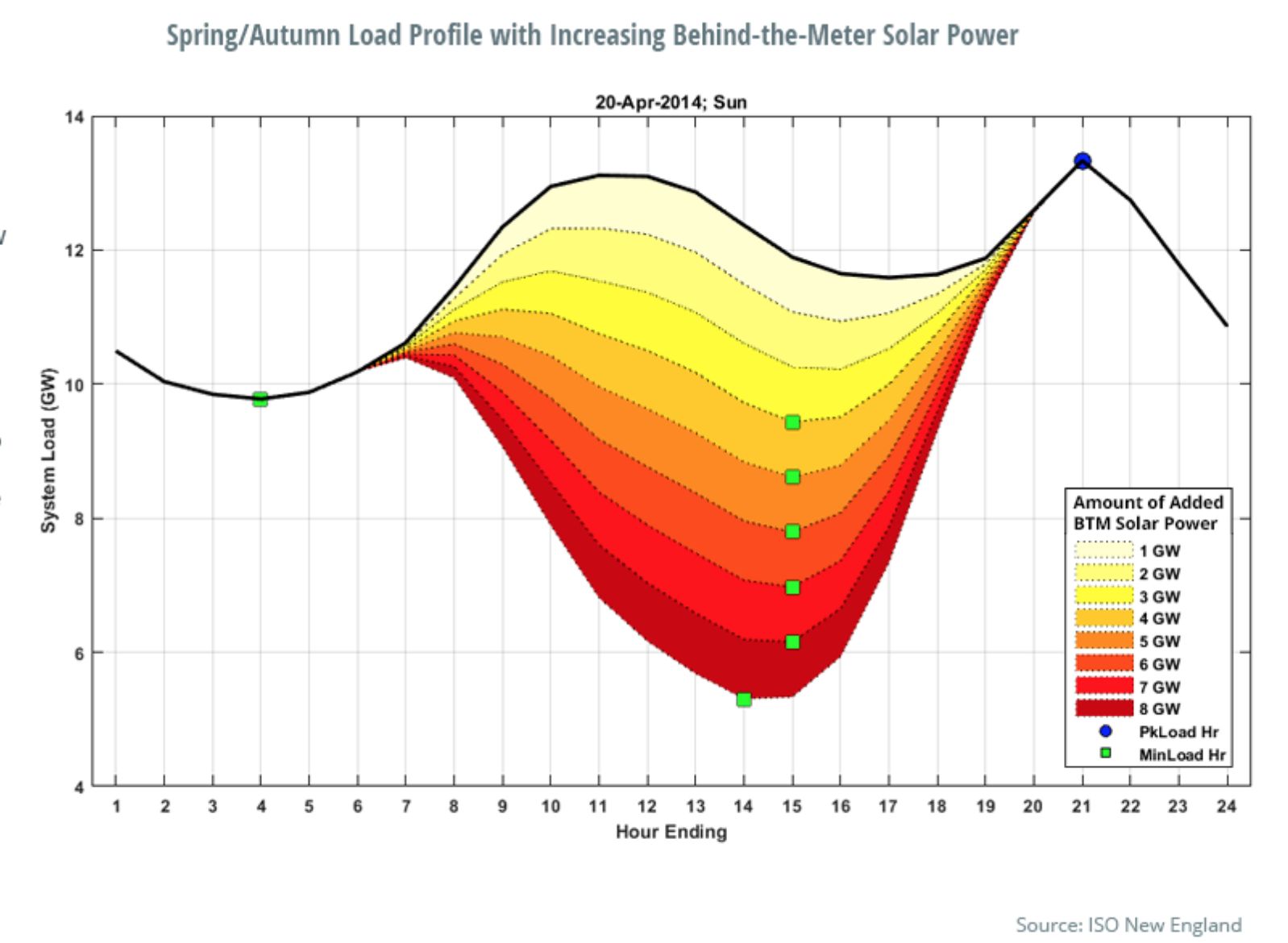
2. Sun and wind only produce a fraction of the time (40% [1] and 25% [2] respectively, and 7.5% (= 8.94/(63.2+56)) of installed capacity this very second [3])

3. Production capacity without sun and wind Germany's mix only work because of neighbouring countries. And their humongous amounts of still existing coal and gas.

[1] https://assets.greentechmedia.com/assets/content/cache/made/...

[2] https://www.statista.com/statistics/555654/wind-electricity-...

[3] https://app.electricitymap.org/zone/DE

Re: Germany is closing half of its reactors before the end of the year

#153
post #124

Earlier quoted context omitted.

How do you reach that conclusion?

You can't decide when the wind blow and when the sun shines. And you can't either decide when people turn on their washing machine. So it is obvious there is a problem

Well, it is obvious, that the renewable production needs to be paired with some on-demand sources. Short term, gas is great for that, as gas power plants can be switched on and off quickly, long-term the necessary storage options are needed (some of that can be power2gas, which can be burnt in the gas power plants).

Re: Germany is closing half of its reactors before the end of the year

#154
post #37

What if we ban all cryptocurrencies mining in order to save energy ?

What if we raise price of energy to the level where mining cryptocurrency is barely profitable and even that only in times of peak production from renewables and subsidize consumers directly so they can purchase reasonable amount of energy priced that way for their own use?

Who is a reasonable consumer? Industries like steel refinement are basically just energy cost arbitrage just like Bitcoin but you get steel instead of Bitcoin.

Plus crypto dynamically changes the mining difficulty.

Re: Germany is closing half of its reactors before the end of the year

#155
post #136

Earlier quoted context omitted.

6. Wholesale electricity rates have increased from 50 Euros/mwh to 250 Euros/mwh over the course of the last year. This isn't about averages. It's about meeting demand, which is especially important during the winter heating season.

That's a very good argument for the need to build much more renewable capacity in Germany, since that would substitute the burning of natural gas that caused this price increase.

Sure, we'll see it when it happens. Renewables are like a trickle at best, all the low hanging fruit there is taken, and the required battery capacity is huge....

Re: Germany is closing half of its reactors before the end of the year

#156

Earlier quoted context omitted.

One important thing to notice is that uranium is a finite non-renewable resource. The Red Book says there are about 3.3 million tons that are extractable for a price of 130 USD/ton. In 2017 the total uranium production was 60.000 tons. Thats about 55 years of uranium left at the current production rate. The Red Book assumes there are another 2.1 million tons likely to exist from geological data, but not found yet and…

FWIW, according to your own links. > Uranium-235 is a finite non-renewable resource.[1][3] > As of 2017, identified uranium reserves recoverable at US$130/kg were 6.14 million tons (compared to 5.72 million tons in 2015). At the rate of consumption in 2017, these reserves are sufficient for slightly over 130 years of supply. The identified reserves as of 2017 recoverable at US$260/kg are 7.99 million tons (compared t…

They calculate 130 years of supply at current consumption rates. Nuclear power supplies something like 5% of the global primary energy, so scaling this to 100% would deplete the estimated reserves in a few years.

Breeders would help, but have so far not been very successful. For example, the German Thorium breeder THTR-300 is considered one of the greatest technological failures in postwar history.

Re: Germany is closing half of its reactors before the end of the year

#157
Unfortunately Germany's medium term decarbonization plan relies on Russian gas. The Greens could throw a wrench into this plan and sabotage it like they did with nuclear energy. But then the question is what do they put in its place? And the answer is almost always: coal.

Re: Germany is closing half of its reactors before the end of the year

#158
post #145
post #108

Earlier quoted context omitted.

6. If everyone had the same electricity mix than Germany we would have total blackouts everyday

Germany has the same electricity mix as Germany and it has extremely good SAIDI index compared to all other countries ( https://www.cleanenergywire.org/factsheets/germanys-electric... ). I guess those Germans are just insanely competent, then.

Check precision energy import charts, especially at night in winter. Germany uses other countries as a battery.

Re: Germany is closing half of its reactors before the end of the year

#159
post #89

Earlier quoted context omitted.

Do you have sources to back these claims? I'd imagine that somewhere there is always enough wind and sun in Europe.

I'd imagine that somewhere there is always enough wind and sun in Europe. The problem with this approach is that you need to overbuild the total installed capacity massively, so that every "somewhere" could, in need, play the role of an energy producing and exporting center for all the other regions. If 70 % of Europe is calm and dark at one point, the remaining 30 % would need to produce enough energy for the entire…

It would be great to have that infrastructure of course, but if we're going to say "OK we need to do mammoth projects which require lots of up front capex and ongoing administrative competence", that same argument applies to old-school nuclear reactors too.

The most grating thing about the renewable fad is that "herp durp churn out more wind and solar at the margins decentralized" and "massive coordinated grids and/or huge batteries" are utterly different modes of infrastructure production. There is no sense in which getting really good at the former makes one any better at the latter.

Re: Germany is closing half of its reactors before the end of the year

#160
post #124

Earlier quoted context omitted.

How do you reach that conclusion?

You can't decide when the wind blow and when the sun shines. And you can't either decide when people turn on their washing machine. So it is obvious there is a problem

This is a syllogism and masks a complete mismatch of both demand and risks of windless days. There is no insurmountable problem if you accept a market in electricity in Europe, demand management (which already exists in the market in air-conditioning, freezing and thermal mass industries) and overbuild of supply. Not to mention storage.

It's not just a syllogism, it's a really weak one. You actually can decide when people "turn on their washing machine". It's called controlled supply, it's existed since the 1950s. Mainly for water heating but in principle any function.

Post reply on HN