Live data from Hacker News

The Joy of Cryptography

joyofcryptography.com

11–20 of 105 posts

Re: The Joy of Cryptography

#11
post #3

This is the coolest way I have seen someone write their email and avoid email harvesting bots: For inquiries related to this book, use x@joyofcryptography.com, where x is the author's first name. - Nearly everyone with a high school education can “crack” that puzzle and figure out his email and yet most bots will fail.

I prefer cmlja2FzdGxleQ== at example.com, for instance, if the target audience is tech literate.
Re: The Joy of Cryptography

#13
post #5

> All the sensible textbook titles were already taken. Actual joy not guaranteed. Like a lot of people (I imagine) I made it through a CS bachelors program not really ‘getting’ the discrete math combinatorics part. Crypto is an area where those concepts really really matter. It’s great to see this resource available!

Somehow discrete math was the only math I understood in CS. Calculus, on the other hand, completely eluded me.

Re: The Joy of Cryptography

#16
post #12

Related question: when using Block Cipher Mode, how does Alice and Bob exchange the IV?

It depends on the protocol and mode, but it’s usually transmitted in the clear along with the encrypted message.

Thanks! I thought it had to be somehow not transmitted in the clear.

Re: The Joy of Cryptography

#17
post #12

Related question: when using Block Cipher Mode, how does Alice and Bob exchange the IV?

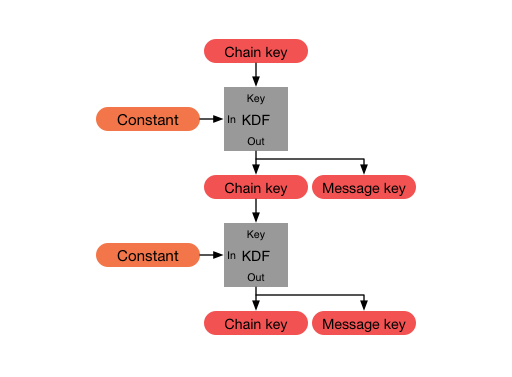
Signal message keys seem to include an IV. [1] Message keys are generated by passing a chain key through a key derivation function. [2] So you can also expand a shared secret established through Diffie-Hellman.

Someone please correct me if I'm wrong.

[1] https://github.com/signalapp/libsignal-protocol-java/blob/ma...

[2] https://signal.org/docs/specifications/doubleratchet/Set0_1....

Re: The Joy of Cryptography

#18
post #3

This is the coolest way I have seen someone write their email and avoid email harvesting bots: For inquiries related to this book, use x@joyofcryptography.com, where x is the author's first name. - Nearly everyone with a high school education can “crack” that puzzle and figure out his email and yet most bots will fail.

i'd guess that bots these days harvest domain names and then human names associated with them and then spam tools try common schemes for constructing email addresses. don't know for sure though.

i always thought the hotness would be to encrypt the address in source text and render/decrypt it client side in javascript, but i suppose scrapers these days use full blown headless browsers complete with javascript runtimes.

Re: The Joy of Cryptography

#19
post #13
post #5

> All the sensible textbook titles were already taken. Actual joy not guaranteed. Like a lot of people (I imagine) I made it through a CS bachelors program not really ‘getting’ the discrete math combinatorics part. Crypto is an area where those concepts really really matter. It’s great to see this resource available!

Somehow discrete math was the only math I understood in CS. Calculus, on the other hand, completely eluded me.

How did you graduate with a CS degree?

Re: The Joy of Cryptography

#20
post #3

This is the coolest way I have seen someone write their email and avoid email harvesting bots: For inquiries related to this book, use x@joyofcryptography.com, where x is the author's first name. - Nearly everyone with a high school education can “crack” that puzzle and figure out his email and yet most bots will fail.

RFC 5321 requires compliant domains to have both a "postmaster" and an "abuse" email address (e.g. postmaster@joyofcryptography.com). This technique will not stop a flood of spam emails to x@joyofcryptography.com, which will end up in the postmaster inbox.

Not sure what you mean.

Mail to the literal 'x@joyofcryptography.com' address would just be dropped. There's no expectation that mail to a nonexistent address would be placed in the postmaster mailbox.

Post reply on HN