Live data from Hacker News

When is the revolution in architecture coming?

currentaffairs.org

161–170 of 211 posts

Re: When is the revolution in architecture coming?

#161
post #80

Earlier quoted context omitted.

Screw the ornamental stuff, when do we start getting different large-scale patterns in spaces to live and work? Long dark hallways filled with apartments where nobody knows each other or has any occasion to interact. Secluded offices vs. anxiety inducing planes of "open" disasters. Apartments designed to be a shrine to a television and a small bedroom with light only suitable for cave dwellers. The shape of spaces is…

Sure, that too. Architects don't give a shit about interior spaces. They have interns do the plans. What they are lauded for is the exterior, the big hall and the sky terrace. To be fair the working space is being experimented upon. The open spaces are fairly new, and there are plenty of workplaces also where people don't have attributed desks, they just walk around the building and sit wherever they want. Whether an…

This is the one area driven purely by economic factors, any developer commissioning the building will let the architect have free reign on the exterior or overall building shape on the proviso that it maximizes leasable floorspace inside. Exciting and interesting interior spaces either use up space or are less marketable catering to a smaller subsection of the market.
Re: When is the revolution in architecture coming?

#163
Hopefully, much of the oppressive and ugly modernist rubbish will wither away over time. Shaming bad architecture openly and mercilessly is a public service (after all, we must live in the damned world built by these architects, and they seem not to care about the damage they inflict, so gloves are off). Also, architecture programs need some disruption. Maybe a ranking based on what they teach. University administration loves, and fears, the almighty ranking. They've got a noose around the neck of academia. Time to put a noose around their necks. Funding and its deprivation is another lever in this regard.

In the interim, it's also possible to work with some of the stuff that's already here[0] in very simply ways if financial constraints and practical considerations prevent razing offending architecture and building greenfield. It doesn't take all that much to turn a mediocre building into something that's at least passable. The real difficulty is when the architect has painted you into a corner by producing some weird construction that forms a rigid and perverse totality of which nothing can be saved. Yes, looking at the poop building in the article. You cannot expand or extend or modify that building. Don't let the mood lighting reflecting off its surface fool you here either. You don't fix the problem of oppressive and ugly austerity by building things that look like shit.

I also sympathize with taking on local architectural traditions, but only in a way that refines them and in a way that respects aesthetic principles. Gaudy buildings that look like something that belongs in Vegas or Atlantic City are not fun or "whimsical". They're gaudy.

[0] https://www.stroik.com/portfolio/infant-of-prague-cloister

Re: When is the revolution in architecture coming?

#164
Odd that none of the 200 comments so far mention the obvious economic cause. When land is already occupied by a private party, parties who want to buy and develop that land have to compete on price. The land owner wants as much as they can get. Decoration costs money, so that gets jettisoned and the resulting savings flow to the selling land owner.

Re: When is the revolution in architecture coming?

#165
I compare modernist architecture and architects to James Joyce's "Ulysses": lot of writers and critics love Ulysses but to most of us it's incomprehensible. To have any chance of appreciating Ulysses you have to have an understanding of literature and then work at applying that to the text. (I also suspect there's a bit of intellectual snobbery.)

I am not an architect but I've done a far amount of amateur studying and I find some modernist architecture interesting and/or fascinating. It definitely helps to understand what the architect was trying to accomplish. I can see why other architects--who have the background to understand--would like the examples in the original article.

But public buildings shouldn't require the general public to have a background in architecture to appreciate them. This disconnect between architects and the public is the root of the problem.

Re: When is the revolution in architecture coming?

#166

Earlier quoted context omitted.

There are multiple problems in the architect community. One is the marquee architects were all raised up in a post-war era where--some have argued--their designs are more influenced by PTSD than art. The brutalism of a modern building was certainly influenced by the materials--prestressed concrete and poured concrete, for example--but to put a stark and ugly face on a building requires a broken mind. Those marquee ar…

> We were able, through materials science, to increase vertical density at the cost of human scale structures. I’m not sure the two are in opposition. I feel more connected to humanity in NY, Tokyo, Hong Kong than I do in, say, Denver or Orlando. The economic forces that drive verticality also drive the use of ground level for retail, restaurants, etc.

It's certainly debateable. In a place with constrained real estate, like NYC and Tokyo, there isn't really any choice. When thinking about "human scale," it helps to emphasize the human part of the equation. Can a human walk up 57 flights of stairs? Yes, but not many. Can a human walk from one side of Orlando to the other? Yes, but not many, and a lot of them will be smooshed by cars.

Orlando wouldn't be human scale any more than the Burj Kalafia is. Orlando is automobile scaled, and would suffer the same consequences as the Burj if energy costs skyrocket.

That said, there are some people who thrive in places like NYC. It takes a certain kind of person to be able to deal with the sea of humanity, and not a lot of people can.

Re: When is the revolution in architecture coming?

#167
I actually prefer the modern ones to the old ones (... well some of them at least).

A bit of an aside - I have often wondered what makes "good" architecture, i.e. what is it about a space that means it is still a "good" place to be. There are many examples of both "old", "post-war", and "modern" architecture in London where the spaces are still great spaces and inspiring and welcoming and just work for their purpose, and likewise there are examples where they are depressing and miserable.

What is the "magic formula" for this that makes a building or space work? There has to be some theory on this, but if so why are "bad" buildings still made?

Re: When is the revolution in architecture coming?

#168

I've seen enough revolution. I would be far more interested in an architectural counter-revolution, with the vendee marching on these modern monstrosities with pitch forks, torches and jackhammers.

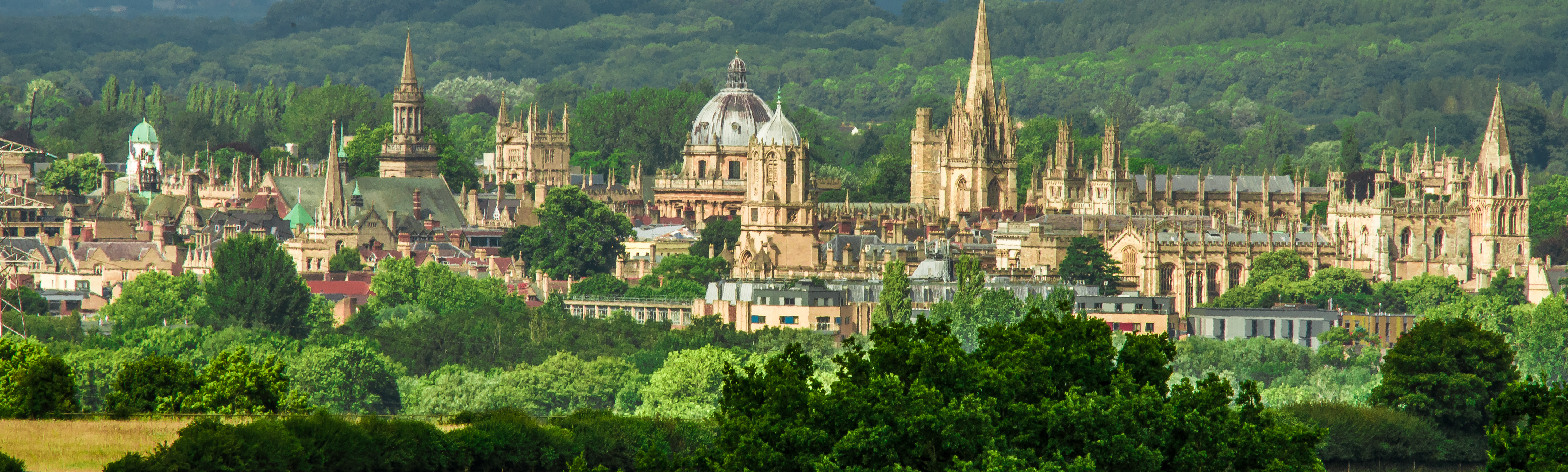
Here's a skyline I think similarly-minded people might appreciate, this is Oxford which survived WW2 relatively unscathed and contains too many listed buildings for the post-war town planners to have bulldozed them all in favour of boxy concrete abominations against the sighted.

https://www.ox.ac.uk/sites/files/oxford/field/field_image_ma...

Re: When is the revolution in architecture coming?

#169
post #159

Earlier quoted context omitted.

It's the slow march of the "business" mindset taking over all decision-making. Buildings are paid for by businessmen, businessmen want to be cheap and follow the crowd, and you end up with the same cheaply built building over and over.

Yet many 19th century warehouses had more ornamentation that today's Pritzker winners. At some point, there were businessmen backing beautiful buildings. I do think Apple's Ring campus is minimalist while also trying to be beautiful. But Ive and Jobs weren't architects by training.

Having visited several times for meetings, the main thing that stands out to me is how the interior has the decorative sense and aesthetics of a shopping mall. It’s pretty awful.

Re: When is the revolution in architecture coming?

#170

I actually prefer the modern ones to the old ones (... well some of them at least). A bit of an aside - I have often wondered what makes "good" architecture, i.e. what is it about a space that means it is still a "good" place to be. There are many examples of both "old", "post-war", and "modern" architecture in London where the spaces are still great spaces and inspiring and welcoming and just work for their purpose,…

Taste. I’m not sure it’s quantifiable.
Post reply on HN