Live data from Hacker News

When is the revolution in architecture coming?

currentaffairs.org

71–80 of 211 posts

Re: When is the revolution in architecture coming?

#71
post #63

This argument is ridiculous: Note: I have set aside for the purposes of this article the fact that our ugly buildings are all capitalistic megaprojects and thus we cannot change our design until we change our economic system. There are plenty of beautiful buildings being built today. Just because the Pritzker Prize isn't awarded to them because the panel awarding this prize believes in hideous monstrosities doesn't m…

The capitalistic megaprojects of, say, 1750-1930 were much more likely to be beautiful than the modern ones. Incredibly ornate banks and rail terminus stations. Beautiful brick, stone, and cast-iron apartment buildings. Towering stone offices. Even factory complexes were usually brick and had some amount of ornamentation [1][2]. I'm aware that there's a lot of survivorship bias supporting this view, but is there even…

Maybe there’s a more effective argument to be made than ‘capitalism sucks,’ then.

Re: When is the revolution in architecture coming?

#72
post #2

This misses a big point: highly skilled craftsmanship will never again be affordable on an architectural scale. So we'll have it again when it can all be done by machine. It costs human lives to build a Notre Dame, both in deaths and in total lifespan output, and as for Sagrada Familia it's still not complete. We now value human life and labor too much to be able to afford it. I personally can't wait to have detailed…

This is so wrong. We don't need slavery to run cotton fields. We can build Notre Dame without killing people.

Re: When is the revolution in architecture coming?

#73
post #68

"...Alejandro Aravena’s Angelini Innovation Center, was called by the Pritzker jury “remarkably humane and inviting.” His work is “welcoming,” they say, and “deepens our understanding of what is truly great design.” When I read things like this, I feel like I must be of a different species to these jury members, ... " Absolutely! It looks like the toilet block in a gulag.

>Absolutely! It looks like the toilet block in a gulag. Maybe the architects derived a sense of beauty from toilet blocks in a gulag. Even though soviet architecture wasn't exactly beautiful, it wasn't as bad as most modern architecture.

Depends on what you mean by bad. And which era of Soviet architecture. The block flats look like prisons and feel like the budget ran out 1/3 of the way building them. The early stuff looks excellent, at least the well built parts. The overall build quality is a bit hit or miss on everything.

Re: When is the revolution in architecture coming?

#74
Wasn't everyone wanking off about how clever they were pointing out Charlie Munger wasn't an architect last week?

Ohhhhhh he's doing something different trying to change the nature and expense of dormitory living with his own money, and the "architect" just left the project.

Architects are shit, but equally they both allow a differentiation from the normal and also have to differentiate from the normal to justify their fees, which means their buildings are often not practical but do look pretty, which all the chosen Brutalist buildings do look. Beautiful. You just don't want them everywhere.

The first set of photos are just staged photos with the colors changed from Instagram, from world famous Disneyland locations that have $$$$ for their up keep.

Afrofuturist design is just making dystopian shanty towns look pretty. Perhaps aim higher for Africa.

And trees and plants on buildings don't work. They die.

How about we work on, trees in the ground in more places. More utilities underground and less public advertising.

Re: When is the revolution in architecture coming?

#75
The coolest modern airport is definitely Koh Samui in Thailand: https://www.shutterstock.com/search/koh+samui+airport

I wish more significant structures were built in a style that thinks outside the box, and is locally sensitive. I wonder what this would mean for a place like the SF Bay.

Re: When is the revolution in architecture coming?

#77
post #2

This misses a big point: highly skilled craftsmanship will never again be affordable on an architectural scale. So we'll have it again when it can all be done by machine. It costs human lives to build a Notre Dame, both in deaths and in total lifespan output, and as for Sagrada Familia it's still not complete. We now value human life and labor too much to be able to afford it. I personally can't wait to have detailed…

> This misses a big point: highly skilled craftsmanship will never again be affordable on an architectural scale. So we'll have it again when it can all be done by machine.

That's not really the case. As with the internet and software, architecture was hijacked by building products corporations and tradespeople were duped into playing along, just like the employees of social media corporations one can see on this site who try to justify the evil activities of the companies they work for.

Background: when I quit software in the latter half of the 2000s I bought a house built in 1908 in the central US. It needed lots of things, so I basically lived in half of it and worked on the other half for about 10 years.

What I learned in the process of learning how to do all of that stuff by trial and error (including building custom windows and doors... wooden ones to replace the 'new' ones from previous owners that I threw away) is that prior to the 1980s there were lots of small machines built for the market of a small custom shop that might build things for local clientele. They have all been replaced by worse (in every respect) multi-function machines that only make boring things badly.

As a baseline, the most notorious of big box stores [1] says that new plastic windows cost 800 - 1000 dollars. That's highway robbery. There's about 30 board feet of rough sawn lumber in a 4' x 3' wooden double hung window. The material cost (assuming cypress in the southeast or douglas fir in the north/west) is gonna be around 5 dollars per board foot. Glass in smallish bulk quantities lets say 3 dollars per square foot, and hardware about 50 dollars per window, I'll give 10-20 dollars for paint and what not. So we're looking at a material cost of around $250.00 per window if someone wanted wooden windows in a common size.

The problem is not that it's impossible to compete with the plastic window on quality at a slight price markup, the problem is that there's no one to do it because everyone has been turned into a middle man, serving rent seekers. Outside of major cities with enough of a concentration of historic buildings to keep real craftsmen busy, there aren't going to be any such real craftsmen. They're all going to be glorified salesmen with a few hand tools from the local building supply retailer.

It didn't have to be this way. As an example, up until the late 1970s a company named Powermatic built a small single end tender (model # 2A) that is shown here [2] and here [3]. These were marketed to small shops, not giant industrial factories. These machines have appreciated in value on the used market in the past 10 years, because people are still using them! Ten years ago you could buy a serviceable 2A tenoner for $500-1000 dollars, now they're going for $2500 to 3k. I met people running window and door shops doing historic preservation work around Boston that were stockpiling every one they find for sale for parts. Powermatic the company on the other hand was sold and the brand "cashed in" on cheap import imitations of other tool companies' products long ago.

Another example would be the machine called a "sash trimmer" shown here [4] and here [5]. I use the term "machine" very loosely because it's not even motorized, you operate it with your foot like an old sewing machine. This machine could be replicated in a machine shop today using an old milling machine or mortiser as a base for probably $3000 dollars or so in custom parts. It's how you make fancy wooden windows like these [6]. It's virtually impossible to make such a wooden window without that machine, because modern machines can't replicate the required angled mortises. I looked for years and never found one for sale in the southeastern US. Despite the fact that thousands of historic homes in the southeastern US have such windows, that are all over 80 years old now and gradually rotting away.

You can extend this to any other item in the typical single family home in the US. For instance there's no reason for kitchen cabinets to have plywood in them. Plywood is another notorious "profit margin" item by the building products corporations that is basically scrap and glue with a picture of real wood on top of it. Why isn't there a set of jigs like the ones used 80+ years ago for sale by which a local cabinet maker can produce "stick built" cabinets without plywood shells? Why does the local cabinet maker pay obscene prices for fake lumber pressed into sheets, when by the square foot solid yellow pine is cheaper? Because the local cabinet shop sees himself as a building product middle man just like the corporate stores do, there is no other reason.

As if the entirety of American architecture being beholden to corporate producers of junk products isn't bad enough, general contractors are charging an additional 20-30% markup (at least) on top of the supplier's markup, to lead people to think that the junk they've bought is reasonably that expensive.

As the wise machine said in the movie from the cursed decade: "the only way to win, is to not play."

Read a few books, go to architectural salvage stores to look at things in person and see how they were built, go to your local woodworker's meetup group, go watch youtube videos about how to glaze windows and hang doors. You don't have to buy a shop full of antique machines and start with rough lumber if you don't want to, but if you know how to spec and order things from local craftsmen on your own without the aforementioned rent seeking middlemen charging you 20-30% to do it on your behalf, you can have a house just as nice as those from the late 19th and early 20th century, albeit with some quality of lumber compromises due to the lack of old growth supply.

1. https://www.homedepot.com/c/cost_install_replacement_windows

2. https://youtu.be/TT13WmJZyU0

3. https://www.thewoodfurniturefactory.com/tour.htm

4. https://www.facebook.com/seattlehistoricwindow/videos/102924...

5. http://vintagemachinery.org/photoindex/detail.aspx?id=9824

6. https://www.google.com/search?q=diamond+window+sash

Re: When is the revolution in architecture coming?

#78
post #33
post #23

Earlier quoted context omitted.

Architectural revolutions come and go in steady cycles. This guy is of the post-modern school, which hates on the modern school. They do irrational nonsense just to make a point against rationalism. They post eg in /r/evilbuildings Modernism hated art-noveau and previous such schools, like baroque, and esp. rokoko (late baroque), the typical l'art pour l'art extremist schools. Nobody takes them too serious, so they g…

Wow I just looked up rococo and it's absolutely astounding and beautiful. I wish every building I walked into looked like those buildings, I feel like I'd just be happier even if it were merely cheap imitation.

Rococo architecture is absolutely toooo much (to me, of course), the gulag toilet is too little.

There are options in the middle. Classicist touches (columns, simple harmonizing forms), big windows, scale, light, green, stairs, plazas. Walkable, connected to the underground public transportation, etc.

Sometimes less is more. There's no need to make houses organic looking, instead the architecture should provide spaces and light (hence a lot of glass) for real organic things. Humans, animals, plants.

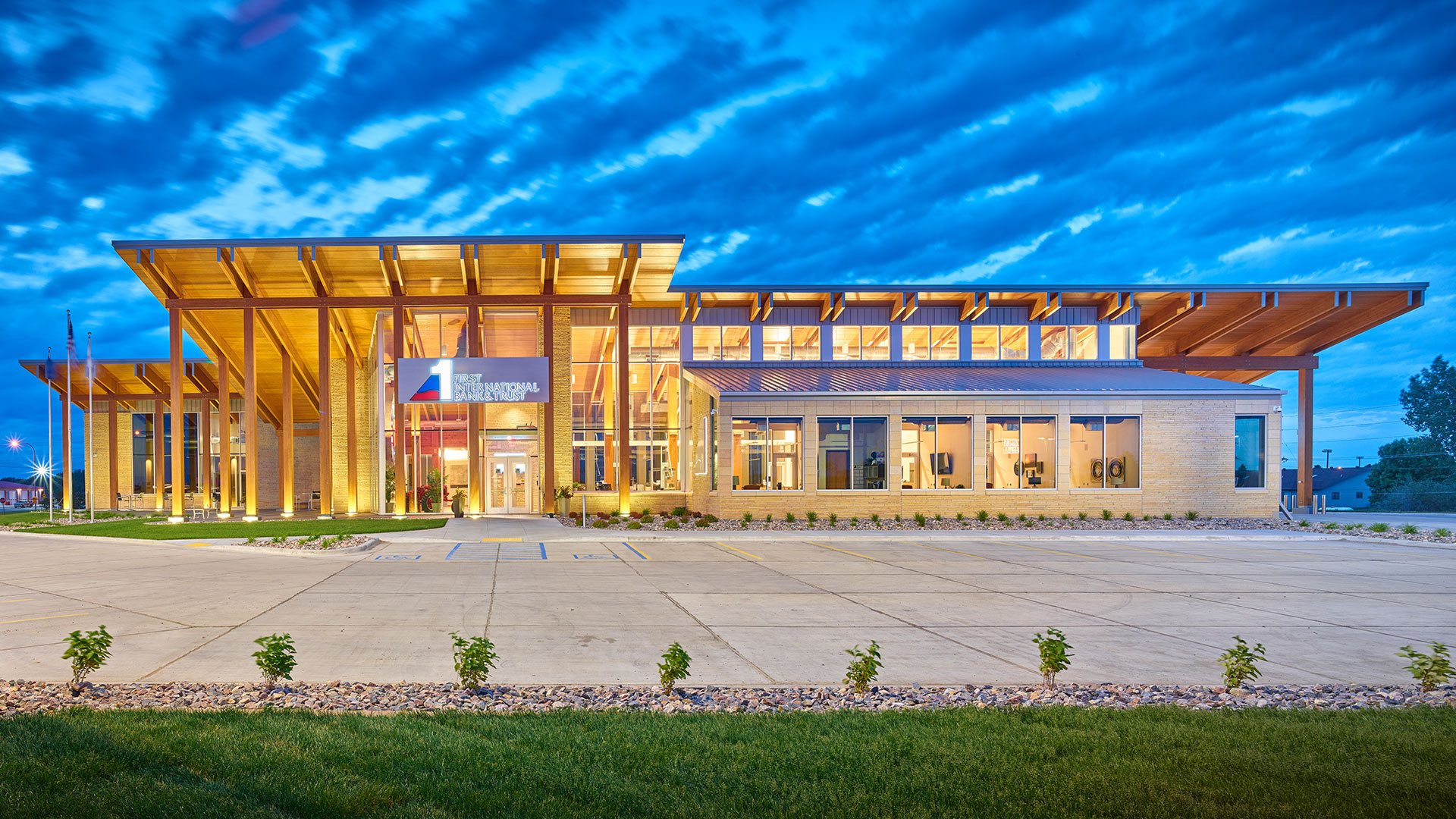
https://media.jlgarchitects.com/jlgblobstorage/2019/04/sdsu-...

https://jlg-legolas.azureedge.net/jlgblobstorage/2019/01/fir...

Of course you might absolutely not agree.

Re: When is the revolution in architecture coming?

#79
Oh yeah I can totally relate. If you want to dive deeper, follow Twitter accounts like @wrathofgnon or @createstreets.

Just be prepared to leave the cozy liberal bubble of software… the scene is… more diverse. There seems to be a correlation between modernist architecture and liberalism, and vice versa, which to me is so baffling since it is the same people who advocate for modernist buildings who then enjoy their vacations in Venice.

On the other hand, advocates of more traditional architecture are correlated (in my observation) with also traditional (non-democratic) power structures and family/gender values, and in parts support alt right topics such as anti-vax/Covid denial up to blatant racism.

I had not expected this.

What‘s missing, and the article hints at it at the end, is a middle ground: progressive, but based on emotions and beauty. Embedded into local vernacular (which clings to solving problems with local weather patterns and sourcing of local material) rather than international style, and embedded into its surroundings rather than being antithetical. Using low-carbon materials such as wood, stone, straw, or mud, which, when used correctly, show as good (or better) properties regarding air quality and temperature control than high-tech materials based on oil, and air conditioning or hesting systems that require constant use of a power source. And, as importantly, going back to a language that creates cities we actually enjoy, using a human scale, walkable, complex, and beautiful.

Re: When is the revolution in architecture coming?

#80
post #35

So. Fucking. True. The state of architecture is a disaster. Ever since Adolf Loos wrote “ornament is crime”, architects have booed anything decorative. We get textures, sure. Oh boy do we get textures. We get all the woods, all the stones, all the 3d printed concrete. Sculpture? Hell, no… And no it’s not that expensive. When you build 234 park avenue, every apartment sells for $10m. maybe there is some of it that can…

Screw the ornamental stuff, when do we start getting different large-scale patterns in spaces to live and work? Long dark hallways filled with apartments where nobody knows each other or has any occasion to interact. Secluded offices vs. anxiety inducing planes of "open" disasters. Apartments designed to be a shrine to a television and a small bedroom with light only suitable for cave dwellers. The shape of spaces is…

Sure, that too. Architects don't give a shit about interior spaces. They have interns do the plans. What they are lauded for is the exterior, the big hall and the sky terrace.

To be fair the working space is being experimented upon. The open spaces are fairly new, and there are plenty of workplaces also where people don't have attributed desks, they just walk around the building and sit wherever they want. Whether any of it works, I don't know...

Post reply on HN