Live data from Hacker News

Prague's Brutalist Buildings

calvertjournal.com

111–120 of 122 posts

Re: Prague's Brutalist Buildings

#111

Every time a holier-than-thou architectural magazine waxes poetic about the beauty of "poor forgotten brutalism", they make their point by showing extremely well-cropped, always black and white, high contrast images to make the shadows pop. And then say wow isn't it a shame we're tearing these down? It's because that's not what crumbling Soviet-era buildings look like. Sure they're fun to photograph. I've seen these…

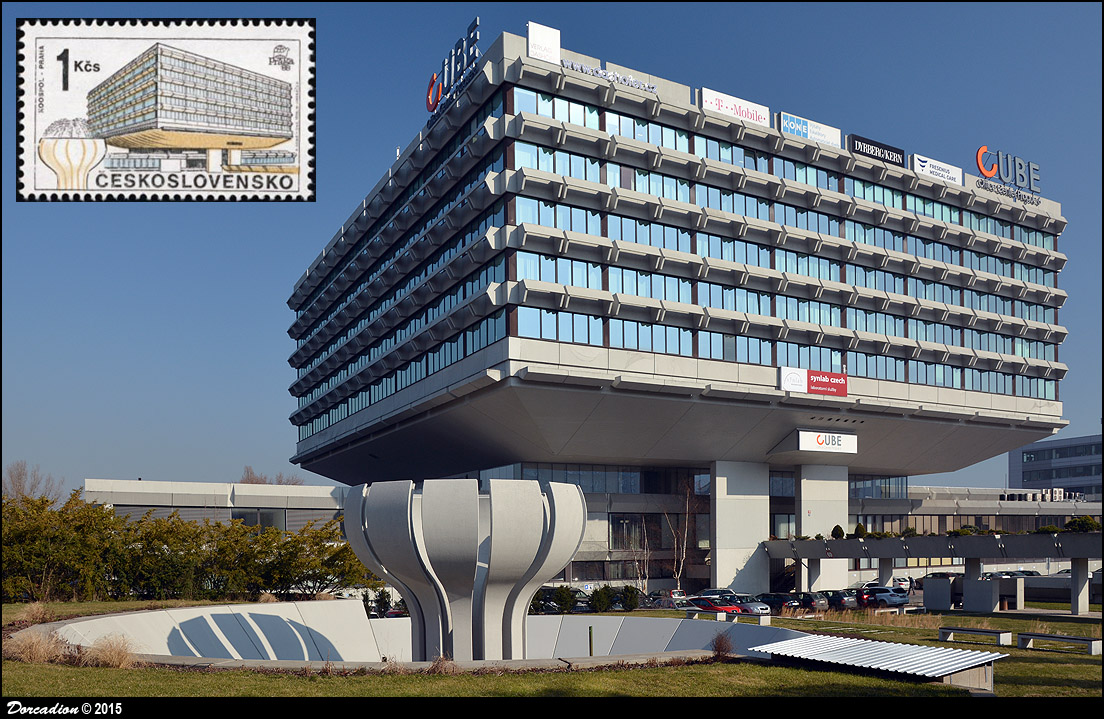
What the buildings look like in color

National Theatre https://upload.wikimedia.org/wikipedia/commons/thumb/a/a8/Pr...

The Transgas building https://upload.wikimedia.org/wikipedia/commons/thumb/c/c1/Pr...

Koospol (The CUBE) https://s3.amazonaws.com/gs-waymarking-images/315ed165-5a22-...
DBK Department Store https://upload.wikimedia.org/wikipedia/commons/thumb/9/98/Pr...

Re: Prague's Brutalist Buildings

#112
post #68

Earlier quoted context omitted.

There were intellectuals that believed in communism in non-soviet countries.

...So they got architecture degrees and jobs designing buildings to spread communism?

No, communist principles are expressed by the intellectuals and then used by the architects for public planning.

Re: Prague's Brutalist Buildings

#113

Every time a holier-than-thou architectural magazine waxes poetic about the beauty of "poor forgotten brutalism", they make their point by showing extremely well-cropped, always black and white, high contrast images to make the shadows pop. And then say wow isn't it a shame we're tearing these down? It's because that's not what crumbling Soviet-era buildings look like. Sure they're fun to photograph. I've seen these…

What the buildings look like in color National Theatre https://upload.wikimedia.org/wikipedia/commons/thumb/a/a8/Pr... The Transgas building https://upload.wikimedia.org/wikipedia/commons/thumb/c/c1/Pr... Koospol (The CUBE) https://s3.amazonaws.com/gs-waymarking-images/315ed165-5a22-... DBK Department Store https://upload.wikimedia.org/wikipedia/commons/thumb/9/98/Pr...

I like the cube one. The rest are pretty dull and are in line with the GP’s sentiment.

Re: Prague's Brutalist Buildings

#114
post #101

Every time a holier-than-thou architectural magazine waxes poetic about the beauty of "poor forgotten brutalism", they make their point by showing extremely well-cropped, always black and white, high contrast images to make the shadows pop. And then say wow isn't it a shame we're tearing these down? It's because that's not what crumbling Soviet-era buildings look like. Sure they're fun to photograph. I've seen these…

I'm not even sure why exposed concrete architecture took off. It's not economical, it looks rudimentary and institutional (functional without adornment). But, it costs more, is tougher to maintain, and has drawbacks --like massive loads which must be accounted for when building them. Raw concrete makes sense for dams and hydroelectric projects because you need mass to hold water. Otherwise, it's a poor choice and in…

Concrete = fast and cheap for post WW2 reconstruction. Which built up excess of labour / expertise in concrete construction that also spread abroad with post war emmigration. It's still the only economical choice for many regions. Not everyone has access to cheap, renewable lumber.

Re: Prague's Brutalist Buildings

#115

Every time a holier-than-thou architectural magazine waxes poetic about the beauty of "poor forgotten brutalism", they make their point by showing extremely well-cropped, always black and white, high contrast images to make the shadows pop. And then say wow isn't it a shame we're tearing these down? It's because that's not what crumbling Soviet-era buildings look like. Sure they're fun to photograph. I've seen these…

It's basically masturbation for western audiences that get to see weird retro buildings without any context that could tell them the whole story, especially if it's in Eastern Europe. I regularly see buildings I've been in on r/urbanhell that are great places to live but just look different and are located in the poor wastelands east of Vienna.

This is shockingly evident with the "spomeniks" trend that is basically recreating Edward Said's orientalism but for the Balkans. Westerners come on a cheap Ryanair flight, see a building and write endless blogposts about the ancient bloodthirsty peoples that once built these alien artifacts.

Black and white photos included.

Re: Prague's Brutalist Buildings

#116
post #101

Earlier quoted context omitted.

I'm not even sure why exposed concrete architecture took off. It's not economical, it looks rudimentary and institutional (functional without adornment). But, it costs more, is tougher to maintain, and has drawbacks --like massive loads which must be accounted for when building them. Raw concrete makes sense for dams and hydroelectric projects because you need mass to hold water. Otherwise, it's a poor choice and in…

Concrete = fast and cheap for post WW2 reconstruction. Which built up excess of labour / expertise in concrete construction that also spread abroad with post war emmigration. It's still the only economical choice for many regions. Not everyone has access to cheap, renewable lumber.

Concrete is useful. Large imposing structures poured in lace like a slurry wall doesn’t make sense. As a component of the structure yes, but not as used in typical unfinished concrete of that style. Steel and glass is cheaper, easier to maintain and has more flexible design. Plus it doesn’t look dystopian.

Re: Prague's Brutalist Buildings

#118
post #102

Every time a holier-than-thou architectural magazine waxes poetic about the beauty of "poor forgotten brutalism", they make their point by showing extremely well-cropped, always black and white, high contrast images to make the shadows pop. And then say wow isn't it a shame we're tearing these down? It's because that's not what crumbling Soviet-era buildings look like. Sure they're fun to photograph. I've seen these…

Brutalism was just another communist crime, razing old europe so they could stamp their manifestations of authoritarianism on it.

Brutalism was popular in France too, withmany extremely popular proponents (Le Corbusier to name one). Many big projects in the 50-60-70-80s were built in a brutalist style. Most have aged terribly though mostly IMHO due to poor maintennce.

Re: Prague's Brutalist Buildings

#119
post #116

Earlier quoted context omitted.

Concrete = fast and cheap for post WW2 reconstruction. Which built up excess of labour / expertise in concrete construction that also spread abroad with post war emmigration. It's still the only economical choice for many regions. Not everyone has access to cheap, renewable lumber.

Concrete is useful. Large imposing structures poured in lace like a slurry wall doesn’t make sense. As a component of the structure yes, but not as used in typical unfinished concrete of that style. Steel and glass is cheaper, easier to maintain and has more flexible design. Plus it doesn’t look dystopian.

>Steel and glass is cheaper

If memory serve, it wasn't at the time. There wasn't sufficient industrial capacity for steel + glass post war to address scale of ongoing construction demands. Building form work out of wood and pouring concrete from local aggregate was cheaper in terms of labour, materials and logistics. It became self reinforcing with economies of scale as concrete supply chains popped up regionally. Which is building science in a nutshell, do what makes most economic sense at the time. Usually limited by transportation costs. Ergo cladding eventually replaced by cheap light weight building envelop systems due to increase in global trade and sourcing from Asia.

IMO applying dystopian to Brutalism is an label applied after the fact due to various cultural factors. The style itself was continuation of modernism. Of course modernism since inception has been a friction point between academia and popular sentiment. I do think many architects did delude / post rationalize concrete aesthetics to a degree, in no small response to fact that they had to work with it out of economic neccessity. Architecture school is very good at brainwashing students who entered due to love of classical aesthetics into embracing modern aethetics, because there just aren't much opportunites to build outside of dominant building systems of the era. So designers learned to love and celebrate concrete.

Re: Prague's Brutalist Buildings

#120

Earlier quoted context omitted.

>> seemed not to be outright enemy of mankind Isn't it incredible that people who had so much hate of their fellow man were allowed to design entire environments for people to spend their lives in? And that we were actually taught about this as a "movement" in school, as if it were just a natural extension of modernism?

Jfc, dude, don't you think you are projecting a bit? The article contains photos of, in order, an office building, a theatre, another office building, a TV tower, a small office building, a bridge, a bank, a metro station, a shopping centre. These are not buildings people lived in, and in any case these are some of the more beautiful buildings of the period. Certainly no worse than the average office building of the…

I wasn't speaking strictly about Prague, much of which is beautiful. I'm talking about the misanthropy of Brutalist architecture in general. Some of the worst examples are in Western Europe.
Post reply on HN