Yamaha DX7 Technical Analysis
1–10 of 130 posts
Re: Yamaha DX7 Technical Analysis
#2Awesome -- the DX7 had a huge musical impact.
Re: Yamaha DX7 Technical Analysis
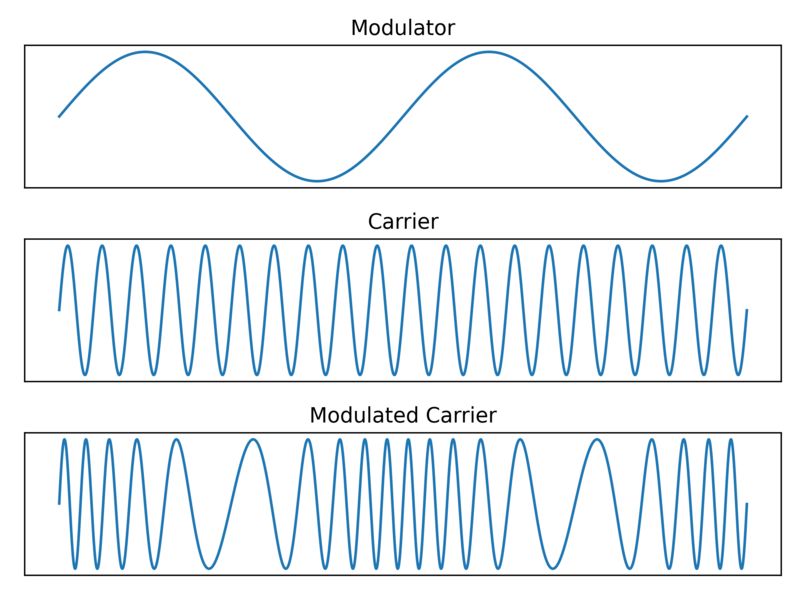
#3> In mathematical terms, FM synthesis is achieved by using the instantaneous amplitude of a sound wave (the modulator) to adjust the rate of change in the phase angle of another wave (the carrier).
> As convoluted as this sounds, it makes more sense when visualised: [1]
...but does it??
[1] https://ajxs.me/static/img/articles/dx7_technical_analysis/f...
Re: Yamaha DX7 Technical Analysis
#4Plogue, a Canadian software company, have recently released a (software) emulation of the DX-7 in excruciating detail. Here you can see part of the trouble they went through: https://www.youtube.com/watch?v=XJ97iXQrqzw. Suffice to say that they used a logic analyzer to discover gritty details that no other analysis of the DX-7 I know has ever paid attention of.
Re: Yamaha DX7 Technical Analysis
#5Awesome -- the DX7 had a huge musical impact.
I repair them to keep them in play, impossible to get some of the parts so I tend to use one that is too far gone to repair a number (usually three or so) of others and then I still end up with some more spares that might come in handy later.
They are incredibly durable, one that I got had been in a fire but it still worked, even though more than half of the keyboard had been burned off. The mainboard went on to repair one that was otherwise good but had a fried CPU. Another one I got had been owned by a touring musician, who apparently didn't know about flight cases :) There wasn't a lick of paint on the outer case. I got it for free because it wouldn't turn on any more. Turned out that the voltage selector had somehow been moved in transport and got stuck between the two settings, leaving it disconnected. That was the fastest fix ever, there simply wasn't anything wrong with it. (And good thing that voltage selector had not been pushed a tiny little bit further because then it would have been end-of-story for sure).
So, I have a pretty large collection of spares, looms, main boards, display boards, keys (they do break, especially as the plastic ages it can get more brittle, more so in synths that have been in the sun), switches, PSUs and so on. Every now and then I put an ad out to get people to sell me their broken ones or to help them out and then a new batch of working DX-7's goes back into the world. It's never going to make me a dime, especially not when counting the time but it feels pretty good to keep these oldies alive, and to see how happy musicians are when their baby works again.
Re: Yamaha DX7 Technical Analysis
#6Awesome -- the DX7 had a huge musical impact.
I repair them to keep them in play, impossible to get some of the parts so I tend to use one that is too far gone to repair a number (usually three or so) of others and then I still end up with some more spares that might come in handy later. They are incredibly durable, one that I got had been in a fire but it still worked, even though more than half of the keyboard had been burned off. The mainboard went on to repa…
I’d love to see some pictures of the super beat up ones that still work :)
Re: Yamaha DX7 Technical Analysis
#7Awesome -- the DX7 had a huge musical impact.
I repair them to keep them in play, impossible to get some of the parts so I tend to use one that is too far gone to repair a number (usually three or so) of others and then I still end up with some more spares that might come in handy later. They are incredibly durable, one that I got had been in a fire but it still worked, even though more than half of the keyboard had been burned off. The mainboard went on to repa…
That’s amazing. How does a person learn to repair older electronics tech like that?
Re: Yamaha DX7 Technical Analysis
#8> In mathematical terms, FM synthesis is achieved by using the instantaneous amplitude of a sound wave (the modulator) to adjust the rate of change in the phase angle of another wave (the carrier). > As convoluted as this sounds, it makes more sense when visualised: [1] ...but does it?? [1] https://ajxs.me/static/img/articles/dx7_technical_analysis/f...
If you understand Bessel Basis Functions, or the design and tuning of motorcycle carburetors, then it makes perfect sense. If you are uneducated on these and similar arithmatic summations of wave functions, then it will make no sense.
Re: Yamaha DX7 Technical Analysis
#9Earlier quoted context omitted.
I repair them to keep them in play, impossible to get some of the parts so I tend to use one that is too far gone to repair a number (usually three or so) of others and then I still end up with some more spares that might come in handy later. They are incredibly durable, one that I got had been in a fire but it still worked, even though more than half of the keyboard had been burned off. The mainboard went on to repa…
I’d love to see some pictures of the super beat up ones that still work :)
Ah, that's a missed chance. I never thought of that. That one chassis is long gone (I took off it what I could) and the burned keyboard I took apart outside the house. The keys that were still good went into the spares bin.
Next time I have one of these die-hards I'll be sure to take pictures.
Re: Yamaha DX7 Technical Analysis
#10Earlier quoted context omitted.
I repair them to keep them in play, impossible to get some of the parts so I tend to use one that is too far gone to repair a number (usually three or so) of others and then I still end up with some more spares that might come in handy later. They are incredibly durable, one that I got had been in a fire but it still worked, even though more than half of the keyboard had been burned off. The mainboard went on to repa…
That’s amazing. How does a person learn to repair older electronics tech like that?
It's the level of tech that I grew up with so I'm not sure where you'd learn it other than just to get your hands on one and to start digging in. Very few tools required if you stick to the test-and-replace-subsystems level, a screwdriver, a good DVM, a soldering iron (a good one, preferably one that is isolated from mains), a lot of spare time and a notebook so that you can keep track of what you find and build up a store of knowledge over time to help diagnose problems faster.
About 200K DX-7's were made, which is enough that you can find them and not so many that there is no value in repairing them, on top of that the degree to which people are attached to their synths is something that still amazes me. The level of emotion when a dead synth comes back to life with the owners is always quite gratifying, it's some of the best time spent for me.