Live data from Hacker News

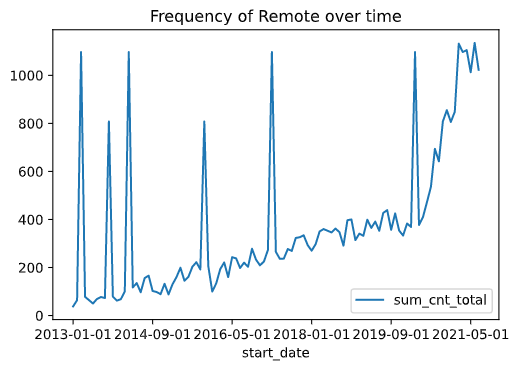
For programmers, remote working is becoming the norm

economist.com

41–50 of 461 posts

Re: For programmers, remote working is becoming the norm

#41
post #16

Right now companies havent figured out how to handle this situation and are playing along. I'm sure, sooner or later tides will turn and either you'll be roped into coming to office or take a pay cut for working remotely. So enjoy while it last!!

I don't get your reasoning on why you expect that people will have to take a pay cut for working remotely. Would have thought it would be the opposite. Office space, hardware and energy cost a bit.

Ah, that's easy.

The negotiating power of a company, which is practically a group of people, is much higher than that of employees, which are just 1 person. A big company loses what? 0.00001% of its revenue if it doesn't hire the right person for a specific position? An employee loses 100% of their revenue if they don't get hired or get fired.

So companies can pretty much do what they want (up to a point where they cause uproar and those individuals to bunch up into a group fighting the company).
Re: For programmers, remote working is becoming the norm

#42

Hacker News in the News! https://www.economist.com/graphic-detail/2021/08/11/for-prog...

I think that some of HN people don't like this. The more popular it gets the less quality (or more mod work) will HN comments have. But since the article is paywalled... maybe it's protecting HN :)

Indeed I don't want to sound like a 'get out of my lawn' kind of person but I am increasingly noticing an overlap between submissions on HN and posts on r/worldnews.

Again I think for the most part the moderators are doing an amazing work but there is definitely a risk of just becoming another frontpage of the internet instead of sticking to the original ethos of submissions about 'anything that gratifies one's intellectual curiosity'.

Re: For programmers, remote working is becoming the norm

#43
post #16

Right now companies havent figured out how to handle this situation and are playing along. I'm sure, sooner or later tides will turn and either you'll be roped into coming to office or take a pay cut for working remotely. So enjoy while it last!!

That's a proper slave mentality right there. I suggest you instead think like this "what will I do to continue working remotely? Which company will I pick?".

“More pay” and “less pay” are relative. Once things equalize, jobs that require people to commute will have to pay more. Just like jobs that required you to be on a plane every week paid more in 2018.

Re: For programmers, remote working is becoming the norm

#44
post #12

Earlier quoted context omitted.

Dentist. The Medical people seem to pay their blood up front and have the rest of their life set. Am I wrong about this? We seem to not have to pay anything up front, but at the cost of a life long rat race. If you want to talk flexibility, some of these doctors show up to the office like three times a week in the long run.

That's the last thing I'd direct my kids towards. To spend a third of your waking life digging in people's dirty mouths because of the stable income is how dreams die.

Thanks for making me laugh out loud, appreciated.

Re: For programmers, remote working is becoming the norm

#45
post #34

Earlier quoted context omitted.

In fact, no. Those are specifically the trades that always have work and don't depend on new construction. "General Construction" is very boom&bust. There are also many specialties available in plumbing and electrical that demand top dollar. The average electrician where I'm at in the US working for themselves is making $80-150 an hour (market depending) without any specialties involved. Related: https://www.youtube.…

I mean take roofing for example. Of course roofs need replacement eventually. But after a construction boom the fraction of new roofs is high, so those don't need replacement for a while. Wouldn't that mean that roofers have less work?

Roofing is maybe the weakest link in that list of four and also the most punishing of those trades on the body. Congrats, you found it. It's also the one I put last.

Commercial properties also have roofs that need replacing and residential & commercial construction often don't boom at the same time. More importantly, storms are always a thing and one of the most common places trees go is into buildings & from the top.

I have never met a roofer that wasn't insanely overbooked.

Re: For programmers, remote working is becoming the norm

#46
post #5

Earlier quoted context omitted.

What are less volatile industries with well paying jobs?

Plumbing. Electrical. HVAC. Roofing. The average age of trade workers is over 50. Carpentry is in extreme demand but the pay hasn't caught up yet -- eventually it will. Demand already far exceeds supply. Edit: I like how I gave a perfectly truthful answer to the question and I'm being downvoted to oblivion. A lot of contempt for tradespeople, I guess. I went to high school with people who became electricians and they…

Don’t forget welding. I’m colorblind so that’s been my dream if I were to start over. Most of those require a good amount of color coded wiring. I did try to become a cop and passed all the exams, but they also check for colorblindness.

I’m a fan of trades over office jobs. They’re paid fairly, you either have a union or at least paid for your hours you actually work. And I’ve always dreamed about overtime pay. Instead I’m pitted against overseas labor which instead of fighting, I’d prefer to unionize with them against our employer. Anyone that hires overseas deserves it. Certainly didn’t care about jobs here so we shouldn’t care about their well-being either.

Re: For programmers, remote working is becoming the norm

#48

Earlier quoted context omitted.

I'd say the more removed your job as a programmer is from those "posted on HN" or in the FAANGM realm and is more solid enterprisey "Line of Business" type work the GREATER leverage you have in telling an employer to go pound sand if they want to get back to a butts in seats world. We've been full remote for 18 months with only tentative plans to go to a 3/2 office/remote sitch by next year (with team options to go e…

I don't share your optimism. From what I see in France, there's a ton of competition in "consulting". Not freelance, mind, but body shops renting out developers. The end clients have a tendency to think of those devs as completely interchangeable (that's the main reason they give when asked why they don't hire directly). I have a hard time seeing how telling them to pound sand can have a serious effect, especially si…

I don't necessarily disagree with anything you say but we are coming from different perspectives of FTE vs "staff aug". My company uses contractors as an FTE pipeline or funnel and by nature they have far less leverage (if they are good they will eventually be offered FTE spots and get more of the "leverage" I mentioned).

There's also probably some nuance between the US job market and French job market of which I have no business speaking to.

My overall point is, that in the US at least, for middle of the bell curve type talent to solve middle of the bell curve type problems, there is far less talent than there is problems.

Re: For programmers, remote working is becoming the norm

#49

This is unfortunately not the experience I have had in Australia. I looked into a few jobs earlier in the year, and spoke with a few recruiters. Despite the initial remote-friendly job description, it ended up being full time or more, with 1 day work from home a week. I look forward to when remote working is common, with internal processes and culture adapted to suit multiple modes of working.

That's interesting - I've always found Australia to be more welcoming to remote work than other countries like the US. Both my wife and I have lived in Christchurch, NZ, for the past 6 years now and worked 100% remotely for multiple companies based out of Sydney.

Re: For programmers, remote working is becoming the norm

#50

Regardless of jobs containing "onsite" or "remote", the metric that really matters is - how many people are actually applying... Companies can advertise "onsite" all they want, but from all the stories I've heard about how hard it is to find good developers, and how developers are leaving their work-from-home jobs as soon as they're told to come into the office, you have to draw the conclusion that it's a buyer's mar…

This is exactly right. It's not just that the firms can choose among all the world's remote devs, the reverse is also true.

I've been turned down when offering remote jobs to devs who found something more attractive, it happens and the market is a two way negotiation.

Post reply on HN