Live data from Hacker News

Regulators should treat stablecoins like banks

economist.com

71–80 of 224 posts

Re: Regulators should treat stablecoins like banks

#71
>Tether, has issued $62bn-worth of tokens which it says are redeemable for a dollar apiece. But of the assets backing the tokens in March only about 5% were cash or Treasury bills

Cash & Cash Equivalents & Other Short-Term Deposits & Commercial Paper:

Commercial Paper and Certificates of Deposit2 $30,807,654,349

Cash & Bank Deposits3 $6,282,756,692

Reverse Repo Notes4 $1,000,662,458

Treasury Bills5 $15,279,528,705

Subtotal $53,370,602,204

How do we go from an assumption of 5% in March to ~85% (53/62) in June? The author I can understand being cautious about the subject of stable coins, but this seems to be the wrong evidence to back their claim.

https://tether.to/wp-content/uploads/2021/08/tether_assuranc...
Re: Regulators should treat stablecoins like banks

#72
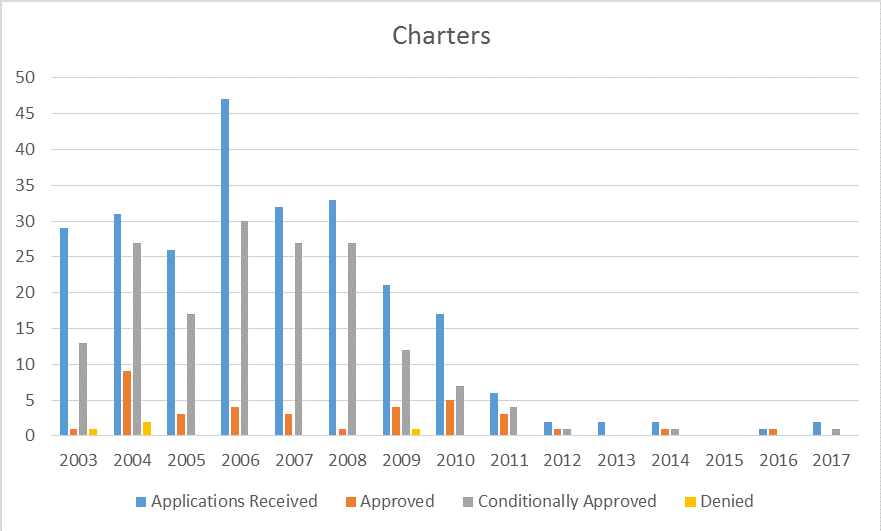
Regulating stablecoins like banks would absolutely have to involve reform of the OCC, whose willingness to actually issue new banking charters has slowed to a near halt in recent years.

https://wp-vip.law.columbia.edu/wp-content/uploads/sites/2/2...

Many fintechs would be more willing to submit to banking regulation if they felt there was a sane and cost effective path to, you know, actually becoming a bank.

Re: Regulators should treat stablecoins like banks

#73
post #4

> With estimated leverage of 383-to-1, Tether would be unable to honour all its tokens after losses of just 0.26%—a safety cushion that regulators would never allow at a bank. So even if they are telling the truth, it is still on the edge.

So if 0.26% of tether is withdrawn into currency the coin would collapse? Am I reading that right?

You can only redeem USDT to USD through centralized exchanges (after all, that's the point of stablecoins in dEx ...).

As long as these centralized exchanges collude to refuse redeeming USDT to USD, there is no run of the bank scenario.

Re: Regulators should treat stablecoins like banks

#74
Firstly, Tether is rat poison. Unfortunately, newcomers to the space identify "stable coins" = "tether" or wrongly assume that other stablecoins share similar mechanisms. There are many alternatives that operate radically differently in the nascent space.

DAI is immensely exciting. Stablecoins like DAI are interesting experiments that could powerfully create new online economies.

Blockchains like Ethereum are currently far more transparent than the state-sponsor US monetary system. I hope to live in a society where economic experiments can be executed, new lessons learned, and transparency maintained. If stablecoins are persecuted, the need for cryptographic zero-knowledge proofs will allow these systems to continue with far less transparency.

As a different matter, how can society say "2008 bad", which resulted in little economic progress, and then threaten problem solvers from making new solutions? Innovation is a hedge against regulator lethargy.

Re: Regulators should treat stablecoins like banks

#75
post #67
post #54

Earlier quoted context omitted.

That is misleading. A more relevant number is the capital requirement, which is between 7% and 13% currently for US banks, if I'm not mistaken, corresponding to leverage of 8 to 14. Much more benign. https://www.federalreserve.gov/newsevents/pressreleases/bcre...

Capital requirements are for something else. We're talking about retail customers being able to withdraw their cash, in which case the reserve requirement is the correct number.

It simply is not. Retail banking customers are able to withdraw 100% of their balances and have been for almost 100 years thanks for the existence of the FDIC. Nobody has lost a single dollar to a bank run since the FDIC was instituted after the Great Depression. Even in 2008 when WaMu went under. Not one dollar.

All retail banks in the United States are backstopped by the FDIC and the FDIC is backstopped by the federal reserve. Saying otherwise is tinfoil hat thinking. Fractional reserve banking isn’t a conspiracy.

Retail banks act on behalf of the federal reserve to actively manage the money supply, in part through fractional reserve lending.

The issue for stable coins and stable coin operators, is that they’re not backstopped by an FDIC, aren’t subject to any capital requirements and aren’t subject to any risk management practices.

Re: Regulators should treat stablecoins like banks

#76
post #71

>Tether, has issued $62bn-worth of tokens which it says are redeemable for a dollar apiece. But of the assets backing the tokens in March only about 5% were cash or Treasury bills Cash & Cash Equivalents & Other Short-Term Deposits & Commercial Paper: Commercial Paper and Certificates of Deposit2 $30,807,654,349 Cash & Bank Deposits3 $6,282,756,692 Reverse Repo Notes4 $1,000,662,458 Treasury Bills5 $15,279,528,705 Su…

Note the terminology there: Cash or treasury bills.

That $31 billion in commercial paper might not be actually liquid.

The only thing that counts are the $6 billion in cash and $15 billion in treasury bills.

There are a number of other issues as well. Which bank is holding that cash? Is it actually a real bank?

Re: Regulators should treat stablecoins like banks

#77
post #74

Firstly, Tether is rat poison. Unfortunately, newcomers to the space identify "stable coins" = "tether" or wrongly assume that other stablecoins share similar mechanisms. There are many alternatives that operate radically differently in the nascent space. DAI is immensely exciting. Stablecoins like DAI are interesting experiments that could powerfully create new online economies. Blockchains like Ethereum are current…

Isn't DAI backed by USDC and Tether in part?

Re: Regulators should treat stablecoins like banks

#78
post #22

Earlier quoted context omitted.

Which, if it were to fail (which is exceptionally unlikely), is backed by the US Treasury and the Federal Reserve. EDIT: Walking back to first principals, why can't the USD fail? Because you can print whatever adults in the room decide need to be printed to hold the economy up. You cannot do this with a deflationary digital asset, nor one tied to smart contracts.

>Because you can print whatever adults in the room decide need to be printed to hold the economy up. You cannot do this with a deflationary digital asset, nor one tied to smart contracts. Sounds like a feature to me. Printing money is effectively a socialized loss for everyone who's holding the currency.

We've run this experiment before. Look at the number and severity of recessions/depressions prior to fiat currency and after.

Re: Regulators should treat stablecoins like banks

#79
post #11

> With estimated leverage of 383-to-1, Tether would be unable to honour all its tokens after losses of just 0.26%—a safety cushion that regulators would never allow at a bank. So even if they are telling the truth, it is still on the edge.

Banks are now required to have 0% of deposits as cash.[1] It’s funny whenever people start to get outraged at seeing fractional reserve banking in any context besides where we’ve ignored it and accepted it. [1] Citation for those who missed this development: https://www.eidebailly.com/insights/articles/2020/4/federal-...

Yes, because the areas where we ignore and accept it are highly regulated and insured as a result of hundreds of years of learnings at this point. People react negatively when they see it outside of that context because it is something we have repeatedly seen fail and cause instability. This isn't hard to understand.

Re: Regulators should treat stablecoins like banks

#80
post #71

>Tether, has issued $62bn-worth of tokens which it says are redeemable for a dollar apiece. But of the assets backing the tokens in March only about 5% were cash or Treasury bills Cash & Cash Equivalents & Other Short-Term Deposits & Commercial Paper: Commercial Paper and Certificates of Deposit2 $30,807,654,349 Cash & Bank Deposits3 $6,282,756,692 Reverse Repo Notes4 $1,000,662,458 Treasury Bills5 $15,279,528,705 Su…

For an effective money market fund, there is a huge difference between cash and bank deposits; Treasuries; and commercial paper, certificates of deposit and reverse repos.
Post reply on HN