Kaspersky Password Manager: All your passwords are belong to us
donjon.ledger.com
Kaspersky Password Manager: All your passwords are belong to us
1–10 of 122 posts
Re: Kaspersky Password Manager: All your passwords are belong to us
#2Getting some DUAL_EC prng vibes.
Insert Kaspersky owned by Russia intelligence conspiracy here...
Re: Kaspersky Password Manager: All your passwords are belong to us
#3Getting some DUAL_EC prng vibes. Insert Kaspersky owned by Russia intelligence conspiracy here...
Kaspersky's Advanced School of KGB graduation photos:
https://cs6.pikabu.ru/post_img/big/2017/07/04/11/14991974131...
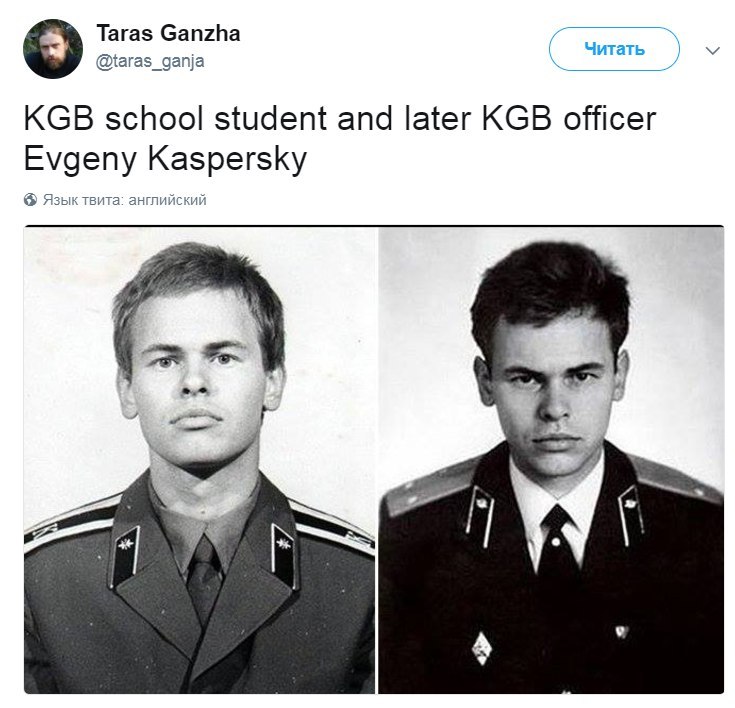
Re: Kaspersky Password Manager: All your passwords are belong to us
#4I feel like the discussion about uniform password generation and PRNG, while interesting, is relatively irrelevant here. Even a garbo xorshift-based non uniform PRNG is almost certainly good enough to generate strong random passwords, as long as it's seeded correctly. An attacker is unlikely to gather enough output (generated passwords) to predict other ones, and the passwords are unlikely to be all generated within the same session so the PRNG state probably wouldn't carry over anyway. It's shoddy craftsmanship for sure and it doesn't inspire confidence in the product, but I'm not sure that it could be meaningfully exploited on its own.
Seeding with the current time is the real sin here.
Re: Kaspersky Password Manager: All your passwords are belong to us
#5I use Bitwarden and it's open source. Switched over from LastPass and haven't regretted it since
Re: Kaspersky Password Manager: All your passwords are belong to us
#6>All the passwords it created could be bruteforced in seconds
Can somebody please correct me if I'm wrong, but to bruteforce a password attackers need offline access to the stored passwords data and I'm assuming it mustn't be stored in a proper encrypted way
why should the onus be on the end client/ user to use 'crazy' lenght and complex passwords(I'm excluding stupidily simple passwords such as 123456 etc..)
surely a well design vault/ safe for the passwords and a restricted client logon system would stop all/ most attackers
Re: Kaspersky Password Manager: All your passwords are belong to us
#7I use Bitwarden and it's open source. Switched over from LastPass and haven't regretted it since
Bitwarden has the best UI/UX of any password manager I have used, by far. In particular it puts LastPass (which I switched from) to shame.
I rarely use the premium features, but I pay for premium anyway to support the project. Costs a dollar a month, so barely noticeable.
Re: Kaspersky Password Manager: All your passwords are belong to us
#8>All the passwords it created could be bruteforced in seconds Can somebody please correct me if I'm wrong, but to bruteforce a password attackers need offline access to the stored passwords data and I'm assuming it mustn't be stored in a proper encrypted way why should the onus be on the end client/ user to use 'crazy' lenght and complex passwords(I'm excluding stupidily simple passwords such as 123456 etc..) surely…
The seed to the PRNG was the current time (in seconds). There are ~31556952 seconds in a year. That means there are at most that many passwords generated by all users of KPM in any given year (assuming same charset was used). That makes it trivial (both in computation and time) to generate a table with all the passwords generated over the whole lifetime of KPM.
Re: Kaspersky Password Manager: All your passwords are belong to us
#9>All the passwords it created could be bruteforced in seconds Can somebody please correct me if I'm wrong, but to bruteforce a password attackers need offline access to the stored passwords data and I'm assuming it mustn't be stored in a proper encrypted way why should the onus be on the end client/ user to use 'crazy' lenght and complex passwords(I'm excluding stupidily simple passwords such as 123456 etc..) surely…
I think the attack vector would be something like:
- Website is compromised, database is dumped
- It contains hashed user passwords that you'd have to bruteforce if you want to recover them
- If you know roughly how long the password is and when it was generated (and what character set it uses) and that you know that it was probably generated by this Karspersky product, you can use that to generate all possible combinations and speed up the bruteforcing considerably.
It definitely hinges on a very specific set of circumstances and wouldn't be trivial to exploit, but it's still a pretty silly and easily avoided flaw for a password generator to have.
Re: Kaspersky Password Manager: All your passwords are belong to us
#10I feel like the discussion about uniform password generation and PRNG, while interesting, is relatively irrelevant here. Even a garbo xorshift-based non uniform PRNG is almost certainly good enough to generate strong random passwords, as long as it's seeded correctly. An attacker is unlikely to gather enough output (generated passwords) to predict other ones, and the passwords are unlikely to be all generated within…
I think the issue is in both: seeding with time and using a generator that does not have an additional source of entropy (i.e. is fully deterministic given seed).