After drinking my morning coffee I realized that the heat transfer is from the surface to the water droplets/vapors that then carry it to the next layer of this still.
Ergo: coffee makes you smarter and I shouldn't be on HN so early in the morning.
121–130 of 241 posts
After drinking my morning coffee I realized that the heat transfer is from the surface to the water droplets/vapors that then carry it to the next layer of this still.
Ergo: coffee makes you smarter and I shouldn't be on HN so early in the morning.
FTA: "Unlike some desalination systems, there is no accumulation of salt or concentrated brines to be disposed of. In a free-floating configuration, any salt that accumulates during the day would simply be carried back out at night through the wicking material and back into the seawater, according to the researchers." The capabilities are freaking interesting, but let's say someone builds a big enough settlement on a…
Earlier quoted context omitted.
The sea is a big place. I could imagine perhaps some very localised effects near the plant, but even this isn't obvious.
> imagine > perhaps > but even this isn't obvious So basically you're admitting you don't know anything about the subject, but you're making a conclusion anyway. It's OK to admit you don't know enough about a subject, and it's OK to not comment or theorize based on no knowledge besides an imagination.
Earlier quoted context omitted.
Back of the envelope - say that you could get 7-8 hours of sunlight a day that could destill water. That would mean ~50 liters/day. ~20 Days to get 1m^3. Reverse Osmosis costs approx $0.50/m^3 water, so your payback on a $100 system would be ~200 * 20 Days or 4,000 Days to equal what you could get for spending $100 on buying water from a reverse osmosis system. The objective here isn't large scale economics, but self…
Looking at a 10+ year time frame, I feel that maintenance cost would become the dominating factor. For both.
Earlier quoted context omitted.
Or is it? > In a free-floating configuration, any salt that accumulates during the day would simply be carried back out at night through the wicking material and back into the seawater, according to the researchers. This is fine for a small scale demonstration unit, but with bigger plants you will again run into the problem of over-salinating seawater, destroying the environment (and reducing your still's efficiency)…
That would have to be a very small sea indeed.
Earlier quoted context omitted.
Usually, numbers over 100% mean that you are putting in less energy than is needed for the process. In this case, that would mean putting in a little over a quarter of the needed energy. That does not imply free energy or anything. The rest of the energy has to come from the environment. A heat pump is another common example with efficiency numbers in the same ballpark. With a heat pump, the heat is being moved from…
Efficiency is still the wrong name. What you are describing is usually referred to a coefficient of performance , abbreviated to COP . See https://en.wikipedia.org/wiki/Coefficient_of_performance
For those curious what the 385% refers to > the team’s demonstration device can achieve an overall efficiency of 385 percent in converting the energy of sunlight into the energy of water evaporation. Honestly I still don't know what that means, or how efficiency can be over 100%.
Others already explained where the >100% efficiency comes from, but I want to point out that a good 1/4th of the article is repeatedly explaining how this works, over a couple of paragraphs.
This is the winning sentence for me: Unlike some desalination systems, there is no accumulation of salt or concentrated brines to be disposed of.
Or is it? > In a free-floating configuration, any salt that accumulates during the day would simply be carried back out at night through the wicking material and back into the seawater, according to the researchers. This is fine for a small scale demonstration unit, but with bigger plants you will again run into the problem of over-salinating seawater, destroying the environment (and reducing your still's efficiency)…
Earlier quoted context omitted.
My understanding: As the water condenses onto the next surface layer in the stack, the solar heat is recycled. This is because the transition from gas to liquid releases heat. Really clever stuff! Edit: mixed up evaporate/condense
For that to work, each successive layer will need to remain cool enough for water to condense on it.
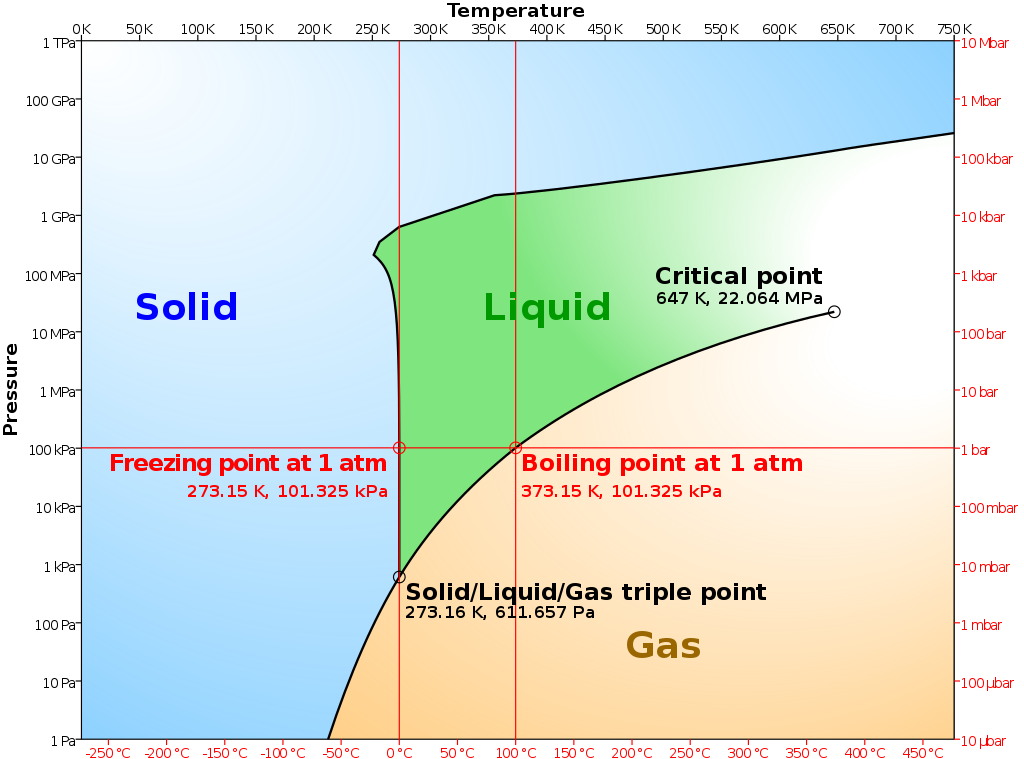
At 5ATM water condenses at a higher temperature than it boils at 4ATM.