Live data from Hacker News

Why does the world harbor so many different voltages, plugs, and sockets?

spectrum.ieee.org

41–50 of 77 posts

Re: Why does the world harbor so many different voltages, plugs, and sockets?

#41

I know it’s likely highly subjective and prone to local bias, but I feel a next step would be to do user testing of alternatives and derive a best form factor plug. What’s the best plug we could all be aspiring to. Some are clearly more usable than others. One metric: easy of use in the dark/based on feel alone.

I definitely have a local bias but I believe this one has the best of all criteria. From compact to safety (improved 2007 version) and robustness as well as being polarized.

Swiss Plug:

https://www.worldstandards.eu/electricity/plugs-and-sockets/...

https://en.m.wikipedia.org/wiki/SN_441011

Compact 3 socket version: https://www.bauhaus.ch/product-images/52/95/22025295/1009627...
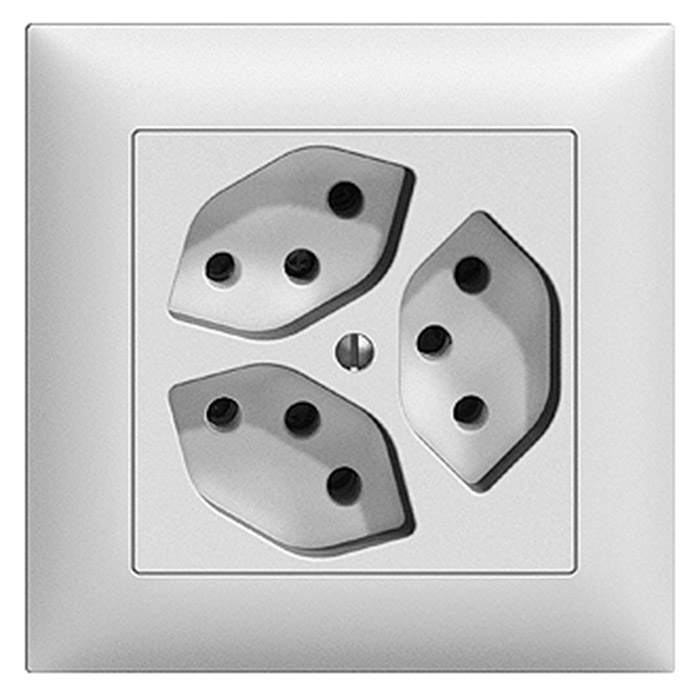
Multiphase: https://en.m.wikipedia.org/wiki/SN_441011#/media/File:SEV_10...

Chart of all current/phase versions: http://www.toplight.ch/info/ch_plugs.pdf

Re: Why does the world harbor so many different voltages, plugs, and sockets?

#42

I know it’s likely highly subjective and prone to local bias, but I feel a next step would be to do user testing of alternatives and derive a best form factor plug. What’s the best plug we could all be aspiring to. Some are clearly more usable than others. One metric: easy of use in the dark/based on feel alone.

Safety seems like a big one too. Even the shoddiest fit should never have a visible powered part. Reliability: Fit should be good. You should be easily able to plug a heavy transformer on a downward facing socket without it falling out by gravity alone. Lastly, compactness. The standard should be compact so fittings can be good looking and not use too much space. The UK grounded connector fails the last criteria. The…

From memory, all the UK-style plugs I've used (in HK) have been a tight fit. I can't see how they'd fall out.

Re: Why does the world harbor so many different voltages, plugs, and sockets?

#44
post #25
post #9

Unfortunately this doesn’t get to why. For example the absurdly large UK plugs with integral fuses date to first (or was it postwar? I forget) surge of electrification which,for expediency’s sake was often point-to-point (like “party line” phones) so local devices needed protection. Nobody else went this route (well, excepting some dodgy informal systems I’ve seen in India and southern Africa) so could get away with…

Australia, and Argentina since then 90s, use the Y plug, which is not mentioned in the article. Why Argentina used the same plug as Australia I have no idea, and it's not fully documented as far as know.

China uses a similar inverted design as well.

Re: Why does the world harbor so many different voltages, plugs, and sockets?

#45
post #20

The article seems to be mostly about voltages and plugs/sockets that the consumer will see at the outlets throughout their home. It's interesting to look a little beyond that. Most of the places that offer 230 V at their outlets seem to be distributing power in the neighborhoods using a 3 phase 230 V system. Individual houses are wired to one phase of that. In the US, distribution throughout a neighborhood is typical…

> The normal outlets in the house are wired across half the transformer, giving 120 V. Ovens, water heaters, dryers, EV chargers, air conditioners, etc get wired across the full transformer giving 240 V.

Why not just give the 120 V up and go full 240 V in every outlet?

Re: Why does the world harbor so many different voltages, plugs, and sockets?

#46
post #20

The article seems to be mostly about voltages and plugs/sockets that the consumer will see at the outlets throughout their home. It's interesting to look a little beyond that. Most of the places that offer 230 V at their outlets seem to be distributing power in the neighborhoods using a 3 phase 230 V system. Individual houses are wired to one phase of that. In the US, distribution throughout a neighborhood is typical…

> The normal outlets in the house are wired across half the transformer, giving 120 V. Ovens, water heaters, dryers, EV chargers, air conditioners, etc get wired across the full transformer giving 240 V. Why not just give the 120 V up and go full 240 V in every outlet?

> Why not just give the 120 V up and go full 240 V in every outlet?

No one feels it's worth the effort.

You'd need two sets of plugs in every home and redesign a whole bunch of appliances and sell both types during the change over period, which could last decades.

Re: Why does the world harbor so many different voltages, plugs, and sockets?

#47
post #9

Unfortunately this doesn’t get to why. For example the absurdly large UK plugs with integral fuses date to first (or was it postwar? I forget) surge of electrification which,for expediency’s sake was often point-to-point (like “party line” phones) so local devices needed protection. Nobody else went this route (well, excepting some dodgy informal systems I’ve seen in India and southern Africa) so could get away with…

I am always getting anxious that I get electrocuted when I disconnect US plug. I wish the whole world adopted UK plugs and sockets for safety.

You're so close to the realisation, so close.

Re: Why does the world harbor so many different voltages, plugs, and sockets?

#48

Earlier quoted context omitted.

> The normal outlets in the house are wired across half the transformer, giving 120 V. Ovens, water heaters, dryers, EV chargers, air conditioners, etc get wired across the full transformer giving 240 V. Why not just give the 120 V up and go full 240 V in every outlet?

> Why not just give the 120 V up and go full 240 V in every outlet? No one feels it's worth the effort. You'd need two sets of plugs in every home and redesign a whole bunch of appliances and sell both types during the change over period, which could last decades.

Most appliances that draw less than a kilowatt of energy are capable of switching to 240V or 120V as needed, some even automatically.

Re: Why does the world harbor so many different voltages, plugs, and sockets?

#49

I know it’s likely highly subjective and prone to local bias, but I feel a next step would be to do user testing of alternatives and derive a best form factor plug. What’s the best plug we could all be aspiring to. Some are clearly more usable than others. One metric: easy of use in the dark/based on feel alone.

Safety seems like a big one too. Even the shoddiest fit should never have a visible powered part. Reliability: Fit should be good. You should be easily able to plug a heavy transformer on a downward facing socket without it falling out by gravity alone. Lastly, compactness. The standard should be compact so fittings can be good looking and not use too much space. The UK grounded connector fails the last criteria. The…

UK plugs are not compact, but they are always a tight fit. They always feel more secure than Euro style plugs, especially for chargers and lamps.

Re: Why does the world harbor so many different voltages, plugs, and sockets?

#50
post #24

Italian sockets are a fun one. The plugs come in a 10A and 16A versions which are slightly different sizes. Newer sockets will usually take both plugs, but older sockets take one or the other. The size looks very similar to European Schuko sockets, and if you jam it in, then it will just about fit (without an earth). You can get adapters all over the place, which is the way you are supposed to do it, but for older so…

As a tourist, Italian sockets always made me furious with those sideways grounding pads/pins. Any UK->EU adapter would be pushed out by those instantly. At one point, in a fit of rage, I ripped them out of the socket of a hostel I was staying at so I could use the socket (I wouldn't ever vandalise public property like that under any circumstances). I like to think that they wouldn't be missed.
Post reply on HN