Earlier quoted context omitted.
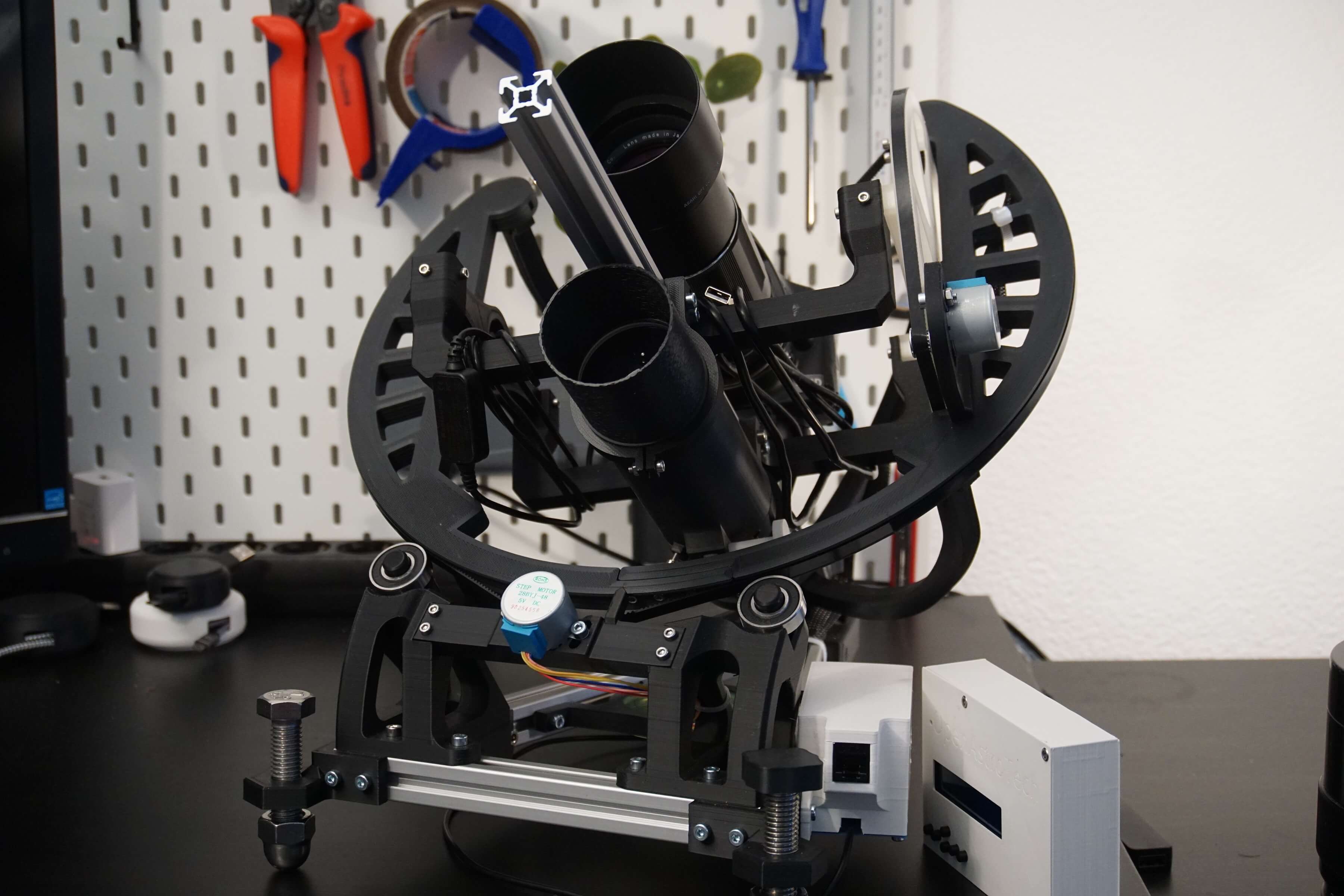
Surely in camera, it is just a matter of taking a shot, wait an interval, take another shot, then shift/rotate the two images until X number of bright spots line up and then form a new composite, rinse and repeat. If you have a motor in the camera for stabilising you can use that shift/rotate parameter to move the sensor for the next shot.
Modern cameras can physically move the sensor inside the camera. It is called IBIS or In Body Image Stabilization. Taking one long exposure I imagine would better pick up on faint sources of light compared to multiple short exposures.
You definitely need an exposure long enough for the light sources to actually show up on the image. But beyond that point, sometimes you can do better by taking lots of separate exposures: https://en.wikipedia.org/wiki/Lucky_imaging Really depends on what the limiting factor is in your imaging system. For cheap consumer cameras, sensor sensitivity is more of an issue than atmospheric fluctuations, so longer exposures are usually better.