Armchair strategizing on the topic I know nothing about (but it's fun to think about!): Constraints: - C removal requires lots of energy (can't avoid thermodynamics) - electricity on that scale is either expensive, dirty, or both Additional concerns: - cheap/clean energy is intermittent (and still a small percentage) - excessive electricity is as bad as not enough electricity Solution: - build lots of new (safe and c…
The development of next-gen/thorium/msr/whatever from first-commercial-success to repeatable-and-therefore-cheaper is, even in a highly optimistic scenario, a 30+ year proposition. I fervently believe we should fund and invest in that r&d, but even if it pans out (which I bet it would, but you have to acknowledge its our guess), its simply not a part of our "it is time to act now" timeline.
I do this all the time too, its largely a part of the fact that many of us are middle aged men now. We were taught to think of, and mentally frame this as, an "over the course of the next several decades" type of problem. In which case a nuclear solution was fairly obviously the best path available.
The problem is we didn't take that path. And the decades have passed. So while we should start down that path now ASAP from an r&d/investment perspective, it is almost completely a distraction today from a "net-zero in 20-30 years" perspective.
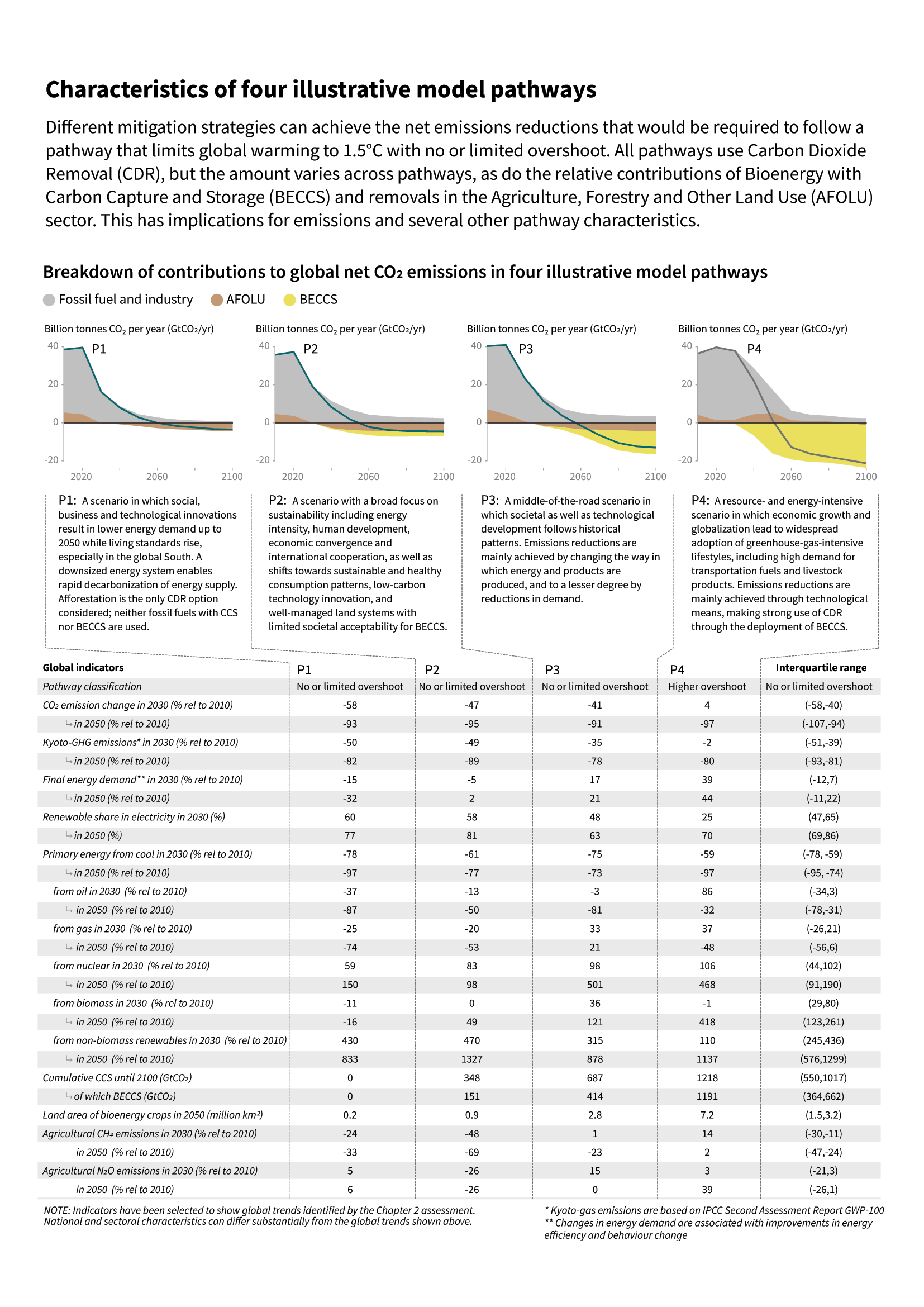
I guess what I'm mostly trying to say is, whenever engaging in the climate-change/energy-generation-mix "debate" these days, try to mentally factor in time as one of the top constraints in your model. Here's an IPCC chart of four example scenarios that show you what the slope of the curves need to look like: https://www.ipcc.ch/site/assets/uploads/sites/2/2019/02/SPM3...